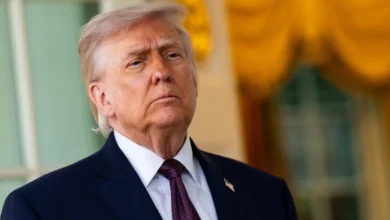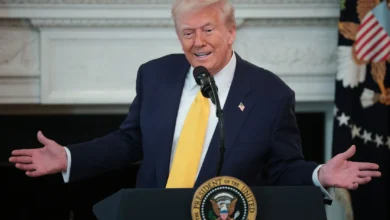
Days after Trump’s well-publicized visit to China, Putin and Xi meet in Beijing.

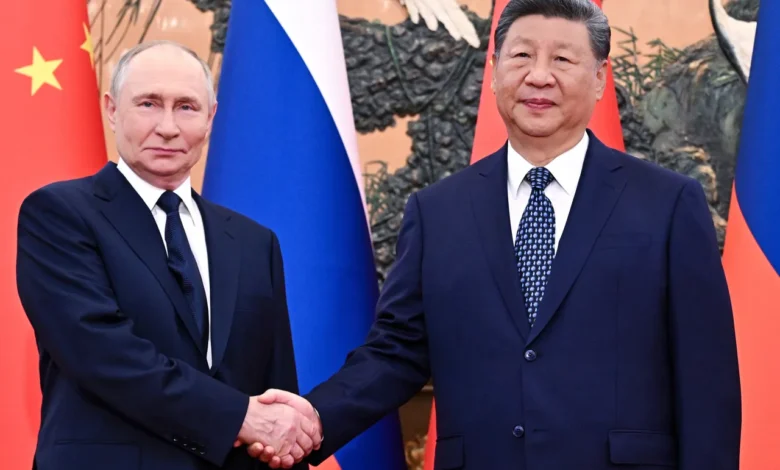
Important discussions about trade, energy cooperation, and the Iran war will take place in Beijing between Chinese President Xi Jinping and Russian President Vladimir Putin.
Only a few days after US President Donald Trump visited China amid the Iran War, Russian President Vladimir Putin and Chinese President Xi Jinping are getting ready to meet in Beijing.
This is the first time Beijing has hosted the leaders of the US and Russia in the same month outside of a multilateral setting, and it takes place a week after Trump’s state visit to China.
Putin’s “state-heavy” delegation, which includes industrial planners, security officials, and energy executives, reflects a philosophy of “strategic survival under constraint.” The meeting is expected to focus on strengthening economic ties and military cooperation amidst rising tensions in the region. Both leaders aim to solidify their positions on the global stage while navigating the complexities of their respective relationships with the United States.
Pay attention to trade and disputes.
The Israeli-US war on Iran, trade, bilateral relations, energy cooperation, and the conflict in Ukraine are among the topics on the agenda.
While trade targets are likely to be reaffirmed or slightly increased, energy cooperation is anticipated to strengthen.
Before the two leaders meet, Xi will host a welcoming ceremony for Putin.
After the discussions, the two leaders intend to sign a joint statement and a number of other agreements.
Later, Putin will meet with Li Qiang, the premier of China, to talk about economic cooperation.
The journey takes place in conjunction with the 25th anniversary of the two nations’ Treaty of Good-Neighborliness and Friendly Cooperation.
China currently consumes about half of Russia’s crude oil exports, and bilateral trade between the two countries reached over $240 billion in 2023. This strengthening partnership highlights the growing economic ties and mutual interests between Russia and China, particularly in energy and trade. As they celebrate this significant milestone, both nations are likely to explore further avenues for collaboration in various sectors, including technology and infrastructure development. This could lead to a more integrated economic landscape in the region, potentially reshaping global trade dynamics. Additionally, such cooperation may encourage other nations to reassess their diplomatic and economic strategies in light of this evolving alliance.