Lagos Government Rescues Unconscious Pregnant Woman, Hands Mother and Newborn Over to Plateau State Authorities

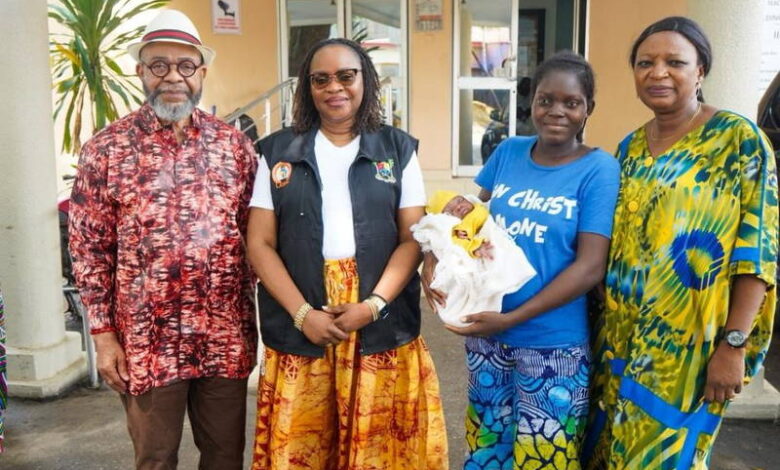
The Lagos State Government has successfully rescued an unconscious pregnant woman who was found abandoned under distressing circumstances, providing her with urgent medical care that ultimately saved both her life and that of her unborn child before formally handing the mother and baby over to the Plateau State Government for continued support and rehabilitation.
The incident has been described by officials as a powerful demonstration of the importance of timely emergency intervention, intergovernmental collaboration, and the need to protect vulnerable citizens regardless of their state of origin.
According to government officials, the woman was discovered in a critical condition after concerned members of the public alerted emergency responders. She was reportedly unconscious when she was found, prompting an immediate rescue operation coordinated by relevant state agencies.
Medical personnel quickly transported her to a government-owned healthcare facility where doctors and nurses worked tirelessly to stabilize her condition.
Upon arrival at the hospital, healthcare professionals carried out emergency assessments and initiated life-saving treatment to improve her chances of survival. Given the severity of her condition and the advanced stage of her pregnancy, doctors monitored both mother and unborn child closely while administering appropriate medical care.
After several hours of intensive medical attention, the woman gradually regained consciousness, allowing doctors to continue treatment while preparing for the safe delivery of her baby.
Health officials disclosed that the medical team successfully delivered the child, with both mother and newborn responding positively to treatment following the emergency intervention.
The successful outcome was welcomed by healthcare workers, who described the case as a reminder of the critical role emergency medical services play in preventing avoidable maternal and infant deaths.
Following their recovery, the Lagos State Government initiated efforts to identify the woman’s family and determine her state of origin.
Investigations eventually established that she was from Plateau State, leading Lagos authorities to begin discussions with the Plateau State Government regarding arrangements for her welfare after discharge from the hospital.
Officials explained that because the woman required continued social support and reintegration into her home environment, both state governments worked together to ensure a smooth and coordinated transfer.
The handover process involved officials from relevant ministries responsible for health, social welfare, women affairs, and humanitarian services.
Representatives of the Plateau State Government formally received both mother and child, expressing appreciation to the Lagos State Government for its swift humanitarian response and commitment to preserving lives.
They commended the medical personnel whose timely intervention ensured the safe delivery of the baby despite the challenging circumstances under which the woman was initially found.
Officials from Plateau State also assured that arrangements had been made to provide the mother with continued medical care, counselling, and any additional assistance required to support both her recovery and the well-being of her newborn.
The Lagos State Government emphasized that its response was guided entirely by humanitarian considerations.
Authorities noted that emergency services in the state are designed to assist anyone facing life-threatening situations irrespective of ethnicity, religion, social status, or state of origin.
Government representatives reiterated that preserving human life remains one of the highest priorities of public institutions, stressing that no individual in need of urgent medical attention should be denied assistance.
Healthcare experts have welcomed the successful rescue, describing it as an example of how coordinated emergency response systems can significantly improve maternal and child health outcomes.
According to medical professionals, delays in accessing skilled healthcare remain one of the leading contributors to maternal mortality in many developing countries.
They explained that rapid transportation, immediate medical intervention, and the availability of qualified healthcare workers often determine whether complicated pregnancies result in successful outcomes.
Public health specialists further emphasized the importance of strengthening emergency referral systems across the country while encouraging pregnant women to attend regular antenatal care throughout pregnancy.
Such services, they noted, enable healthcare providers to identify potential complications early and prepare appropriate treatment before emergencies occur.
Social welfare advocates also praised the collaboration between Lagos and Plateau states, noting that cooperation among governments remains essential in responding effectively to humanitarian cases involving vulnerable individuals.
They argued that stronger partnerships between states can improve social protection systems, facilitate family reunification, and ensure that citizens receive adequate care regardless of where emergencies occur.
The incident has equally reignited conversations about the welfare of pregnant women facing homelessness, poverty, displacement, or other social challenges.
Experts believe more investment in maternal healthcare, community outreach, social support programmes, and public awareness campaigns could help reduce similar situations in the future.
As the mother and her newborn begin a new chapter under the care of Plateau State authorities, many Nigerians have praised the compassion shown by emergency responders, healthcare workers, and government officials involved in the rescue operation.
The successful intervention stands as a reminder that prompt medical response, effective collaboration, and commitment to humanitarian values can save lives and offer vulnerable citizens a renewed opportunity to rebuild their futures.
For many observers, the story represents not only a remarkable medical success but also an encouraging example of how coordinated public institutions can work together to protect lives, preserve dignity, and strengthen confidence in Nigeria’s emergency healthcare and social welfare systems.