
Military Neutralises 65 Terrorists, Rescues 34 Kidnap Victims in One Week – DHQ

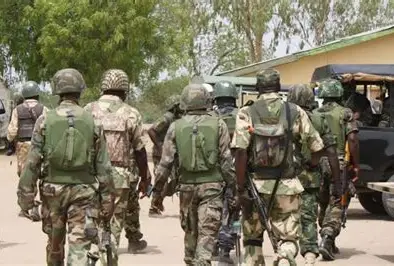
The Defence Headquarters has announced that Nigerian troops neutralised 65 terrorists and rescued 34 kidnapped victims during military operations conducted across various parts of the country in one week.
The military said the operations, which covered several theatres of operation, were aimed at dismantling terrorist networks, disrupting kidnapping syndicates, recovering weapons and denying criminal groups the freedom to operate in communities and forests.
According to the Defence Headquarters, the operations were conducted between August 7 and August 13, 2026, as troops intensified pressure on terrorists, kidnappers and other armed criminal groups.
The military also reported the arrest of suspected terrorist collaborators, logistics suppliers and other individuals believed to be providing support to armed groups.
Weapons, ammunition, motorcycles, communication equipment, cash and other items were reportedly recovered during the various operations.
The Director of Defence Media Operations, Major General Michael Onoja, who disclosed the figures in an operational update, said troops across the different theatres continued to record successes despite the difficult security environment.
The North-East remained one of the major areas of military activity during the period under review, with troops under Operation Hadin Kai carrying out operations against terrorist elements in Borno and Adamawa states.
The military said troops raided terrorist hideouts and disrupted the activities of fighters operating in remote areas.
In Kaniram East, Abadam Local Government Area of Borno State, troops reportedly raided a terrorist hideout and neutralised one fighter.
The operation also led to the recovery of weapons and ammunition, while the hideout was destroyed.
Troops operating around Gombi Local Government Area of Adamawa State also reportedly disrupted terrorists who were allegedly collecting illegal taxes from local residents and herders.
The military said the terrorists withdrew after troops mounted pressure on them and abandoned weapons and other items.
The military also reported the surrender of 19 terrorist fighters in different locations across Borno State during the period.
According to the Defence Headquarters, the surrendering terrorists included women and children.
The military attributed the surrender to increasing pressure on terrorist groups, food shortages and internal disagreements within their ranks.
The authorities have repeatedly encouraged members of terrorist groups to abandon violence and surrender, particularly those willing to cooperate with security agencies.
Another operation in Nganzai Local Government Area of Borno State reportedly resulted in the neutralisation of a terrorist who was allegedly attempting to infiltrate the area.
Troops also recovered an assault rifle, ammunition and explosive devices during the operation.
The military further reported the rescue of five female victims who had escaped from a terrorist enclave in the Mandara Mountains.
The women were reportedly rescued around Amuda Bridge along the Ngoshe-Gava Road in Gwoza Local Government Area.
Their rescue added to the number of people recovered from terrorists and kidnappers during the week.
Kidnapping remains a major security challenge in Nigeria, with criminal groups frequently holding victims in forests and demanding ransom payments from their families.
The military’s operations have therefore increasingly focused on both rescuing victims and destroying the networks that facilitate abductions.
In the North-West, troops operating under Operation Fansan Yamma reportedly conducted operations across Zamfara, Katsina and Kebbi states.
The military said troops disrupted terrorist movements and forced some fighters to abandon their positions.
Several motorcycles, camouflage materials and communication equipment were reportedly recovered during the operations.
Troops also arrested suspected collaborators and logistics facilitators allegedly connected to terrorist networks.
The military reported that two suspects described as foreign experts allegedly involved in the production of improvised explosive devices were among those arrested.
In Zamfara State, troops reportedly recovered more than ₦5 million allegedly intended for terrorist associates from one suspect.
The military also reported that terrorists operating around Magazu Village in Tsafe Local Government Area abandoned kidnapped victims after troops intervened.
Kebbi State also witnessed a major confrontation between troops and armed terrorists during the week.
The Defence Headquarters said troops responded to an attack on Makuku Village in Sakaba Local Government Area and neutralised 18 terrorists.
However, the military acknowledged that personnel and civilians were also killed during the confrontation.
According to the report, 10 members of a local security outfit, one vigilante and one civilian lost their lives in the attack.
The incident highlights the dangers faced by security personnel and community-based security groups working in areas affected by armed violence.
In the North-Central region, troops operating under Operation Whirl Stroke continued clearance operations against criminal groups in Benue and Kogi states.
The military said troops neutralised an armed criminal in Azege village in Logo Local Government Area of Benue State.
A rifle and ammunition were reportedly recovered from the suspect.
Further operations in Ukum Local Government Area resulted in the arrest of five suspected associates of kidnappers.
Kogi State recorded some of the most notable rescue operations during the week.
The Defence Headquarters said troops rescued 16 kidnapped victims along the Ojuwo-Ajengo-Memarebo and Ojiwo-Itobe routes in Ofu Local Government Area.
The victims reportedly included six men, six women and four children.
Troops later rescued another nine victims along the Ajaokuta-Itobe Road after engaging suspected kidnappers.
The kidnappers reportedly abandoned the victims and fled into the surrounding area as troops advanced.
The rescue operations are particularly significant because several major roads in parts of Nigeria have become vulnerable to attacks by kidnapping gangs.
Travellers are often targeted in isolated areas where criminals can quickly move victims into nearby forests.
Military and other security operations along such routes are therefore aimed at protecting travellers while simultaneously disrupting the hideouts used by kidnappers.
In Plateau State, troops operating under Operation Enduring Peace reportedly rescued a kidnapped resident after applying pressure on the abductors.
The victim was reportedly abandoned around Rafin Bauna in Bassa Local Government Area.
In Niger State, troops operating under Operation Savannah Shield also reportedly rescued nine male kidnapping victims in Mariga Local Government Area.
The military said operations against terrorists and criminal groups continued in the area.
Niger State has faced growing security concerns because of the activities of armed groups operating across parts of the North-West and North-Central regions.
These groups have been accused of kidnapping residents, attacking communities and engaging in livestock rustling and other criminal activities.
The military’s operations are intended to prevent the groups from establishing permanent bases and expanding their areas of influence.
Security operations were also intensified in the South-East.
Troops operating under Operation Udo Ka, in collaboration with the Department of State Services, reportedly targeted a kidnapping syndicate operating in Enugu State and neighbouring areas.
The military said one commander of the syndicate was neutralised while another member was arrested.
Troops reportedly recovered four AK-47 rifles, seven magazines and 133 rounds of ammunition from a forest hideout.
The recovery of such weapons underscores the level of firepower available to some kidnapping and criminal groups operating in remote areas.
In the South-South, troops operating under Operation Delta Safe reportedly rescued a kidnapped farmer in Edo State.
One suspected kidnapper was reportedly neutralised during the operation.
The military also recovered ₦1.5 million allegedly intended as ransom payment.
Beyond counter-terrorism and kidnapping operations, troops continued to conduct operations against crude oil theft and illegal refining activities in the Niger Delta.
The Defence Headquarters said troops recovered suspected stolen crude oil and illegally refined petroleum products during the period.
The military also highlighted the contribution of the Nigerian Air Force to the operations.
According to the Defence Headquarters, air operations were conducted against terrorist concentrations and movement routes in parts of northern Nigeria.
One air operation in Mariga, Niger State, reportedly targeted a large gathering of terrorists.
The military claimed that the operation resulted in approximately 120 bodies being discovered and hundreds of motorcycles being destroyed.
Another air operation around Maburya in Mariga reportedly targeted terrorists allegedly fleeing with rustled cattle.
The military said 46 terrorists were neutralised during the operation.
The reported figures represent the military’s account of its operations and have not been independently verified.
Nevertheless, the Defence Headquarters described the results as evidence that sustained military pressure was disrupting terrorist and criminal networks across several parts of the country.
The military said its strategy is increasingly focused on dismantling the infrastructure supporting armed groups rather than concentrating exclusively on individual fighters.
Such infrastructure includes weapons suppliers, financiers, transporters, informants and logistics networks.
Security officials believe that attacking these support structures can make it more difficult for terrorist and kidnapping groups to recruit fighters and sustain operations.
The military also encouraged Nigerians to provide credible information that could assist security agencies in locating criminals and identifying their movements.
Community intelligence remains important in counter-terrorism and anti-kidnapping operations because many armed groups operate in remote locations where security forces cannot maintain a permanent presence.
Residents who notice suspicious movements or activities can provide information that may help troops respond before attacks occur.
The Chief of Defence Staff, General Olufemi Oluyede, reportedly commended the troops for their efforts and urged them to maintain pressure on terrorist and criminal groups.
The military leadership also reiterated its commitment to protecting communities and restoring normalcy in areas affected by insecurity.
For the 34 kidnapped victims reportedly rescued during the week, the operations mean an opportunity to reunite with their families after periods of fear and uncertainty.
However, the continued existence of kidnapping and terrorist networks shows that the security challenge remains significant.
Military victories against armed groups can disrupt their operations, but lasting security will also require effective intelligence gathering, community cooperation, prosecution of suspects and measures to prevent criminal groups from rebuilding their networks.
The reported deaths of security personnel and civilians during some of the operations also demonstrate the dangers involved in the fight against terrorism and kidnapping.
While the Defence Headquarters reported that 65 terrorists were neutralised, the broader objective remains to create conditions where communities can live, travel, farm and conduct their businesses without fear of armed attacks.
The military’s latest report therefore presents a picture of intensified operations across several regions of the country.
From the North-East to the North-West, North-Central, South-East and South-South, troops reported arrests, terrorist surrenders, weapons recoveries and the rescue of kidnapped victims.
The coming weeks will show whether the latest operations can translate into sustained improvements in security.
For now, the Defence Headquarters says troops will continue offensive operations against terrorist organisations, kidnapping syndicates and other armed groups while working with other security agencies to protect communities and restore peace across the country.