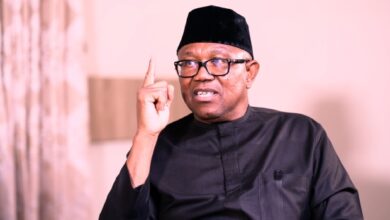

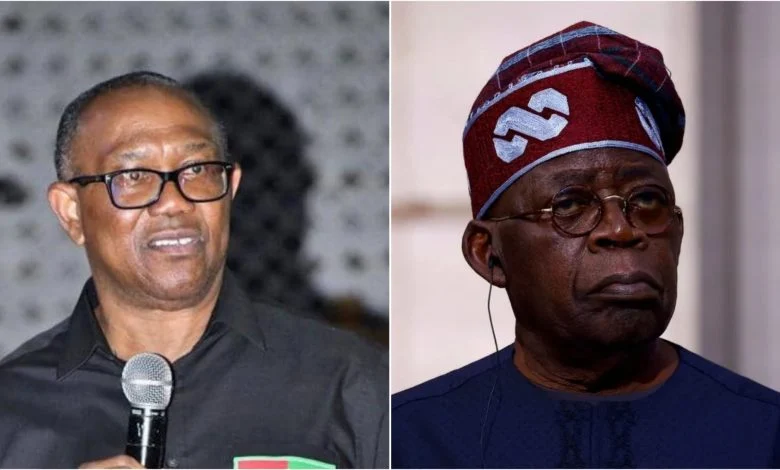
Presidential candidate of the Nigeria Democratic Congress, Peter Obi, has explained why he says he will not insult or verbally attack President Bola Ahmed Tinubu despite their political differences ahead of the 2027 presidential election.
Obi said his approach to politics is to focus on policies, governance and the performance of public officials rather than resorting to personal attacks.
The former Anambra State governor made the remarks while speaking at the 2026 All Nigeria Editors’ Conference in Enugu, where discussions centred on the role of the media, elections and the responsibility of citizens and political leaders in sustaining democracy.
Obi said he respects Tinubu because he occupies the office of President of Nigeria, stressing that respect for the office does not mean he cannot disagree with decisions taken by the administration.
He maintained that politicians can strongly challenge one another’s policies without turning political disagreements into personal insults.
According to his position, criticism should be directed at what a government does or fails to do, rather than at the individual occupying the office.
Obi said he has never made a practice of verbally attacking governors or other government officials and does not intend to change that approach because of the political contest ahead of 2027.
He argued that there is a distinction between respecting a public office holder and accepting everything done by the government.
For him, political accountability requires citizens and political opponents to examine government decisions, question policies and point out areas where they believe the administration is not performing adequately.
The former governor said such disagreements are legitimate in a democracy and should not automatically be interpreted as disrespect.
He also urged the media to examine political leaders based on their records, public statements and qualifications.
Obi argued that leaders have an influence on the values of society and should therefore understand that their conduct is constantly being observed by citizens.
He said political leaders have a responsibility to demonstrate the standards they expect from the people they govern.
His comments come as political activities intensify ahead of the 2027 presidential election, with Tinubu seeking another term and several opposition figures preparing to challenge the ruling political structure.
Obi’s decision to emphasise issue-based politics comes amid growing exchanges between political parties and their supporters as the election draws closer.
The former Anambra governor has continued to criticise the federal government’s handling of several national issues, including the economy, insecurity, poverty, healthcare, education and the cost of governance.
However, he has maintained that challenging the administration on these issues does not require personal attacks against the President.
The position also reflects Obi’s broader argument that the 2027 election should be centred on the problems facing ordinary Nigerians rather than personality-driven campaigns.
He has repeatedly called for political debates to focus on measurable outcomes and the ability of candidates to provide solutions to national challenges.
In recent remarks on electoral reform, Obi also said anyone who manipulates elections under an administration led by him would face severe consequences.
He has argued that credible elections require strong institutions, protection of votes and accountability for anyone who attempts to undermine the electoral process.
At the same time, he has said opposition political parties should be allowed to operate freely and participate in national discussions without intimidation.
The contrast between these positions is important to Obi’s political message: while he intends to challenge the policies and performance of the current administration, he says he does not believe such criticism should become personal.
His latest comments also come after previous public statements in which he strongly criticised Tinubu’s performance in office.
In July, Obi called on Tinubu to step aside ahead of the 2027 election, arguing that Nigeria required a different approach to its economic and security challenges.
He also said the 2027 campaign should focus on issues such as poverty, hunger, unemployment, insecurity, education and healthcare.
The latest remarks suggest that Obi sees a distinction between strong political opposition and personal hostility.
His argument is that political competition can remain intense while candidates maintain basic respect for one another and for the institutions they seek to control.
The issue has become increasingly relevant as political discussions on social media become more confrontational, with supporters of different parties frequently engaging in personal attacks.
Political observers have often raised concerns about the effect of inflammatory campaign language on national unity, particularly in a country where political disagreements can intersect with ethnic, religious and regional identities.
Obi’s call for issue-based campaigning places greater emphasis on policy discussions and public records.
Under such an approach, candidates would be expected to explain how they intend to address Nigeria’s economic difficulties, improve security, create jobs, strengthen public services and manage government resources.
They would also be expected to defend their own records while responding to criticism from opponents.
For voters, the approach could shift attention away from insults and towards the practical differences between the programmes being offered by competing candidates.
The 2027 election is expected to feature intense competition as political parties attempt to build alliances and expand their support across Nigeria’s regions.
Obi’s political movement has remained particularly prominent among supporters who believe that the election should be fought around governance and development issues.
Tinubu’s administration, meanwhile, continues to defend its policies and economic reforms, while supporters of the government argue that the measures being implemented are intended to address long-standing structural problems.
The political contest is therefore likely to produce sharp disagreements over the economy, security, infrastructure, taxation, education and other national priorities.
Obi’s latest comments do not suggest that he intends to reduce his criticism of government policies. Rather, he is drawing a line between criticism of decisions and personal attacks against those making them.
He said public officials should be questioned when they make decisions that affect citizens, but such questioning can be carried out without abusing or insulting them.
His message also places responsibility on the media to scrutinise all political actors, regardless of party affiliation.
He urged editors and journalists to examine what politicians say and do, compare their records and qualifications and provide citizens with information they can use when making electoral decisions.
As the 2027 election approaches, the quality of political debate is expected to remain an important issue.
Whether campaigns will largely focus on policies and records or become dominated by personal attacks will depend on the conduct of candidates, political parties, supporters and the media.
For Obi, however, his stated position is clear: he intends to challenge Tinubu and other political leaders on issues of governance and performance, but says he will not make personal abuse part of his political strategy.
His remarks have added another dimension to the developing 2027 campaign, where political differences are already becoming increasingly visible but where candidates are also being urged to present clear programmes for addressing the country’s challenges.
The election remains ahead, and Nigerians will ultimately assess the competing candidates, their records, promises and proposed policies before making their choices at the polls.