

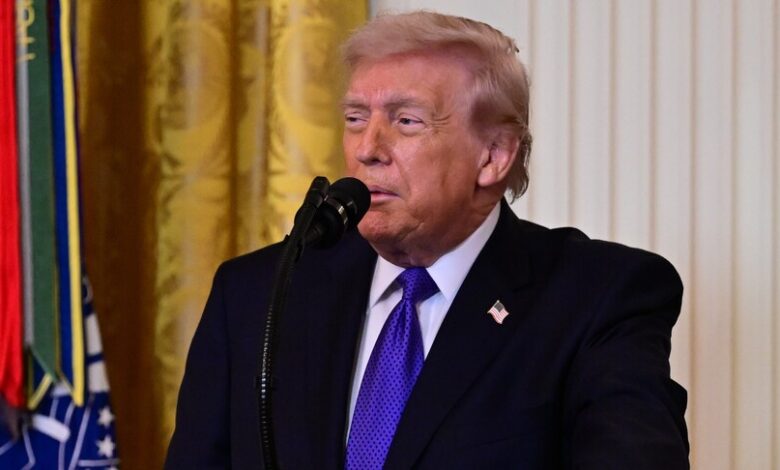
U.S. President Donald Trump has nominated Jay Clayton, the former Chairman of the U.S. Securities and Exchange Commission (SEC), as his pick for Director of National Intelligence (DNI), in a move that has already sparked political debate in Washington.
The announcement, made on June 11, 2026, reportedly came as Trump continues to shape his national security and intelligence team ahead of what sources describe as a critical period in U.S. domestic and global policy positioning.
Clayton, a former corporate lawyer and Wall Street figure, previously served as SEC Chairman from 2017 to 2020, where he oversaw major regulatory actions involving financial markets, corporate disclosures, and enforcement reforms. His nomination to a top intelligence post has therefore drawn attention due to his background being rooted in finance rather than intelligence or military service.
According to political observers in Washington, the selection reflects Trump’s preference for appointing individuals with strong legal and executive management experience, even when outside traditional intelligence circles. Supporters of the move argue that Clayton’s regulatory background demonstrates discipline, analytical capability, and experience handling complex national systems.
However, critics have questioned whether Clayton’s lack of direct intelligence community experience could pose challenges in overseeing the Office of the Director of National Intelligence, which coordinates the activities of multiple agencies including the CIA, NSA, and FBI intelligence divisions.
Reports from Capitol Hill indicate that Trump has urged the U.S. Senate to move quickly in reviewing and confirming the nomination, emphasizing what his team describes as the need for strong leadership in national intelligence coordination amid evolving global security threats.
The nomination has already triggered early reactions from lawmakers in both parties. Some Republican allies have expressed confidence in Clayton’s leadership abilities, citing his previous government service and legal expertise. Meanwhile, several Democratic lawmakers have called for a thorough confirmation process, arguing that the role requires extensive intelligence and national security experience.
Clayton’s appointment, if confirmed, would place him at the center of U.S. intelligence operations, responsible for overseeing intelligence sharing, threat assessment coordination, and advising the president on matters of national security.
Political analysts note that the nomination comes at a time of heightened global tensions, with ongoing discussions around cybersecurity threats, geopolitical rivalries, and intelligence reform in the United States.
As the confirmation process awaits Senate deliberation, attention is expected to focus on hearings that will likely examine Clayton’s qualifications, decision-making record at the SEC, and his approach to managing the complex structure of the U.S. intelligence community.
For now, the nomination stands as one of the latest high-profile political developments in Washington, setting the stage for what is expected to be a closely watched confirmation battle in the coming weeks.
Following the announcement of Jay Clayton’s nomination as the next Director of National Intelligence (DNI), political activity in Washington has intensified as the administration moves to fast-track key national security appointments.
President Donald Trump, in his statement on June 12, 2026, urged the U.S. Senate to begin prompt consideration of Clayton’s nomination, describing the role as critical to strengthening coordination across America’s intelligence agencies at a time of evolving global security challenges.
Clayton’s nomination has sparked immediate debate across political and security circles, largely due to his background as a former Securities and Exchange Commission (SEC) chairman rather than a traditional intelligence official. His previous tenure at the SEC, where he oversaw financial regulation and corporate compliance frameworks, is now being closely examined as lawmakers assess his suitability for one of the most sensitive national security positions in the United States.
Inside the White House, officials have defended the choice, arguing that Clayton’s leadership experience in managing complex regulatory systems demonstrates the administrative discipline required to oversee the Office of the Director of National Intelligence, which coordinates multiple intelligence agencies including the CIA, NSA, and other federal security bodies.
However, the nomination has also drawn scrutiny from critics who argue that the intelligence community requires deep operational experience in national security, counterterrorism, and classified intelligence analysis. Some lawmakers have called for a rigorous confirmation process, stressing that the position demands both strategic judgment and direct familiarity with intelligence operations.
Senate leaders are expected to schedule hearings in the coming weeks, where Clayton will be questioned on issues including cybersecurity threats, foreign intelligence cooperation, and internal intelligence reforms. The hearings are anticipated to draw significant public and political attention given the importance of the role.
Supporters of the nomination within the Republican establishment have praised the decision, describing Clayton as a capable administrator with a record of enforcing accountability and modernizing regulatory systems. They argue that his legal and institutional experience could bring a fresh perspective to the intelligence community.
Opponents, however, remain cautious, insisting that leadership of the nation’s intelligence apparatus should be reserved for individuals with extensive national security or intelligence backgrounds.
As the confirmation process unfolds, attention is expected to remain focused on how Clayton navigates Senate scrutiny and outlines his approach to managing intelligence coordination at a time of increasing global instability.
For now, the nomination stands as one of the most closely watched political developments in Washington, with implications that could shape the structure and direction of U.S. intelligence operations in the years ahead.