

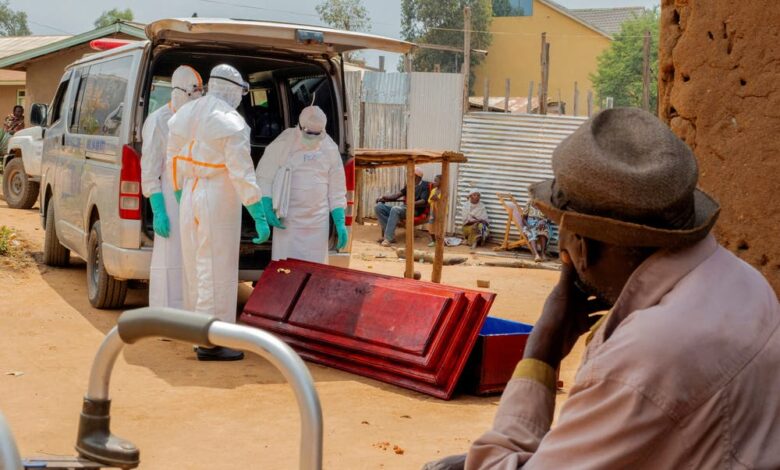
The Government of Uganda has officially declared the country free of Ebola, marking the successful end of its latest outbreak after health authorities confirmed that no new infections had been recorded within the required monitoring period.
The announcement comes as neighbouring Democratic Republic of Congo (DR Congo) continues to battle a severe Ebola outbreak, where the number of reported deaths has risen to approximately 1,400, highlighting the stark contrast in the public health situations facing the two neighbouring countries.
Uganda’s Ministry of Health made the declaration after completing the mandatory surveillance period recommended by international health experts following the discharge or recovery of the last confirmed Ebola patient.
Health officials stated that extensive contact tracing, laboratory testing, public awareness campaigns and community surveillance played a major role in successfully containing the outbreak before it spread further.
The ministry praised healthcare workers, emergency responders, scientists, local leaders and community volunteers for their coordinated efforts, noting that rapid intervention helped prevent widespread transmission of the deadly virus.
Officials also acknowledged the support provided by international health partners, including the World Health Organization (WHO) and other humanitarian organisations, which assisted with surveillance, technical expertise and emergency response measures.
Despite celebrating the country’s Ebola-free status, Ugandan authorities warned that the threat has not completely disappeared because of the ongoing outbreak in neighbouring DR Congo.
Health officials announced that surveillance at border crossings, airports and other entry points would remain active to reduce the risk of importing new cases.
Travellers arriving from high-risk areas are expected to continue undergoing health screening as part of preventive measures designed to protect the country from future outbreaks.
Meanwhile, the situation in DR Congo remains a major concern for public health authorities.
According to health officials monitoring the outbreak, approximately 1,400 people have lost their lives since the disease resurfaced, making it one of the deadliest Ebola outbreaks recorded in recent years.
Medical teams in affected provinces continue battling the virus despite significant logistical and security challenges that have complicated response efforts.
Humanitarian organisations operating in the region say ongoing conflict, population displacement and limited access to healthcare facilities have made disease control significantly more difficult.
Health experts have also reported that misinformation, fear and attacks on healthcare workers have occasionally disrupted vaccination campaigns and community surveillance activities.
The World Health Organization has repeatedly called for increased international support to strengthen response efforts in DR Congo and prevent the virus from spreading across borders.
Ebola is a highly infectious viral disease that spreads through direct contact with the bodily fluids of infected individuals or contaminated materials.
Symptoms often include fever, severe weakness, muscle pain, vomiting, diarrhoea and, in severe cases, internal and external bleeding.
Although the disease can be fatal, early diagnosis, supportive medical treatment and effective public health interventions significantly improve survival rates and reduce transmission.
Public health experts have praised Uganda’s response, describing it as an example of how early detection, rapid isolation of patients, aggressive contact tracing and public cooperation can successfully interrupt the spread of infectious diseases.
However, they cautioned that continued vigilance remains essential given the proximity of the ongoing outbreak in DR Congo.
Authorities have encouraged citizens to continue practising good hygiene, promptly report suspected cases and cooperate with health officials should any future alerts arise.
The Ugandan government also reaffirmed its commitment to maintaining strong disease surveillance systems capable of responding quickly to future public health threats.
As Uganda celebrates a major public health achievement, the worsening humanitarian situation in DR Congo serves as a reminder that the fight against Ebola is far from over.
Health organisations continue appealing for greater international cooperation, increased funding and stronger regional partnerships to contain the outbreak and prevent further loss of life across Central and East Africa.