
Army, DSS, Vigilantes Kill 24 Bandits, Foil Mass Kidnap in Katsina Community, Rescue Victims

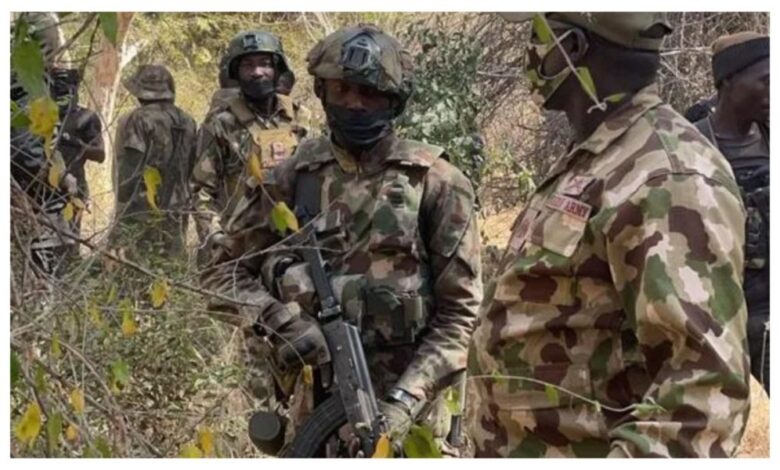
Security forces have recorded a major breakthrough in the fight against banditry in Katsina State after a coordinated operation involving Nigerian Army troops, operatives of the Department of State Services and local vigilantes reportedly disrupted an attempted mass kidnapping and neutralised 24 suspected bandits.
The operation also led to the rescue of kidnapped victims, as security personnel moved against the armed group before the criminals could carry out what was believed to be a larger abduction operation.
The development is significant for Katsina, one of the North-West states that has continued to experience attacks by armed criminal groups, particularly in rural communities and areas close to forests used as hideouts by bandits.
The latest operation demonstrates the increasing reliance on joint security operations involving the military, intelligence agencies and community-based security groups.
According to details surrounding the operation, security personnel received intelligence concerning the activities and movements of the suspected bandits in the affected area.
The information reportedly prompted security forces to mobilise and move towards the location where the criminals were operating.
The operation eventually resulted in an armed confrontation between the security personnel and the bandits.
During the encounter, 24 suspected members of the criminal group were reportedly killed, while others fled into surrounding areas.
The security forces also succeeded in rescuing victims who were in the custody of the attackers.
The operation prevented the criminals from carrying out an alleged mass kidnapping, potentially saving a large number of residents from being taken into captivity.
Mass abductions have become one of the most serious security concerns confronting communities across Nigeria’s North-West.
Criminal groups operating in the region have increasingly targeted villages, farmers, travellers and other vulnerable residents.
In many cases, the attackers arrive in large numbers, overpower local residents and take their victims into forests or remote locations.
Families are subsequently subjected to pressure to raise money for ransom, while victims can spend days, weeks or even months in captivity.
The security operation in Katsina therefore represents an important intervention because it reportedly disrupted the criminals before they could achieve their objective.
The involvement of intelligence operatives was also crucial.
Unlike conventional military operations, intelligence-led security operations depend heavily on information about the location, movements and activities of criminal groups.
The DSS is responsible for gathering and analysing intelligence relating to threats to national security, while the military provides the manpower and firepower required for combat operations.
Local vigilantes can also provide valuable information because they are familiar with the communities, forests, roads and routes used by criminals.
Their knowledge of the local terrain can help security forces navigate areas that may be difficult for personnel unfamiliar with the environment.
The collaboration between these groups was therefore important to the success of the operation.
Katsina has remained particularly vulnerable to bandit attacks because of its extensive rural areas and proximity to forests that have been used as operational bases by criminal groups.
Several local government areas have experienced attacks, kidnappings, cattle rustling and other forms of criminal activity.
The security crisis has affected the livelihoods of thousands of residents, particularly farmers who depend on access to rural areas for their daily activities.
Fear of attacks can force farmers to abandon their farms or restrict the hours during which they work.
This can have consequences for food production and the wider economy.
For families whose relatives were among those rescued, the operation represents a major relief.
Kidnap victims often endure harsh conditions while in captivity, and their families are left uncertain about their safety.
The return of the victims means that affected families can begin the process of recovering from the ordeal.
Security authorities are expected to continue gathering information from the rescued victims to better understand the structure and activities of the criminal group.
Those rescued may provide important information about the identity of their captors, the locations of hideouts, the number of people operating in the group and the weapons being used.
Such intelligence could assist security agencies in tracking down bandits who escaped during the operation.
The surviving members of the group could also attempt to regroup or move to neighbouring communities.
Security agencies will therefore need to maintain pressure on the criminals and prevent them from reorganising.
There may also be concerns about possible retaliation.
Criminal groups sometimes target communities following successful security operations, particularly when they believe residents provided information that led to the intervention.
Authorities may consequently need to strengthen patrols around the affected community and surrounding settlements.
The operation also underscores the importance of early intelligence in the fight against kidnapping.
Many attacks become difficult to stop once criminals have successfully entered a community and taken hostages.
Preventing an attack before it happens is therefore considered more effective than attempting to rescue victims after they have been transported deep into a forest.
The latest operation demonstrates the value of acting quickly when credible information about criminal movements is received.
It also highlights the importance of cooperation between residents and security agencies.
Communities affected by banditry often have information about suspicious movements and individuals but may hesitate to share it because of fears of retaliation.
Building trust between residents and security forces is therefore essential.
Residents need to be confident that information they provide will be treated confidentially and that authorities will protect them from possible reprisals.
At the same time, security agencies must ensure that intelligence received from communities is properly assessed before action is taken.
The success of the Katsina operation could encourage further cooperation between security agencies and community-based security groups.
However, the reported killing of 24 bandits does not mean that the wider security challenge has been eliminated.
Bandit groups operating across the North-West are often loosely organised and can regroup after losing members.
Some criminals may also move from one state to another in response to military pressure.
This makes sustained security operations necessary.
Katsina shares borders with several areas affected by banditry, meaning criminals can potentially move across state boundaries to evade security forces.
A coordinated regional approach is therefore necessary if authorities are to achieve lasting results.
Security agencies will need to maintain operations not only in Katsina but also in neighbouring areas where criminal networks may have established camps.
The military’s continued presence in affected communities can also help restore confidence among residents.
For farmers and traders, the ultimate sign of improved security will be the ability to return to normal economic activities without fear.
People want to travel freely, attend markets, cultivate their farms and remain in their communities without worrying about being attacked or abducted.
The latest operation is a positive development in that direction.
By reportedly eliminating 24 suspected bandits and preventing a planned mass abduction, security forces have disrupted the activities of a criminal group and rescued people who could otherwise have remained in captivity.
The operation also demonstrates the importance of combining military action with intelligence and local participation.
While firepower is important in confronting armed groups, intelligence determines where and when security forces should strike.
Local knowledge, meanwhile, can make it easier for security personnel to navigate difficult terrain and identify areas where criminals may be hiding.
The combination of these factors can significantly improve the effectiveness of security operations.
Authorities will now be expected to build on the success recorded in Katsina.
Rather than treating the operation as an isolated victory, security agencies will need to use the information gathered to identify other criminal networks operating in the area.
They will also need to monitor the movements of bandits who escaped during the confrontation.
The rescued victims could provide valuable information that may help investigators understand how the criminal organisation operates.
The identities of the suspected bandits killed during the operation and further details about the rescued victims may also emerge as authorities complete their assessment.
For residents, the immediate priority is maintaining peace and preventing another attack.
Community leaders are likely to encourage residents to remain vigilant while cooperating with security agencies.
They may also call for increased patrols around vulnerable settlements and routes frequently used by criminals.
The incident once again highlights the difficult security environment facing parts of northern Nigeria.
Although significant progress has been made in several military operations, banditry and kidnapping remain persistent threats that require continuous attention.
The latest Katsina operation shows that coordinated action can prevent major attacks and save lives.
It also reinforces the need for security agencies to continue strengthening intelligence gathering, rapid response capabilities and cooperation with local communities.
For the victims who regained their freedom, the operation has brought an end to a frightening experience.
For the affected community, it provides temporary relief and renewed hope that security forces can protect residents from armed criminal groups.
The challenge now is to ensure that the gains are sustained.
Security forces will have to remain present, monitor the surrounding areas and prevent the remaining members of the criminal network from regrouping.
If the operation is followed by sustained intelligence-led patrols and stronger community cooperation, it could contribute to improving security in the affected area and surrounding communities.
For now, the reported neutralisation of 24 suspected bandits, the foiling of an alleged mass kidnapping attempt and the rescue of victims represent a significant security development in Katsina State.
The operation has demonstrated what can be achieved when military forces, intelligence personnel and local security groups work together against criminal networks.