Atiku Urges Tinubu to Cut Petrol and Diesel Prices, Calls for Oil Sector Intervention

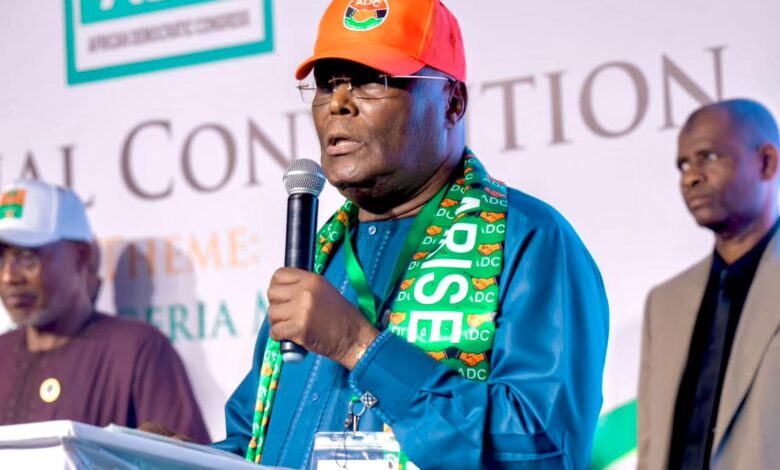
Former Vice-President Atiku Abubakar has appealed to President Bola Ahmed Tinubu to intervene in Nigeria’s oil and gas sector and take steps to reduce the prices of petrol and diesel, arguing that the rising cost of energy is putting increasing pressure on households, workers and businesses.
Atiku made the call while addressing a press conference in Abuja, where he spoke extensively about fuel prices, electricity costs, government intervention and the wider impact of energy expenses on the Nigerian economy.
The presidential candidate of the African Democratic Congress said the continued increase in the cost of petrol has affected almost every area of economic activity, arguing that higher fuel prices eventually translate into more expensive transportation, food, logistics and household necessities.
He said the impact is particularly severe for families whose incomes have not increased at the same pace as the cost of living.
According to Atiku’s argument, the consequences of expensive petrol extend far beyond the filling station. Higher transportation costs affect farmers moving agricultural produce, traders transporting goods, workers commuting to their jobs and businesses that rely on vehicles and generators.
He therefore urged the Federal Government to reconsider its approach to fuel pricing and explore measures capable of reducing the burden on consumers.
Atiku said government intervention should not be viewed solely through the lens of subsidy removal or restoration but should instead be assessed based on whether Nigerians are able to afford essential goods and services.
He argued that economic reforms should ultimately improve the purchasing power of ordinary citizens.
The former vice-president also revisited his previous calls for government intervention in the petroleum sector.
He said he had earlier proposed measures aimed at reducing petrol prices but that the proposal had been criticised by President Tinubu.
Atiku now believes developments in the economy have strengthened the case for some form of intervention, pointing to concerns raised by workers, petroleum marketers, manufacturers and households over the rising cost of energy.
He urged the president not to reject an economic proposal simply because it originated from a political opponent.
Atiku said the central issue should be whether a policy can provide relief for Nigerians rather than who initially proposed it.
He called on the president to use the remaining months of his administration to implement measures that could reduce the financial burden on citizens.
He argued that Nigerians should not have to wait for a change of government before benefiting from policies capable of reducing fuel and energy costs.
The ADC presidential candidate also criticised the continued reliance on palliatives as a response to economic hardship.
He argued that emergency assistance such as food distribution and cash transfers could provide temporary relief but cannot permanently address the underlying causes of rising living costs.
According to his position, a government should focus on policies that reduce the cost of producing and transporting goods rather than repeatedly providing temporary assistance after prices have already risen.
He maintained that if transportation remains expensive, the cost of food and other essential commodities will continue to rise, regardless of the amount of palliatives distributed.
Atiku also linked the fuel crisis to the wider issue of electricity costs.
He expressed concern about reports that electricity subsidies could be phased out from 2027, arguing that Nigerians are already struggling with high electricity expenses.
He said households and small businesses are increasingly forced to carefully manage their electricity consumption because of the cost of power.
Manufacturers, he added, face additional expenses because they often have to combine electricity from the national grid with diesel generators and other alternative sources.
He warned that increasing energy costs could further affect production and make Nigerian goods more expensive.
The former vice-president argued that the experience of petrol subsidy removal should provide lessons for future decisions concerning electricity.
He urged the government to consider the consequences of policy changes before implementing measures that could further increase the cost of living.
Atiku said the government should avoid imposing additional costs on citizens first and then attempting to manage the resulting hardship through palliatives.
He maintained that the focus should instead be on policies that address the underlying problems.
The former vice-president has also proposed his own approach to fuel pricing if he wins the 2027 presidential election.
He said an Atiku administration would introduce a transparent production subsidy targeted at petroleum products refined in Nigeria and sold to Nigerian consumers.
The proposal would differ from the previous system of subsidising imported petrol, as Atiku said government support would instead be linked to domestic production.
Under the proposed arrangement, only petroleum products refined within Nigeria would qualify for the intervention.
Imported petroleum products would not be eligible, according to the proposal.
Atiku has explained the idea using the example of government support for domestic agricultural processing.
He argued that if government helps reduce the production cost of a Nigerian rice miller, the lower cost could make rice more affordable to consumers while allowing the producer to expand operations, purchase more from farmers and employ additional workers.
He said the same principle could be applied to domestic petroleum refining.
The proposal would involve reducing the cost of crude feedstock supplied to qualifying Nigerian refineries through a transparent and capped mechanism.
Atiku has said the purpose would be to reduce production costs and allow some of the savings to reach consumers without forcing refineries to sell their products below legitimate operating costs.
He also proposed safeguards around the programme, including a fixed spending limit, approval by the National Assembly and independent audits.
The former vice-president has stressed that the intervention should be transparent and subject to public accountability.
His proposal comes amid continuing debate over the future of Nigeria’s petroleum pricing system and the role government should play in determining or influencing pump prices.
The Tinubu administration removed the petrol subsidy in May 2023 as part of its broader economic reform programme.
The policy significantly changed the structure of fuel pricing in Nigeria and was followed by a sharp increase in petrol prices, with subsequent fluctuations influenced by factors including crude oil prices, exchange rates, refining and distribution costs.
The government has defended the reform as necessary for reducing the financial burden of petrol subsidies on public finances.
Critics, including Atiku, have argued that the social and economic consequences of the policy have been too severe and that government should consider targeted interventions to reduce the pressure on Nigerians.
The disagreement has become an important issue in the political debate ahead of the 2027 presidential election.
Atiku’s latest comments therefore combine an immediate appeal to the Tinubu administration with a presentation of his own proposed approach should he become president.
He said his interest in the matter goes beyond electoral competition, arguing that political opponents should still be willing to support policies that improve the welfare of citizens.
Atiku said he was prepared to provide policy ideas or technical input to the current administration if such assistance would help reduce the cost of living.
He maintained that political competition should not prevent leaders from supporting measures that could benefit Nigerians.
The former vice-president also argued that headline economic indicators do not always reflect the financial realities experienced by ordinary households.
He said increases in government revenue or GDP growth would mean little to citizens if their incomes could buy fewer essential goods and services.
In his view, the effectiveness of an economic policy should ultimately be measured by whether it improves living standards and purchasing power.
He also criticised the situation in which manufacturers have goods available but struggle to sell them because consumers lack sufficient purchasing power.
According to his argument, economic growth should translate into stronger demand, increased production and more employment.
Atiku believes that reducing energy costs would help businesses lower operating expenses and potentially make their products more affordable.
Lower production and transportation costs, he argued, could also improve economic activity by allowing businesses to expand and employ more workers.
The debate over fuel prices is expected to remain prominent as the country moves towards the 2027 election.
With Atiku now campaigning on a platform that includes domestic production subsidies, the proposal is likely to become part of the wider discussion over whether Nigeria should maintain its current market-oriented approach to petroleum pricing or introduce targeted government support.
The Tinubu administration and its supporters have previously defended the removal of the petrol subsidy and criticised proposals to restore broad subsidies, arguing that such interventions can place a heavy burden on government finances.
Atiku’s position is different. He argues that a carefully designed intervention focused on domestic refining could lower costs while supporting Nigerian refineries and reducing dependence on imported petroleum products.
The two positions reflect a broader disagreement over how Nigeria should balance fiscal discipline, market forces, domestic production and consumer protection.
For Nigerians dealing with high transportation and energy costs, however, the immediate concern remains affordability.
Fuel prices affect the cost of moving people and goods, while diesel remains important to businesses that depend on generators and other private power sources.
Any significant change in petroleum pricing therefore has the potential to affect the wider economy.
Atiku’s latest appeal places the issue firmly back at the centre of the national political conversation.
He has asked Tinubu to consider immediate measures that could bring down petrol and diesel prices while also warning against further increases in electricity costs.
Whether the Federal Government adopts any of the proposals remains a matter for the administration, while Atiku’s alternative production-subsidy model is now part of his political platform for 2027.
As the election approaches, Nigerians are likely to hear competing proposals from presidential candidates on how to manage fuel prices, domestic refining, electricity costs and the broader cost-of-living crisis.
For Atiku, the immediate priority is straightforward: reduce the energy burden on Nigerians and ensure that economic growth is reflected in what households can actually afford.