

Troops of Operation Fansan Yamma have rescued 10 people who were reportedly abducted by armed terrorists in Katsina State after launching a rapid operation to track down their captors.
The victims were rescued on September 15 following reports of an abduction involving residents of Unguwan Daudu and Unguwan Chibauna communities in Funtua Local Government Area of the state.
The operation was launched after troops received information about the abduction and immediately moved to intercept the fleeing attackers and prevent them from taking the victims farther into the bush.
According to the military’s operational account, troops mounted a sustained pursuit of the terrorists as they attempted to escape with the abducted civilians.
The pressure from the advancing troops reportedly forced the attackers to abandon their captives and flee into the surrounding area.
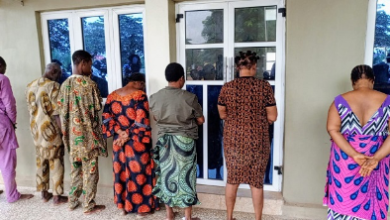
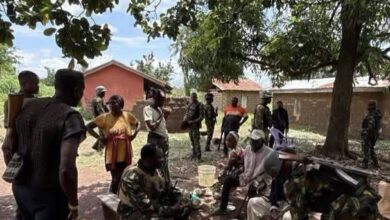
The 10 victims were subsequently recovered safely by the soldiers.
The rescued group comprised three adult males, six females and an infant, highlighting the vulnerability of civilians, including women and children, during attacks on communities in the region.
The victims were taken into military custody following the rescue operation for necessary assistance and further processing before being returned to their families.
The operation was carried out by troops of Sector 2 under Operation Fansan Yamma, the military formation responsible for counter-terrorism and anti-banditry operations across parts of the North-West.
The successful rescue came amid continuing military operations aimed at disrupting armed groups operating in Katsina and neighbouring states.
Security forces have increasingly relied on rapid responses to distress calls and intelligence reports to intercept kidnappers before they can move captives to remote locations.
The Katsina operation demonstrated how timely information can assist troops in locating abducted persons and putting pressure on their captors.
Rather than allowing the terrorists to move the victims deeper into inaccessible areas, the troops reportedly engaged in an immediate pursuit that eventually resulted in the captives being abandoned.
The rescue also occurred against the backdrop of wider military operations in Katsina and Kebbi states.
In a separate operation in Kebbi on September 14, troops rescued another 21 kidnapped victims following an attack in Fafala Village, Kangiwa Local Government Area.
The military said troops acting on intelligence moved towards Fafala and Dandikwa, where they encountered the terrorists and engaged them in a gun battle.
The attackers reportedly withdrew from the area after coming under pressure, allowing troops to conduct further searches that led to the rescue of the 21 victims.
The victims were subsequently reunited with their families.
The combined operations in Katsina and Kebbi brought the number of rescued kidnapping victims to 31 within the two-day period.
The military also reported further action against suspected terrorists in Katsina.
On September 15, troops reportedly moved against a suspected terrorist hideout following intelligence about plans to attack communities in Matazu and Kankara local government areas.
A confrontation followed, during which the military reported that two terrorists were neutralised.
One of those killed was identified by the military as Abbah Alhassan, described as a known terrorist kingpin.
Other members of the group reportedly escaped into the surrounding bush.
Troops subsequently recovered ammunition, a motorcycle, a cutlass and camouflage clothing, among other items, from the area.
In another operation in Katsina, two suspected terrorists were arrested around the Yantumaki general area of Dan Musa Local Government Area.
Preliminary interrogation reportedly indicated that the suspects were associated with a suspected terrorist kingpin identified as Mannori.
The two suspects remain in custody while investigations continue.
The latest operations illustrate the scale of the security challenge confronting communities across the North-West, where kidnappers and armed groups have continued to target rural settlements and vulnerable civilians.
Katsina has experienced repeated incidents involving abductions, attacks on communities and attempts by criminal groups to establish influence in remote areas.
The security situation has placed additional pressure on residents, particularly those living in communities located far from major towns and security formations.
Farmers and other rural workers can be especially vulnerable because their livelihoods often require them to travel through isolated areas where security presence may be limited.
Kidnapping also has wider consequences beyond the immediate victims.
Families can face financial pressure when criminals demand ransom, while fear of abduction can discourage people from travelling, farming or carrying out normal commercial activities.
The continued military operations are therefore aimed not only at rescuing people who have already been kidnapped but also at disrupting the networks responsible for organising attacks and kidnappings.
The authorities have continued to encourage residents to provide timely information about suspicious movements and activities.
The military has stressed that cooperation from local communities can improve the ability of security personnel to respond quickly when attacks occur.
In the latest Katsina operation, the information received about the abduction enabled troops to begin the pursuit before the attackers could move the victims beyond the immediate area.
For the rescued families, the safe recovery of their relatives provides relief after what was likely a traumatic period in captivity.
The presence of an infant among the rescued victims also highlights the potential humanitarian consequences of kidnapping operations.
Women and children caught in such attacks can face particularly difficult conditions when taken away from their homes and communities.
The military has not provided details about how long the victims remained in captivity before they were rescued or whether any ransom was demanded.
It also did not disclose whether any of the terrorists involved in the abduction were arrested during the rescue operation.
The attackers reportedly fled as troops intensified the pursuit.
Investigations are expected to continue as authorities work to identify the individuals involved in the abduction and determine whether the same group has been connected to other attacks in the area.
The latest operation also forms part of broader efforts by Operation Fansan Yamma to restrict the movement of armed groups and prevent them from establishing permanent bases in communities across the North-West.
While the rescue of the 10 victims is a significant development for the affected families, the continuing attacks demonstrate that insecurity remains a major challenge in the region.
Authorities will need sustained operations, improved intelligence gathering and cooperation from residents to prevent similar incidents from recurring.
For now, the 10 rescued victims are safe following the military intervention, while security personnel continue efforts to track down the terrorists who reportedly fled during the operation.
The rescue has once again highlighted the importance of rapid military response in kidnapping cases, particularly when security forces receive information early enough to intercept attackers before they can disappear into remote terrain.