

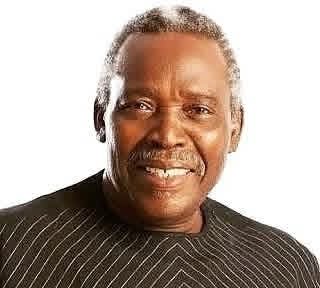
President Bola Ahmed Tinubu has expressed grief over the death of veteran Nigerian actor and film executive Oludotun Baiyewu Jacobs, popularly known as Olu Jacobs, who passed away at the age of 84.
The death of the celebrated actor was announced on Wednesday, September 16, 2026, by members of his family, bringing to an end the life of one of Nigeria’s most respected figures in theatre, television and film.
The family described Jacobs as “The Lion of Lufodo” while announcing his passing and appealed to the public, bloggers and social media users to respect the privacy of the family as they mourn their loss.
In his condolence message, Tinubu described Olu Jacobs as one of Nigeria’s most distinguished actors and a towering figure whose career extended across theatre, television and film both in Nigeria and internationally.
The President said Jacobs made significant contributions to the growth and professionalisation of Nigeria’s entertainment industry and inspired generations of actors and filmmakers through his talent, discipline and commitment to his profession.
Tinubu also praised the late actor’s ability to bring depth, dignity and authenticity to the characters he portrayed, qualities that helped establish him as a respected figure among audiences in Nigeria, Africa and beyond.
The President described Jacobs as a giant of Nigeria’s creative industry and said his death represented a major loss to the country, the African film industry and the wider global community of performing arts enthusiasts.
Tinubu also noted the broader contribution of Nigeria’s creative sector to the country’s cultural identity, international reputation and economic development, adding that Olu Jacobs played an important role in shaping that identity.
The President extended his condolences to Jacobs’ wife, veteran actress Joke Silva, their children, relatives, colleagues and the wider creative community.
He also prayed for the repose of the late actor’s soul and for comfort for those mourning his death.
Olu Jacobs’ career stretched across more than five decades and took him from British theatre and television to international cinema and eventually to the Nigerian film industry, where he became one of the defining faces of Nollywood.
Born on July 11, 1942, Jacobs developed an interest in acting at an early stage and eventually travelled to the United Kingdom, where he received formal training at the Royal Academy of Dramatic Art in London.
His training opened the door to a career in British theatre and television, where he appeared in a number of productions before returning to Nigeria and establishing himself as a major figure in the country’s entertainment industry.
His international experience contributed to the professional style and commanding screen presence that later became associated with his work in Nigerian productions.
Over the years, Jacobs appeared in numerous films, television productions and stage performances, portraying characters ranging from traditional rulers and political figures to businessmen, fathers, community leaders and other authoritative personalities.
His distinctive voice, commanding presence and ability to adapt to different roles made him one of the most recognisable actors of his generation.
Beyond his acting career, Jacobs was also involved in the development of the Nigerian film industry as a film executive and mentor to younger performers.
His long career coincided with the transformation of Nigeria’s movie industry from a largely informal production environment into a globally recognised entertainment sector.
As Nollywood expanded across Africa and gained international audiences, actors such as Jacobs became important representatives of Nigerian storytelling.
His performances helped introduce Nigerian audiences to complex characters and narratives while also contributing to the industry’s growing visibility outside the country.
The announcement of his death has generated widespread reactions across the entertainment industry, with actors, filmmakers and other public figures remembering him as a major influence.
Several younger actors have highlighted the role he played in encouraging and inspiring emerging talents throughout his career.
His death has also revived memories of his many performances and the distinctive characters that made him a household name among Nigerian audiences.
For many viewers, Jacobs represented an era of Nigerian acting in which performers were recognised not only for their popularity but also for their theatre training, professionalism and ability to command a scene.
His body of work extended beyond Nollywood, with his early career abroad giving him exposure to international production standards before he became firmly established as one of Nigeria’s leading actors.
Jacobs also received several honours and awards during his career, recognising his contribution to the performing arts.
He was conferred with the national honour of Member of the Order of the Federal Republic, reflecting the recognition he received for his contribution to Nigerian culture and entertainment.
His death comes after years during which false reports about his passing repeatedly circulated on social media.
Those reports had previously been denied by his family, with Joke Silva and other relatives repeatedly asking the public to disregard rumours about his condition.
The latest announcement, however, was officially made by his family, confirming that the veteran actor had died at 84.
The family has asked the public to allow them to grieve privately as they make arrangements to honour his life and legacy.
The loss has also generated renewed discussion about the importance of preserving the history of Nigeria’s entertainment industry and recognising the pioneers whose work helped establish the foundations on which today’s Nollywood operates.
Jacobs belonged to a generation of performers who worked across theatre, television and film at a time when Nigeria’s entertainment industry was still developing.
His transition between these different forms of performance demonstrated the versatility of actors of his generation and helped strengthen the connection between stage acting and screen performance in Nigeria.
His career also provided a bridge between Nigeria’s earlier theatre traditions and the modern film industry.
Through his performances, Jacobs became familiar to several generations of Nigerians, many of whom encountered his work through television dramas, Nigerian films and stage productions.
His influence extended beyond individual performances because his career demonstrated the possibilities available to actors who combined formal training with dedication to their craft.
For the Nigerian creative community, his passing represents the loss of an elder whose career covered a significant period in the development of the country’s entertainment industry.
For audiences, it marks the departure of a familiar face whose performances became part of the memories of generations of Nigerians.
Tinubu’s condolence message has therefore joined a growing wave of tributes from across the country and beyond as colleagues and admirers reflect on Jacobs’ contribution to the performing arts.
As preparations for his funeral and other memorial activities begin, attention is expected to focus on the legacy he leaves behind through his films, theatre performances, mentorship and contribution to the development of Nigerian entertainment.
Olu Jacobs’ career demonstrated the lasting influence that a dedicated performer can have on a country’s cultural landscape.
More than simply appearing in films, he became part of the history of Nigerian theatre, television and cinema.
His passing closes a remarkable chapter in the story of Nigerian acting, but his performances and the influence he had on younger generations are expected to remain part of the country’s creative heritage for years to come.