

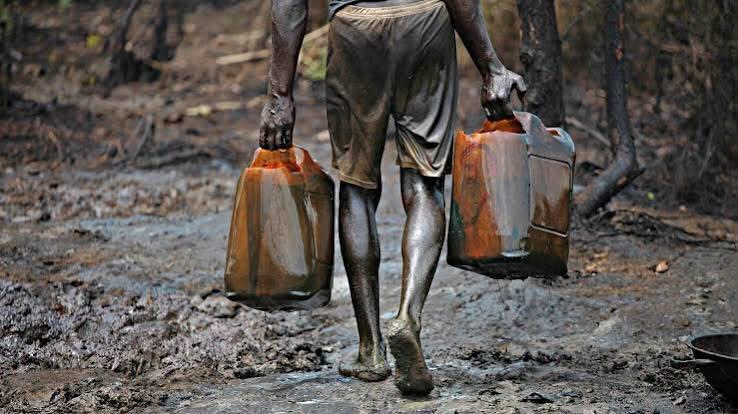
At least 37 people suspected of attempting to steal petroleum products have reportedly died after inhaling a dangerous substance during an incident at Okari Jetty in Okrika Local Government Area of Rivers State.
The incident occurred in the early hours of Thursday, September 3, when more than 100 people, mostly youths from Okrika and neighbouring communities, reportedly gathered around the jetty to siphon petroleum products from a pipeline connected to the region’s petroleum infrastructure.
The affected pipeline is understood to be involved in the transportation of petroleum products from the Indorama Eleme Petrochemical facility towards the Port Harcourt Refinery and vessels that regularly visit the area to load petroleum products for export.
According to accounts surrounding the incident, the youths arrived at the location with boats and began transferring the petroleum product into their containers.
The operation reportedly continued for some time before a strong and unusual smell suddenly spread across the area.
The fumes allegedly became overwhelming, causing several of the people at the scene to collapse.
Some of those affected reportedly fell into the river while others managed to escape from the immediate area.
The incident quickly turned into a major emergency as people who had initially gathered to siphon petroleum products began struggling for their lives.
At least 37 deaths have been reported, while several other people who survived the incident were taken to hospitals for urgent medical attention.
Some of the survivors are reportedly suffering from serious respiratory complications believed to be connected to inhaling the substance released around the location.
The exact substance responsible for the deaths has not yet been officially established.
Although the victims were reportedly attempting to siphon crude oil or petroleum products, authorities are expected to conduct further examinations to determine precisely what was released into the atmosphere and how it caused the sudden collapse of so many people.
The circumstances have also raised concerns about the dangers associated with illegal petroleum-product siphoning, particularly when people tamper with pipelines without knowledge of the pressure, contents or hazardous substances being transported.
Pipeline infrastructure can contain highly flammable and toxic materials, and any attempt to puncture or interfere with such facilities can create serious risks for people nearby.
In the Rivers State incident, the large number of people reportedly gathered at the location meant that the consequences were particularly severe when the fumes spread.
Witnesses described a chaotic situation as people began collapsing and others attempted to flee.
Some victims reportedly fell directly into the water, creating additional difficulties for those trying to rescue people from the scene.
The number of people who may have been present at the jetty has also raised concerns about the scale of the operation.
More than 100 individuals were reportedly around the area when the incident occurred.
The gathering was said to have included youths from Okrika and nearby communities who had travelled to the jetty with boats and containers.
The incident has once again highlighted the persistent problem of illegal oil activities in the Niger Delta, where petroleum infrastructure passes through communities and waterways.
Rivers State remains one of Nigeria’s major oil-producing areas and has extensive networks of pipelines, flow stations and other petroleum facilities.
The presence of these facilities has historically created opportunities for illegal oil theft and unauthorised tapping.
Criminal groups and individuals involved in such activities often target pipelines because petroleum products can be transferred into boats and transported through waterways.
However, the practice carries significant dangers.
People attempting to open pipelines may have little information about the material inside them or the pressure under which the product is being transported.
A sudden release can result in fire, explosions, toxic fumes or other potentially fatal consequences.
The Okrika incident demonstrates how quickly such an operation can become a mass-casualty event.
The situation is also expected to draw attention to the environmental consequences of illegal oil activities.
Repeated interference with pipelines can lead to oil spills that contaminate rivers, creeks, farmland and fishing grounds.
Communities that depend on waterways for fishing and other economic activities can suffer serious losses when petroleum products enter the environment.
In addition to the environmental damage, oil theft can create serious public-health risks.
People living close to affected facilities may be exposed to petroleum fumes or contaminated water.
The latest deaths add another tragic dimension to the wider problem.
Meanwhile, investigations have commenced to establish what happened at Okari Jetty and determine the precise circumstances surrounding the deaths.
Security personnel are expected to examine the location, identify the pipeline involved and determine how the group gained access to it.
Investigators may also seek to establish whether the incident was connected to a larger organised oil-theft network.
The identities of the deceased and those receiving treatment are also expected to be established as the investigation progresses.
Families in Okrika and surrounding communities are likely to face a difficult period as they attempt to determine whether their relatives were among those involved in the incident.
The loss of dozens of people in a single event has already created concern within the area.
Authorities are expected to continue monitoring the situation while efforts are made to prevent additional casualties.
Residents who may have been exposed to the fumes are also expected to receive medical attention where necessary, particularly those experiencing difficulty breathing, dizziness, unconsciousness or other symptoms.
The incident has further emphasised the importance of keeping people away from damaged or illegally accessed petroleum pipelines.
Emergency responders can face serious challenges when large numbers of people are exposed to hazardous substances at the same time.
The presence of boats and waterways around Okrika can make rescue efforts even more complicated.
Beyond the immediate emergency, the incident is likely to renew calls for stronger measures against pipeline vandalism and illegal oil theft across the Niger Delta.
Authorities have continued to battle the activities because of their impact on petroleum production, government revenue, the environment and community safety.
Illegal tapping of pipelines also creates additional security concerns because it can involve organised groups operating across several communities.
The Rivers State incident demonstrates that the consequences can extend far beyond the loss of petroleum products.
For those involved, what began as an attempt to siphon petroleum products reportedly ended in a mass tragedy.
At least 37 people are now dead, while several others remain hospitalised after inhaling the unidentified substance.
The full circumstances surrounding the incident will become clearer as investigators examine the pipeline, the substance released, the activities taking place at the jetty and the events that occurred immediately before the victims collapsed.
Until the investigation is completed, the exact cause of the deaths and the precise nature of the substance involved remain subject to official confirmation.
The tragedy has nevertheless raised fresh concerns about the human cost of illegal petroleum activities and the dangers faced by people who tamper with oil infrastructure.
As authorities continue their investigation, attention will remain focused on the surviving victims, the families of those who died and the need to prevent a similar incident from occurring again.