Donald Duke Questions Nigeria’s Democracy, Says Citizens Were Better Off Under Military Rule

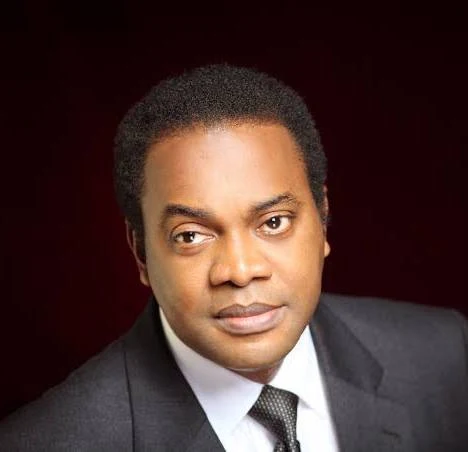
Former Cross River State Governor and Peoples Redemption Party presidential candidate Donald Duke has sparked a fresh political debate after arguing that Nigerians were better off under military rule than they have been during the years of civilian administration.
Duke made the controversial assessment while reflecting on Nigeria’s experience since the restoration of democratic government in 1999, questioning whether the country has delivered enough meaningful improvements in the lives of ordinary citizens to justify the enormous cost of running the present political system.
The former governor said democracy should not be judged simply by the existence of elections, political parties, legislatures and other institutions. In his view, the more important question is whether those institutions have translated into better living conditions, stronger public services, improved infrastructure and greater economic opportunities for Nigerians.
He argued that when the welfare of citizens is used as the main measure, Nigeria has struggled to demonstrate sufficient progress over the years.
Duke pointed to persistent problems in education, healthcare, electricity supply, unemployment and infrastructure as evidence of what he considers the failure of successive administrations to deliver meaningful democratic dividends.
He questioned whether Nigerians are genuinely better off today than they were when civilian government returned in 1999.
The former governor said many of the problems that existed before the return to democracy remain unresolved, while some have become more severe.
He specifically highlighted the continued difficulty with electricity supply and unemployment, arguing that the country has not developed a sufficiently structured strategy for solving challenges that have persisted for decades.
For Duke, Nigeria’s situation is particularly frustrating because he believes the country has enough human and material resources to address many of its problems.
He argued that the country should not regard its challenges as impossible to solve, pointing to the possibility of studying how other countries addressed similar problems and adapting successful approaches to Nigeria’s circumstances.
The former governor also questioned the cost of governance and argued that the resources consumed by Nigeria’s political system have not produced corresponding benefits for citizens.
His comparison with military rule was therefore largely centred on the cost and performance of government rather than an outright argument that military government is preferable in every respect.
Duke maintained that Nigerians should focus on what government actually delivers rather than simply celebrating the continuation of democratic institutions.
His remarks have come at a politically significant period as Nigeria moves closer to the 2027 general election.
As a presidential candidate, Duke’s assessment of the country’s democratic experience also serves as part of his broader political argument about the need for fundamental changes in governance.
He further criticised the state of political opposition in Nigeria, describing the opposition as weak and overly focused on individual interests.
According to his argument, a healthy democracy requires a strong opposition capable of challenging the government, scrutinising its decisions and presenting credible alternatives to voters.
He expressed concern that Nigeria’s political environment has increasingly left citizens disillusioned with the electoral process.
Duke argued that when people lose confidence in elections and believe their votes will not influence political outcomes, voter participation can decline and elected officials may become less accountable to the public.
He linked this situation to the wider crisis of confidence surrounding Nigeria’s political system.
The former governor also questioned the effectiveness of the institutions designed to provide checks and balances on executive authority.
He expressed concerns about the ability of the legislature and judiciary to independently perform their constitutional responsibilities.
Duke cited the rapid process through which the National Assembly approved the return of Nigeria’s former national anthem as an example of what he considered insufficient scrutiny of executive proposals.
His broader argument was that democratic institutions cannot be effective simply because they exist on paper.
For democracy to work, he said, lawmakers, judges, political parties and citizens must be willing to perform their responsibilities independently and hold those in power accountable.
Duke also expressed concern about the growing distance between Nigeria’s political elite and ordinary citizens.
He blamed part of the country’s governance crisis on the elite for allowing political leadership to become concentrated in the hands of a relatively small group of people.
He argued that politics should be treated as a means of public service rather than a permanent occupation.
According to his position, the continued dominance of the same political actors and networks has made it difficult for new ideas and fresh leadership to emerge.
The former governor also warned about the widening economic gap between wealthy Nigerians and those struggling to meet basic needs.
He suggested that increasing inequality could eventually create serious social instability if the conditions affecting poorer citizens are not addressed.
His comments reflect growing frustration among sections of the Nigerian population over the rising cost of living, unemployment, insecurity and difficulties accessing essential services.
The debate over whether Nigerians are better off under democracy than they were under military governments is not new.
Nigeria experienced several periods of military rule before the return to civilian government in 1999. The military administrations were characterised by centralised authority and limited democratic participation, while the current constitutional system provides for elected governments and institutions designed to protect citizens’ political rights.
Supporters of democracy argue that civilian rule provides Nigerians with greater political participation, constitutional freedoms, regular elections and the opportunity to change governments through the ballot box.
Critics such as Duke, however, argue that these institutional gains mean little if citizens continue to struggle with poverty, inadequate infrastructure, unemployment and insecurity.
His comments have therefore reopened a long-standing debate about whether Nigeria’s democracy has delivered the economic and social improvements that citizens expected when military rule ended.
Duke’s position does not necessarily mean that Nigerians should return to military government. Rather, his argument centres on the performance of the political system and whether the enormous resources spent on governance are producing adequate results.
The distinction is important because military rule itself has a complicated history in Nigeria, while democratic government remains the constitutional system under which the country operates.
The former governor’s remarks are likely to attract strong reactions, particularly because they come from a politician seeking the presidency in the 2027 election.
Supporters may view his comments as a blunt assessment of the failures of successive civilian administrations, while critics may argue that comparing military rule favourably with democracy overlooks the political restrictions and abuses associated with military governments.
The debate also raises a fundamental question about what Nigerians should expect from their elected leaders.
For Duke, the answer is measurable improvement in people’s lives.
That means reliable electricity, quality healthcare, functional schools, employment opportunities, adequate infrastructure, security and an economy that allows citizens to become productive.
His criticism suggests that the success of democracy should ultimately be measured by these outcomes rather than by political ceremonies or the mere existence of elected institutions.
As the 2027 election approaches, such arguments are likely to become increasingly prominent.
Political candidates will be under pressure to explain how they intend to address the problems that have persisted across successive administrations.
For voters, the debate may also encourage deeper consideration of what constitutes meaningful political progress and whether the country’s current system is delivering enough value to ordinary citizens.
Duke’s remarks have consequently added another dimension to the emerging presidential contest.
His central argument is that Nigeria cannot continue measuring democratic success by elections alone while ignoring the everyday experiences of citizens.
Whether Nigerians agree with his comparison with military rule or not, his comments have highlighted the growing demand for government to deliver tangible improvements in living standards.
The controversy surrounding his statement is likely to continue, especially as political parties and presidential candidates begin positioning themselves ahead of the 2027 election.
For now, Duke has made his assessment clear: after more than two decades of civilian rule, he believes Nigeria must seriously examine whether democracy has delivered the improvements citizens were promised.
His challenge to the political establishment is ultimately about performance, accountability and the quality of life of Nigerians.