Military Airstrikes Hit Terrorist Stronghold in Zamfara, Several Fighters Reportedly Killed

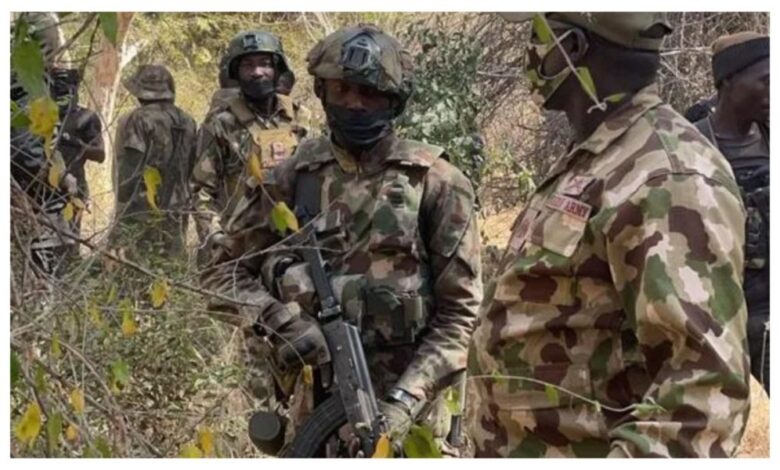
Nigerian military forces have launched coordinated air operations against suspected terrorist fighters in Zamfara State, reportedly killing several members of an armed group operating from a hideout in Tsafe Local Government Area.
The operation was carried out around Yankuzo community, an area that has continued to attract security attention because of the activities of armed groups operating across parts of Zamfara and neighbouring states.
The airstrikes were conducted on the evening of September 7 by forces operating under Operation FANSAN YANMA, the military formation responsible for counter-terrorism and counter-banditry operations in the North-West.
Reports indicate that several military aircraft participated in the operation, targeting suspected fighters believed to have gathered within the community.
The strikes were directed at the armed group’s hideout after intelligence indicated the presence of terrorists in the area.
Several fighters were reportedly killed during the operation, while others were said to have sustained injuries.
One of those reportedly killed was identified as Isiya Gurgu, who was described as an associate of notorious bandit leader Musa Commander, a figure linked to the Ado Aleru network.
The operation is significant because Yankuzo has reportedly been used as a stronghold by armed groups operating in the wider Tsafe area.
Security concerns in parts of Zamfara have remained persistent, with criminal groups exploiting forests and remote settlements to establish hideouts, carry out attacks and move abducted victims.
The military has increasingly relied on intelligence-led air operations to target such locations before deploying ground troops to areas considered difficult or dangerous to access.
The latest operation was reportedly planned with an emphasis on limiting the possibility of civilian casualties.
Sources said the aircraft targeted individuals believed to be armed fighters or persons wearing military-style clothing associated with the terrorist group.
The military’s reported caution reflects the difficulty of conducting air operations in areas where armed groups may operate close to civilian communities.
The success of such operations is often dependent on accurate intelligence capable of distinguishing between legitimate civilian activity and the movement of armed groups.
Following the strikes, security personnel continued monitoring the area to assess the full impact of the operation and determine whether additional terrorists were killed or wounded.
The authorities were also expected to continue ground surveillance around Yankuzo and neighbouring communities to prevent surviving members of the group from regrouping.
The operation comes amid intensified military efforts across the North-West, where security forces have been conducting coordinated operations against terrorists, bandits and kidnapping networks.
Zamfara remains one of the states most affected by armed criminal activity in the region.
Communities in parts of the state have experienced repeated attacks, abductions, cattle rustling and displacement as armed groups take advantage of difficult terrain and extensive forest areas.
The security situation has also created challenges for farming communities, with residents often facing threats while travelling to farms or moving between rural settlements.
The continued military pressure on armed groups is therefore aimed not only at eliminating fighters but also at disrupting their ability to operate freely, collect resources and maintain control over rural areas.
Airstrikes have become an important component of the military’s strategy because they allow security forces to target remote locations that may be difficult for ground troops to reach quickly.
However, such operations also require careful planning because errors in intelligence or targeting can result in civilian casualties.
Nigeria has previously faced controversy over accidental airstrikes in civilian areas, making the protection of non-combatants an important consideration in subsequent military operations.
The reported focus on armed individuals during the Yankuzo operation therefore reflects the military’s effort to reduce the risk of hitting civilians.
The latest strike is also expected to disrupt the network associated with the Ado Aleru group.
Ado Aleru has been linked to serious security concerns in the North-West, with armed groups operating under different commanders and associates across forested areas of Zamfara and neighbouring states.
Removing commanders and key fighters from such networks can weaken their operational capacity, although security agencies still have to contend with the possibility that surviving members may reorganise.
The military’s continued operations in the region suggest that security forces are seeking to maintain pressure on the groups rather than allowing them to establish permanent safe havens.
The reported killing of several fighters could therefore have implications for the group’s ability to coordinate attacks and move personnel around the area.
For residents of Yankuzo and surrounding communities, the operation also highlights the difficult security environment they continue to face.
Communities located near terrorist or bandit hideouts often find themselves caught between armed groups and security operations.
While military operations can provide relief by disrupting criminal networks, residents also require sustained protection to prevent armed groups from returning after security forces withdraw.
The authorities are therefore expected to maintain surveillance and intelligence operations in the area following the latest airstrikes.
Security agencies will also need to determine whether any surviving members of the group escaped from the targeted location and moved into neighbouring communities.
The military has not yet released a comprehensive assessment of the operation, meaning the exact number of casualties remains subject to further confirmation.
The reported death of Isiya Gurgu, however, could represent a significant setback for the armed group if his role within the network is confirmed.
The operation also comes amid broader efforts by the Nigerian military to intensify counter-terrorism and counter-banditry operations across the country.
Recent military operations have targeted armed groups in several northern states, with security forces reporting arrests, rescues of kidnapped victims, recovery of weapons and the neutralisation of suspected terrorists.
The authorities have repeatedly maintained that sustained pressure is necessary to prevent terrorist and bandit groups from rebuilding their networks.
The situation in Zamfara remains particularly complex because armed groups frequently operate across state boundaries, making cooperation between security formations and local authorities essential.
Intelligence gathered from communities can also help security agencies identify movements and hideouts before attacks occur.
For that reason, residents are generally encouraged to provide information about suspicious movements while avoiding direct confrontation with armed groups.
The latest air operation demonstrates the growing role of intelligence-led military action in Nigeria’s fight against terrorism and organised armed crime.
However, eliminating fighters from a hideout is only one part of the broader security challenge.
Long-term stability will also depend on preventing armed groups from recruiting new members, cutting off their sources of weapons and funding, protecting vulnerable communities and ensuring that displaced residents can safely return to their homes.
For now, security forces are continuing to assess the results of the Yankuzo operation.
The military’s reported success in eliminating several suspected terrorists represents a setback for the armed group targeted in the operation, but authorities are expected to maintain pressure on the wider network to prevent it from regrouping.
As operations continue across Zamfara, the focus will remain on disrupting terrorist camps, protecting communities and reducing the ability of armed groups to operate across the region.