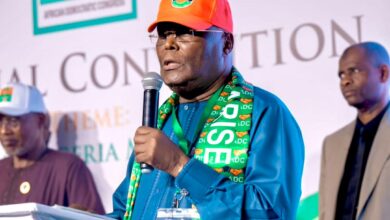


Minister of the Federal Capital Territory, Nyesom Wike, is expected to take up a defined role in President Bola Ahmed Tinubu’s 2027 re-election campaign, with the former Rivers State governor reportedly being considered to coordinate the president’s campaign structure in Rivers State and the Federal Capital Territory.
The emerging arrangement is designed to give Wike responsibility for mobilising support for Tinubu in the two territories while allowing him to retain his membership of the Peoples Democratic Party.
Wike has repeatedly stated that he is not a member of the All Progressives Congress and has also rejected suggestions that he needs to join the party before supporting Tinubu’s re-election.
The proposed role would therefore allow the former Rivers governor to participate directly in the presidential campaign without formally becoming part of the APC’s membership structure.
The development comes as political parties and influential political figures intensify preparations for the 2027 general elections.
Tinubu’s campaign structure is expected to bring together members of the APC as well as politicians from other parties who have declared their support for the president’s second-term bid.
Wike has emerged as one of the most prominent opposition-party politicians supporting Tinubu.
His relationship with the president dates back to the 2023 presidential election, when Wike and four other governors of the PDP formed the G5 group and refused to support the party’s presidential candidate, Atiku Abubakar.
The group had demanded changes within the PDP and raised concerns over the party’s zoning and power-sharing arrangements.
Wike subsequently supported Tinubu during the presidential election while remaining a PDP member.
After Tinubu assumed office, he appointed Wike as Minister of the Federal Capital Territory, making him one of the most prominent members of an opposition party serving in the federal cabinet.
Since then, Wike has repeatedly defended the administration and publicly campaigned for Tinubu’s re-election.
The proposed campaign responsibility in Rivers and the FCT would formalise some of the political work Wike has already indicated he intends to undertake for the president.
Wike recently described himself as the “General Commander of the Political Infantry” in Rivers and the FCT, insisting that he remained in charge of the political structures in the two territories.
He argued that a person did not necessarily have to occupy the office of governor before exercising political influence.
The proposed arrangement, however, comes amid disagreements between Wike and some APC governors over the organisation of Tinubu’s 2027 campaign.
One major source of disagreement has been Wike’s promotion of what he calls the “Rainbow Coalition,” a political arrangement involving individuals from different parties who support Tinubu at the presidential level while retaining the freedom to support candidates of their choice in other elections.
Wike has argued that supporting Tinubu for president does not require politicians to abandon their existing political parties or support every APC candidate in their respective states.
The position has not been embraced by some APC governors.
Imo State Governor Hope Uzodimma, who chairs the Progressives Governors Forum, recently stated that APC governors would not support political arrangements that could weaken the party or create divided loyalties among its candidates.
The disagreement reflects a broader question about how Tinubu’s 2027 campaign will balance the interests of the APC with the political networks of influential figures outside the party.
Wike’s proposed responsibility for Rivers and the FCT appears to be part of an effort to clearly define the roles of different political actors and reduce possible clashes within the emerging campaign structure.
Under the proposed arrangement, former Zamfara State Governor Abdulaziz Yari is expected to serve as Director-General of the presidential campaign council.
However, senior National Assembly leaders, including Senate President Godswill Akpabio and Deputy Senate President Jibrin Barau, are reportedly expected to operate through separate lines of responsibility rather than directly under Yari.
The structure is intended to accommodate different political power centres involved in the president’s re-election campaign.
Wike’s proposed position is similarly expected to focus on specific territories rather than giving him control over the entire APC campaign organisation.
Rivers State is particularly significant because of Wike’s long-standing political influence there.
He served as governor from 2015 to 2023 and built an extensive political network during his time in office.
The current political situation in Rivers is also unusual because Wike and his successor, Governor Siminalayi Fubara, have been involved in a prolonged political dispute, although both have publicly aligned with Tinubu at the presidential level.
Wike has maintained that Rivers should support Tinubu in 2027 and has repeatedly highlighted the federal government’s projects and interventions in the state as reasons for supporting the president.
His expected campaign responsibility would give him a direct role in coordinating efforts to secure presidential support in the state.
The FCT presents a different political challenge.
As the serving minister responsible for the territory, Wike has considerable visibility in Abuja and has already indicated that he intends to play an active role in securing support for Tinubu.
The FCT has historically attracted significant political attention during presidential elections because of its symbolic importance as Nigeria’s seat of government and its diverse population drawn from different parts of the country.
Wike’s proposed dual responsibility would therefore place him at the centre of campaign activities in two strategically important territories.
Meanwhile, Minister of Aviation and Aerospace Development Festus Keyamo is being considered for a prominent spokesperson position within the campaign structure.
Keyamo has considerable experience in presidential campaign communications, having served as spokesperson and Director of Public Affairs during Tinubu’s 2023 presidential campaign.
He also held a senior communications position during former President Muhammadu Buhari’s 2019 re-election campaign.
His possible return to the frontline campaign team would provide continuity in the communication strategy surrounding Tinubu’s second-term campaign.
The emerging structure illustrates the complexity of preparing for a presidential election in which political alliances extend beyond traditional party boundaries.
While the APC remains the platform through which Tinubu is seeking re-election, several politicians outside the party have already declared support for him.
Wike’s continued membership of the PDP is one of the most prominent examples of this cross-party support.
His proposed role also raises questions about how the PDP will respond to one of its senior members actively working for the re-election of an APC president.
Wike has consistently maintained that his support for Tinubu does not prevent the PDP from fielding candidates for governorship, National Assembly and state assembly elections.
This position allows him to maintain his membership of the PDP while supporting Tinubu at the presidential level.
The approach has also contributed to tensions with APC leaders who prefer a unified campaign structure in which support for the president is accompanied by support for APC candidates at other levels.
As the 2027 election approaches, these competing interests are likely to remain an important feature of the political landscape.
For now, the proposed arrangement places Wike in a potentially influential position within Tinubu’s presidential campaign without requiring him to formally join the APC.
His expected responsibility for Rivers and the FCT would allow the campaign to draw on his established political networks while keeping the wider APC structure under its own leadership.
The final campaign council and its complete list of appointments are yet to be formally unveiled.
Until an official announcement is made, Wike’s role remains an emerging arrangement reported by people familiar with the proposed structure.
Nevertheless, the development signals the increasing importance of political alliances across party lines as the 2027 presidential contest takes shape.
With the election still ahead, Tinubu’s campaign will have to balance the interests of APC leaders, governors, lawmakers and influential politicians from other parties.
Wike’s expected assignment in Rivers and the FCT is one of the clearest indications so far of how that broader coalition could be organised.