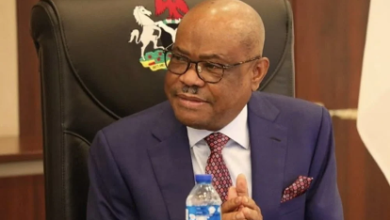
2027: Wike Says His Children Supported Peter Obi in 2023 but Have Since Changed Their Views


Minister of the Federal Capital Territory, Nyesom Wike, has revealed that his children supported Peter Obi during the 2023 presidential election but have since changed their perception of the former Anambra State governor.
Wike made the disclosure while discussing the evolving political landscape ahead of the 2027 general elections.
According to the FCT minister, his children’s decision to support Obi in 2023 was influenced by the political enthusiasm surrounding the Labour Party candidate at the time. He said their position has since changed following their assessment of Obi’s political activities and public conduct.
Wike said his children later told him that they had not fully understood the personality and political approach of the candidate they supported during the previous election.
The revelation comes as Obi remains one of the prominent opposition figures being discussed ahead of the 2027 presidential contest.
Obi attracted significant support during the 2023 election, particularly among young Nigerians and voters in parts of the South-East and South-South.
His campaign, popularly associated with the “Obidient” movement, generated considerable activity on social media and drew support from Nigerians across different demographic groups.
Wike, however, argued that the political circumstances surrounding the 2023 election have changed and that the level of enthusiasm previously associated with Obi is no longer the same.
He specifically dismissed the idea that the support Obi enjoyed in 2023 automatically translates into the same level of support ahead of the next presidential election.
The FCT minister’s comments come as political parties and emerging alliances begin positioning themselves for the 2027 elections.
The political environment has become increasingly fluid, with politicians moving between parties and different groups negotiating alliances ahead of the presidential and legislative contests.
Wike himself remains a member of the Peoples Democratic Party but has openly supported President Bola Ahmed Tinubu’s re-election bid.
His position has placed him at odds with sections of the PDP, particularly those opposed to cooperation with the ruling All Progressives Congress.
The former Rivers State governor has repeatedly argued that political decisions should be based on what he considers the interests of the country rather than party loyalty alone.
His latest remarks about his children have also drawn attention because they offer a personal example of how political opinions can change between election cycles.
The 2023 election produced a highly competitive contest involving Tinubu, Atiku Abubakar and Obi as the major candidates.
Tinubu was declared the winner by the Independent National Electoral Commission, while Obi and Atiku challenged aspects of the election through the legal process.
Obi’s strong performance in several states helped establish him as a major political figure beyond the traditional structure of the Labour Party.
His supporters have continued to maintain that his movement remains capable of attracting significant support ahead of 2027.
Wike’s latest comments challenge that assumption, suggesting that some people who supported Obi in 2023 have reassessed their position.
His statement about his children should nevertheless be understood as a personal account and does not establish the views of Nigerian voters generally.
Political preferences within families, communities and regions can differ significantly, and individual changes in political opinion do not necessarily represent broader voting patterns.
The comments have nevertheless added to the growing debate about whether the political dynamics that shaped the 2023 election will be repeated in 2027.
For Obi, the challenge ahead includes maintaining the support that emerged around his 2023 campaign while expanding his reach beyond the regions and demographic groups where he performed strongly.
Other opposition figures are also seeking to build alliances capable of challenging Tinubu and the APC in the next presidential election.
The emergence of new political coalitions has further complicated the calculations ahead of 2027, with politicians attempting to bring together supporters from different parties and regions.
Wike has continued to insist that the political landscape has changed since 2023 and has criticised opposition figures who he believes are relying too heavily on their previous electoral performance.
He has also questioned claims by some Obi supporters that their candidate won Rivers State in the 2023 election, insisting that electoral victories must be determined by polling-unit results and official declarations rather than social media narratives.
The issue remains politically sensitive because Rivers is Wike’s home state and was a major focus of the 2023 presidential contest.
The debate over the state’s electoral results has continued to feature prominently in political discussions as the 2027 election approaches.
Wike’s latest comments about his children therefore form part of a wider argument he has been making about changing political attitudes and the need for opposition politicians to reassess their strategies.
At the same time, Obi and his supporters continue to position his political movement as an alternative to the established political parties.
The coming months are expected to bring further developments as candidates, parties and political movements begin to organise their structures ahead of the election.
The 2027 contest is expected to feature intense competition over young voters, regional alliances, economic concerns and questions about the performance of the current administration.
For voters, individual endorsements and political claims will ultimately have to be weighed against candidates’ records, policies and proposed programmes.
Wike’s revelation that his own children supported Obi in 2023 but later changed their views has consequently become another talking point in the increasingly active political conversation surrounding the 2027 presidential election.
Whether the broader electorate has undergone a similar shift remains a question that can only be answered through credible voter research and, ultimately, the ballot box.