FIFA President Defends Judicial Independence Following Trump’s Appeal Over Balogun Ban

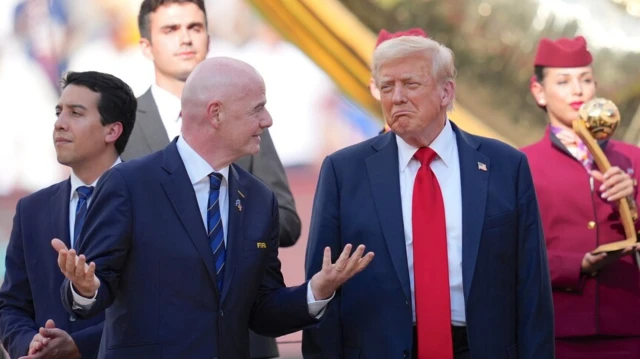
FIFA President Gianni Infantino has reaffirmed the independence of football’s judicial processes following reports that United States President Donald Trump appealed for intervention regarding the suspension imposed on Nigerian defender Leon Balogun.
The development has generated widespread discussion across the global football community, with many observers debating the relationship between political influence and the autonomy of international sporting institutions.
Speaking in response to questions surrounding the matter, Infantino emphasized that FIFA remains committed to ensuring that all disciplinary and judicial matters are handled independently and strictly in accordance with the organization’s established rules and regulations.
According to the FIFA president, the governing body places significant importance on maintaining the integrity of its legal framework, insisting that no external individual, government, or political office has the authority to determine the outcome of disciplinary proceedings.
He explained that FIFA’s judicial bodies operate independently from the organization’s executive leadership and are responsible for assessing cases based solely on evidence, applicable regulations, and the relevant disciplinary code.
Infantino stressed that the credibility of world football depends on transparent and impartial decision-making, adding that preserving judicial independence remains essential to ensuring fairness for players, clubs, national associations, and supporters around the world.
The comments followed reports suggesting that President Trump had expressed concern over the disciplinary action involving Leon Balogun and had reportedly urged FIFA to reconsider the sanction.
Although the exact details of the communication have attracted considerable attention, FIFA officials have reiterated that disciplinary decisions cannot be influenced by political appeals or diplomatic interventions.
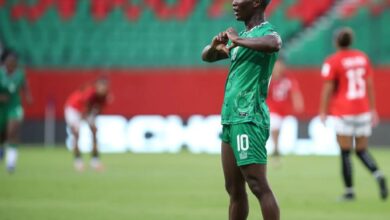
Leon Balogun, one of Nigeria’s most experienced defenders, has enjoyed a distinguished professional career spanning several European leagues while also becoming an important figure for the Super Eagles.
Known for his leadership, defensive intelligence, and commitment on the pitch, Balogun has represented Nigeria in multiple major international tournaments and has earned widespread respect among supporters for his consistency and professionalism.
The circumstances surrounding his suspension have become one of the most discussed football stories in recent weeks, with supporters, analysts, and former players expressing differing opinions regarding both the disciplinary process and the appropriate outcome.
While some have questioned the severity of the sanction, others have emphasized the importance of allowing FIFA’s judicial mechanisms to function without external interference.
Football governance experts argue that one of FIFA’s greatest responsibilities is ensuring that every disciplinary case is treated equally, regardless of the player’s nationality, reputation, or public profile.
They note that maintaining confidence in the sport requires decisions to be based on established regulations rather than public pressure or political considerations.
Legal analysts also point out that FIFA’s disciplinary system provides structured procedures through which players, clubs, and national associations may challenge sanctions when they believe errors have occurred.
These mechanisms include appeals before independent football tribunals and, where appropriate, proceedings before the Court of Arbitration for Sport (CAS), ensuring that affected parties have access to due process within international sports law.
Observers believe Infantino’s latest comments were intended to reassure football stakeholders that FIFA remains committed to protecting the integrity of its disciplinary institutions at a time when football governance continues to receive intense global scrutiny.
Many experts argue that maintaining a clear separation between politics and sporting justice is essential for preserving public confidence in international competitions.
The issue has also generated significant reactions among Nigerian football supporters, many of whom have continued to express support for Balogun while hoping for a fair resolution through the appropriate legal channels.
Several former players have encouraged patience, emphasizing that disciplinary matters should be resolved through the procedures established by football’s governing authorities rather than through public debate alone.
Meanwhile, football administrators continue to stress that respect for institutional independence remains one of the cornerstones of modern sports governance.
They argue that consistency, transparency, and equal treatment are critical in ensuring that disciplinary decisions command credibility across different countries, competitions, and confederations.
As discussions surrounding the case continue, attention will remain focused on the next stages of the disciplinary process and any potential appeal that may be pursued.
Regardless of the eventual outcome, FIFA’s response has reinforced its position that judicial independence remains fundamental to the administration of world football.
For now, the governing body maintains that every case will continue to be assessed on its individual merits, with decisions guided exclusively by evidence, regulations, and the principles of fairness upon which international football governance is built.