
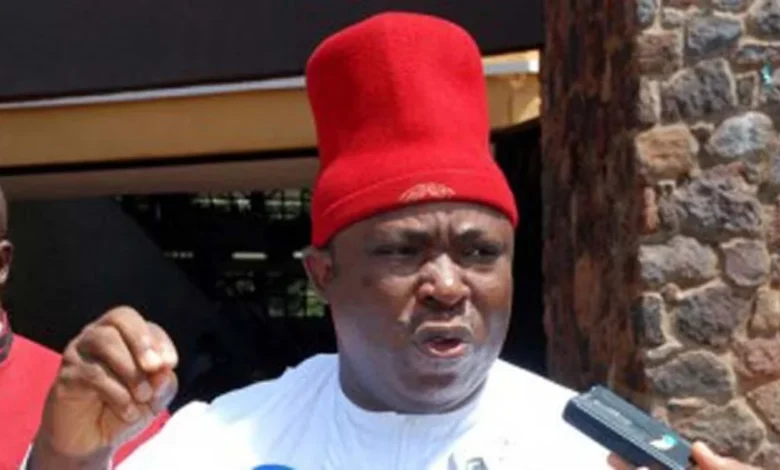
Senator Victor Umeh has called for a fundamental change in the way elections are conducted and concluded in Nigeria, insisting that the people who cast their ballots should determine the winners rather than leaving courts to settle who actually won after disputed results are announced.
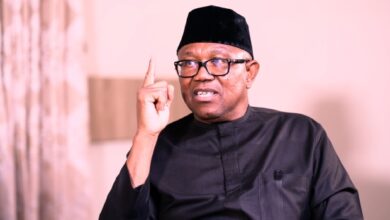
Umeh, who represents Anambra Central in the Senate, made the call while reacting to concerns raised by Nigeria Democratic Congress presidential candidate Peter Obi about the need for the Independent National Electoral Commission to ensure that every vote cast in the 2027 general election is accurately counted and reflected in the final results.
The senator backed Obi’s position, arguing that Nigerians must be able to participate in elections with the confidence that their votes will be properly recorded and respected.
He said the objective should be to conduct elections that are free, fair and credible from the beginning, rather than allowing weaknesses in the electoral process to create disputes that eventually end up before judges.
Umeh expressed concern about past experiences in which voters went to polling units, made their choices and expected those choices to determine the final outcome, only for announced results to become disputed.
He argued that such a situation undermines confidence in democracy because citizens may begin to believe that the outcome of an election is determined by factors other than the ballots they cast.
The senator said the integrity of the ballot box must therefore be protected throughout the electoral process.
He maintained that it was not enough for electoral authorities to repeatedly promise credible elections. According to him, the process must be designed and implemented in such a way that the votes recorded at polling units become the foundation of the final declaration.
Umeh’s comments come as political parties and presidential candidates intensify preparations for the 2027 general election.
The election is expected to attract significant attention, with opposition parties attempting to challenge the ruling establishment and voters closely watching the ability of electoral institutions to conduct a transparent contest.
The senator argued that one of the most important ways to strengthen democracy is to restore public confidence in elections.
He said citizens should not be placed in a position where they have to question whether their votes will eventually be counted or whether the results announced will accurately reflect what happened at polling stations.
Umeh was particularly critical of a situation in which disputed election results are announced and candidates who believe they were denied victory are subsequently directed to seek judicial intervention.
He argued that courts should primarily resolve genuine legal disputes arising from elections rather than becoming the final arena where the winner of an election is effectively determined.
In his view, the responsibility for producing a credible result begins with the electoral process itself.
The senator said political actors should also abandon the mentality of entering elections with the expectation that they must be declared winners regardless of the number of votes they receive.
He described such an approach as harmful to Nigeria’s democratic development.
According to him, politicians should accept the choice of voters and allow the electoral process to determine the winner.
Where disputes arise, he acknowledged that the courts have an important constitutional role in resolving them, but maintained that such disputes should not become a substitute for credible vote counting.
His position places considerable responsibility on INEC and other institutions involved in conducting elections.
The commission will be expected to ensure that voting materials reach polling units, accreditation works properly, votes are counted transparently and results are recorded and transmitted in accordance with the law.
The use of technology is also expected to remain an important part of preparations for the 2027 election.
INEC has been working on improving the reliability of systems used for voter accreditation and results management, while also facing pressure to address concerns that emerged from previous elections.
For Umeh, however, technology alone cannot guarantee credible elections.
He believes the commitment of electoral officials, security agencies, political parties and candidates is equally important.
He also stressed the need for political actors to respect the rules of the electoral process.
Nigeria has experienced numerous election disputes over the years, with some contests continuing through multiple levels of the judiciary.
While the courts have a constitutional responsibility to hear election petitions and determine whether electoral laws were followed, prolonged legal battles can contribute to uncertainty and deepen political tensions.
Umeh’s argument is that preventing disputed outcomes at the polling and collation stages would reduce the number of cases that eventually reach election tribunals.
The senator’s comments also reflect a broader debate about the role of the judiciary in Nigeria’s electoral system.
Election petitions are an important part of the democratic process because they provide a legal avenue for candidates to challenge irregularities and seek redress.
However, the increasing importance of litigation after elections has raised concerns among political observers who believe that electoral disputes should be minimised through better administration of elections.
The ideal situation, according to Umeh’s argument, is for the result announced by electoral authorities to accurately reflect the votes cast by citizens.
That would reduce the incentive for candidates to challenge results and strengthen acceptance of election outcomes.
It would also make voters feel that their participation has a direct connection to the formation of government.
Umeh’s intervention comes against the backdrop of increasing political mobilisation ahead of 2027.
Opposition parties are already positioning themselves for what is expected to be a highly competitive presidential contest, while the ruling political establishment is also preparing to defend its position.
In such an environment, concerns about the credibility of the electoral process are likely to remain central to political discussions.
Candidates and parties will be watching closely to see whether INEC can deliver an election in which results are accepted as credible by the majority of participants.
For voters, the issue goes beyond individual political parties.
A credible election requires citizens to believe that their votes matter, that results will be accurately recorded and that no candidate can manipulate the process to overturn the choice of the electorate.
Umeh’s argument therefore centres on the principle that political power should flow from the ballot box.
He believes that when citizens make their choices freely, those choices should be respected and reflected in the final results.
The senator also warned against creating a political culture in which candidates who lose elections simply assume that they can obtain victory through other means.
Such a culture, he argued, weakens democratic institutions and encourages political actors to treat elections as contests that can be won through influence rather than votes.
His comments are likely to resonate with Nigerians who have expressed frustration over disputed elections and allegations of irregularities in previous polls.
At the same time, the courts remain an essential part of the electoral system because candidates have a constitutional right to challenge results when they believe electoral laws have been violated.
The key issue, therefore, is not whether courts should have jurisdiction over election disputes, but whether the electoral process can be strengthened enough to ensure that fewer disputes arise in the first place.
Umeh’s position is that the best protection for democracy is an electoral system in which the results declared at the end of voting accurately represent the choices made by citizens.
As preparations for the 2027 election continue, the senator’s comments add to growing demands for INEC to protect the credibility of the ballot and ensure that Nigerians have confidence in the results.
The ultimate test will be whether voters can participate in the election knowing that their ballots will be counted, properly documented and reflected in the final outcome.
For Umeh, that is the standard Nigeria must meet if it is to strengthen its democracy and reduce the recurring cycle of disputed results, election petitions and prolonged courtroom battles.
The message is straightforward: Nigerians should decide who governs them through their votes, while the courts should remain the institution that interprets the law and resolves legitimate disputes rather than becoming the place where electoral victories are effectively created.