
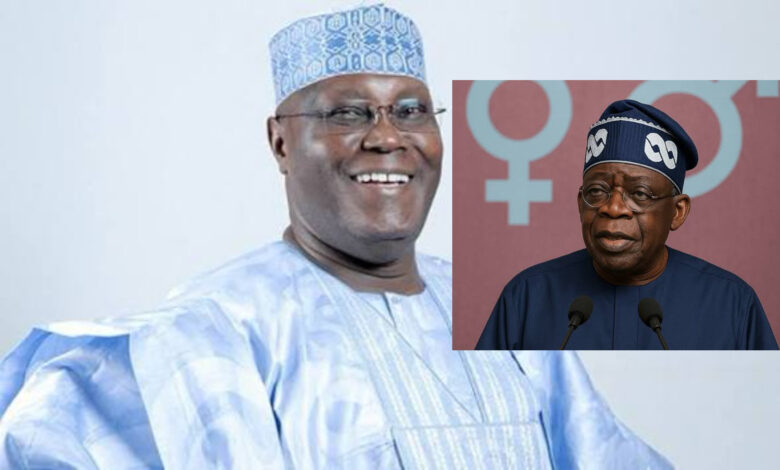
Minister of Aviation and Aerospace Development, Festus Keyamo, has criticised former Vice-President Atiku Abubakar over his repeated use of President Bola Ahmed Tinubu’s first name during a recent press conference in Abuja.
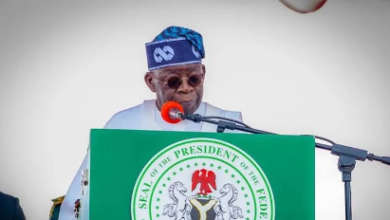
Keyamo described Atiku’s manner of addressing the President as disrespectful and discourteous, arguing that political disagreements should not diminish the dignity attached to the office of the President.
The minister made his position known after Atiku addressed journalists on the country’s economic situation, particularly the rising cost of petrol and the impact of energy prices on households and businesses.
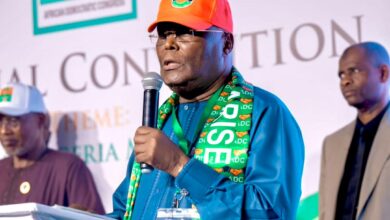
During the press conference, Atiku repeatedly referred to Tinubu as “Bola” while urging the President to consider measures aimed at reducing the cost of petrol and easing the financial pressure on Nigerians.
Keyamo objected to the manner of address, arguing that Atiku, as a former Vice-President and a major political figure, should recognise the importance of respecting the office occupied by Tinubu regardless of their political differences.
He maintained that disagreements between politicians should not translate into what he considered disrespect for the institution of the presidency.
The minister also questioned the tone of Atiku’s remarks, suggesting that the former Vice-President’s political opposition to Tinubu had influenced the way he addressed the President.
Keyamo further referred to Atiku’s recent comments concerning Tinubu’s age, arguing that there was an inconsistency between describing someone as an elder and addressing that person solely by his first name.
The exchange comes as political activities intensify ahead of the 2027 presidential election, with Atiku expected to challenge Tinubu’s administration on economic policies while positioning himself as one of the opposition figures seeking the presidency.
Atiku recently used his press conference to call for urgent government action to reduce petrol prices and address the broader cost-of-living crisis.
He argued that the Federal Government should be willing to adopt workable policy proposals regardless of which politician initially presented them.
The former Vice-President said Tinubu should not reject an idea simply because it came from a political opponent.
He went as far as saying that the President could rename the proposal and take credit for it if doing so would ultimately reduce the amount Nigerians pay for petrol.
For Atiku, the central issue was not political ownership of the proposal but whether Nigerians would benefit from lower energy costs.
He linked the current economic pressure to the removal of the petrol subsidy in 2023, arguing that the resulting increase in fuel costs had affected transportation, food prices, logistics, production and household expenses.
He also raised concerns about electricity costs and warned against repeating what he described as the experience of petrol subsidy removal without adequate measures to protect households and businesses.
Atiku argued that government intervention should focus on reducing the underlying cost of production rather than relying primarily on temporary palliatives.
One of the proposals he discussed involved providing targeted support for petroleum products refined within Nigeria.
Under his proposal, government assistance would be directed towards locally refined products sold to Nigerian consumers, while imported petroleum products would not benefit from the intervention.
He said such a policy could help lower production costs, encourage domestic refining and ultimately reduce the price paid by consumers.
Atiku also called for safeguards around any government intervention, including legislative approval, a defined financial limit and independent auditing.
He used support for local agricultural production as an example of how targeted intervention could help reduce the cost of locally produced goods while supporting businesses and employment.
The economic argument has become an increasingly important part of the political debate ahead of 2027, with opposition figures criticising the government’s handling of inflation, fuel prices and household purchasing power.
The Tinubu administration, on the other hand, has defended its economic reforms as necessary steps towards restructuring the Nigerian economy and addressing longstanding structural problems.
Keyamo’s latest criticism therefore comes within a wider political dispute over both the direction of the economy and the manner in which opposition politicians challenge the government.
Another presidential aide, Sunday Dare, also criticised Atiku over the use of Tinubu’s first name.
Dare described the manner of address as insolent and accused Atiku of attempting to lecture a sitting President on how to run the government.
He also defended Tinubu’s economic reforms and argued that the administration was undertaking difficult measures intended to restructure an economy affected by years of structural problems.
The criticism from both Keyamo and Dare shows how Atiku’s comments have been received within Tinubu’s political camp.
For the opposition, however, the focus remains on the economic consequences of government policies and whether Nigerians are experiencing meaningful improvements in their living conditions.
The disagreement over the use of Tinubu’s first name has consequently become part of a much larger political argument.
While Keyamo views the repeated reference to “Bola” as disrespectful to the presidency, Atiku’s comments were made in the context of his criticism of government policies and his call for action on petrol and electricity costs.
The dispute also illustrates how political language can become a significant part of Nigeria’s increasingly competitive electoral environment.
Tinubu and Atiku are both major figures in the 2027 political contest, and their supporters have frequently exchanged criticism over their records, policies and approaches to governance.
Atiku, a former Vice-President and long-standing presidential contender, is seeking the presidency under the African Democratic Congress.
Tinubu, who won the 2023 presidential election, is expected to seek another term under the All Progressives Congress.
As the 2027 election approaches, economic issues are expected to remain central to the political debate.
Petrol prices, electricity costs, inflation, unemployment, food prices and household purchasing power are among the issues likely to shape discussions between the government and opposition parties.
Atiku has positioned his proposed economic interventions as alternatives that could reduce pressure on citizens, while Tinubu’s administration has continued to defend its reform agenda.
The disagreement between Keyamo and Atiku therefore goes beyond the choice of a name or title.
It reflects the broader political confrontation between the Federal Government and opposition figures over how Nigeria should be governed and how the country’s economic difficulties should be addressed.
For Keyamo, respect for the presidency should remain separate from political disagreements.
For Atiku, the immediate priority is the economic welfare of Nigerians and the adoption of policies that could lower the cost of essential goods and services.
The competing positions are likely to feature prominently in the political discourse as parties prepare for the 2027 election.
With the campaign season approaching, exchanges between government officials and opposition politicians are expected to become more frequent, particularly as both sides attempt to convince Nigerians that their respective approaches offer a better path for the country’s economic future.