Eradiri Faults Donald Duke Over Niger Delta Terrain, Defends Tinubu’s Coastal Highway Project

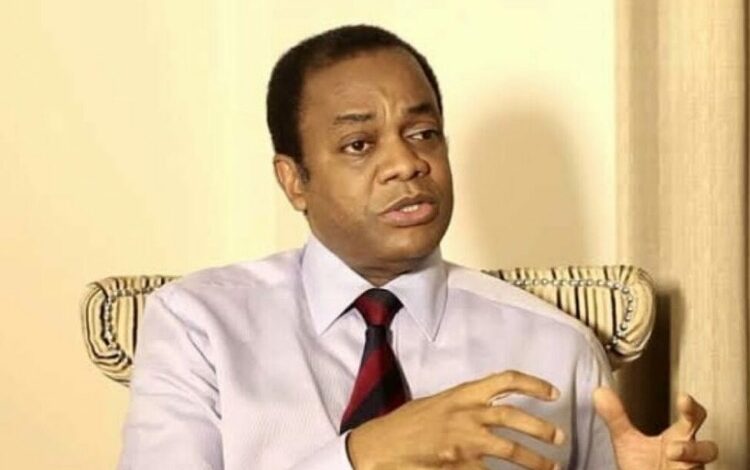
Engr. Udengs Eradiri, Media Director of the Tinubu Support Group in Bayelsa State, has criticised former Cross River State Governor Donald Duke over his comments on the challenges of developing infrastructure across the Niger Delta, arguing that the region’s swampy and riverine terrain should not be treated as an insurmountable barrier to construction.
Eradiri, a former president of the Ijaw Youths Council Worldwide, said modern engineering, adequate funding and sustained political commitment could make major infrastructure projects possible in areas characterised by wetlands, creeks and difficult ground conditions.
His remarks followed Duke’s criticism of the Federal Government’s Lagos-Calabar Coastal Highway project. The former governor had questioned the feasibility of constructing the highway through Bayelsa, citing the state’s swampy landscape and the extensive bridges that might be required to connect communities along the route.
Duke’s comments generated reactions from political figures in the South-South, including Bayelsa State Governor Douye Diri, who also defended the project and cited infrastructure developments in his state as evidence that roads and bridges could be built across challenging terrain.
Eradiri, in his response, maintained that the geographical conditions of the Niger Delta required appropriate engineering solutions rather than being used as a reason to abandon development projects. He argued that the region’s infrastructure challenges could be addressed through careful planning, investment and the deployment of suitable construction technology.
The TSG media director pointed to the Lagos-Calabar Coastal Highway as an example of the type of project he believes demonstrates the possibility of constructing major roads across difficult environments. He said sections of the project, particularly around the Lekki-Epe axis, involved challenging ground conditions and required extensive clearing and sand-filling operations.
Eradiri said his participation in some of the initial work gave him firsthand exposure to the engineering challenges involved. He argued that experiences from such projects could provide lessons for infrastructure development in other parts of the Niger Delta.
“All over the world, engineering backed with serious governance has conquered terrains worse than the ones in the Niger Delta to build critical infrastructure. We cannot see why the Niger Delta case should be different,” he said.
He also referenced road projects in Bayelsa, including routes towards Brass and Agge, as examples of efforts to improve transportation access to communities separated by rivers, creeks and wetlands.
According to Eradiri, infrastructure development in the state has demonstrated that difficult terrain can be addressed through sustained government action. He said improved road connections could help residents reach markets, schools, healthcare facilities and other essential services more easily.
Eradiri further cited the road linking Bodo and Bonny in Rivers State as an example of infrastructure construction across a challenging environment. He argued that projects of this nature could improve connectivity and expand economic opportunities for communities that have historically faced transportation difficulties.
The former Ijaw Youths Council leader also defended President Bola Tinubu’s infrastructure agenda, saying the administration had shown a willingness to undertake projects that previous governments had struggled to execute.
He attributed some ongoing development efforts in Bayelsa to increased revenue allocations to state governments following the removal of the fuel subsidy, alongside federal interventions in major road projects. These claims reflect Eradiri’s assessment of the administration’s infrastructure record.
Taking a direct swipe at Duke, Eradiri accused the former Cross River governor of failing to appreciate the geographical and infrastructural realities of the Niger Delta. He suggested that a visit to Bayelsa and other riverine communities would provide a clearer understanding of the ongoing road construction efforts.
Eradiri also alleged that Duke’s comments could undermine public confidence in the region’s development prospects. He argued that the debate should focus on practical engineering options and the resources needed to deliver infrastructure rather than treating the terrain as an automatic obstacle.
However, the disagreement has also drawn attention to broader questions surrounding the coastal highway, including its cost, environmental implications, engineering requirements and the benefits it is expected to deliver to communities along the route.
The Lagos-Calabar Coastal Highway is a Federal Government project intended to connect coastal communities across nine states: Lagos, Ogun, Ondo, Edo, Delta, Bayelsa, Rivers, Akwa Ibom and Cross River. Its construction involves a variety of geographical conditions, including wetlands and waterways in parts of the Niger Delta.
While supporters of the project argue that it could improve transportation and economic links across the coastal region, critics have raised questions about its feasibility, affordability and environmental impact. Those issues remain part of the wider debate over how the project should be implemented and evaluated.
Eradiri maintained that the region’s difficult terrain should prompt investment in suitable engineering rather than discourage infrastructure development. He said the Niger Delta needed reliable roads and bridges to improve access for residents and support economic activity.
The exchange between Eradiri and Duke has therefore added another dimension to the political and public debate surrounding the coastal highway, with both the technical challenges of construction and the region’s long-standing infrastructure needs remaining central to the discussion.