Obasanjo Accuses Tinubu of Deepening Economic Hardship, Says Nigerians Have Become ‘300% Poorer’

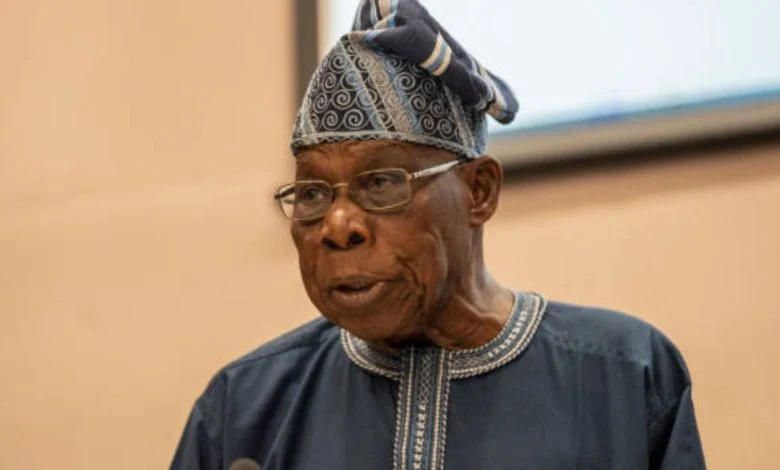
Former President Olusegun Obasanjo has reportedly criticised President Bola Tinubu over the country’s economic reforms, accusing the administration of worsening the financial difficulties faced by Nigerians and claiming that citizens have become “300 per cent poorer.”
The reported remarks have reignited debate over the direction of Nigeria’s economy, the impact of government policies on household incomes and the pace at which the administration is expected to deliver relief to citizens struggling with rising living costs.
Obasanjo’s criticism comes amid continuing public discussions about the consequences of economic reforms introduced by the Tinubu government, particularly the removal of petrol subsidies and changes to the foreign exchange system.
The former president’s reported use of the 300 per cent figure has drawn attention to the scale of the hardship he believes Nigerians are experiencing. However, the figure should be treated as an allegation attributed to Obasanjo unless its calculation and supporting data are independently established.
Nigeria’s economic situation has remained a major subject of political disagreement, with government officials defending their policies as necessary measures to address longstanding structural challenges, while critics argue that the immediate burden on citizens has become too severe.
The Tinubu administration has maintained that its reforms are intended to improve economic stability, reduce distortions in the market and create a foundation for sustainable growth. However, many Nigerians continue to question when those expected benefits will become visible in their daily lives.
The former president’s reported remarks have therefore placed renewed attention on the responsibility of government to explain its economic decisions and demonstrate how they are improving the welfare of citizens.
For households across the country, the rising cost of essential goods has become one of the most pressing concerns. Families have had to adjust their spending as food, transportation, electricity, housing and other necessities consume a growing share of their income.
The pressure has also affected workers whose earnings have not increased at the same pace as the cost of living. Many people are finding it increasingly difficult to maintain previous spending patterns, while those without stable employment face even greater challenges in meeting basic needs.
Small businesses and traders have also been affected by higher operating costs. Expenses associated with transportation, electricity, raw materials and other supplies have made it difficult for some businesses to maintain prices or expand their operations.
These challenges have fuelled criticism of the government’s economic approach, with opposition figures and other commentators calling for more effective measures to protect vulnerable households.
Obasanjo’s reported criticism adds to that debate by questioning whether the reforms have been implemented in a way that adequately considers the immediate welfare of Nigerians.
The former president has remained an influential voice in national affairs since leaving office, and his comments on government policies often attract attention because of his experience in leading the country.
His reported remarks also raise questions about the balance between long-term economic reforms and the need to provide immediate relief to citizens.
Supporters of the administration’s approach have argued that Nigeria inherited serious economic problems that required difficult decisions. They have maintained that reforms such as changes to fuel subsidy arrangements and foreign exchange policies were necessary to address structural weaknesses.
Critics, however, have questioned the timing, implementation and social consequences of those measures. They argue that reforms should be accompanied by stronger safety nets, effective public spending and policies that help citizens cope with higher prices.
The disagreement reflects a broader challenge facing Nigeria: how to pursue economic restructuring without placing excessive pressure on people whose incomes are already limited.
Obasanjo’s reported remarks have also renewed calls for greater transparency in the management of public resources and clearer explanations of how the government’s economic policies are expected to improve living standards.
For many Nigerians, the central issue is not simply whether reforms are necessary, but whether they are producing tangible results in the form of affordable food, reliable services, job opportunities and improved purchasing power.
The administration’s response to such concerns is likely to remain a major factor in public debate as political discussions continue ahead of future elections.
While the “300 per cent poorer” claim has not been established as a verified economic measurement, it captures the intensity of the debate surrounding the cost of living and the effects of government policy on ordinary Nigerians.
As the exchange between Obasanjo and Tinubu’s administration continues to attract attention, the economic conditions facing households are expected to remain central to discussions about governance, accountability and the country’s future.