2027 Presidency: Protests, Political Disagreements Raise Questions Over Tinubu’s Support Base in Northern Nigeria

Political activities ahead of the 2027 general elections are becoming increasingly tense in parts of Northern Nigeria, following a series of protests, attacks on political supporters and growing expressions of dissatisfaction with President Bola Ahmed Tinubu and the ruling All Progressives Congress (APC).
Recent developments in Zamfara, Kaduna and Katsina states have drawn attention to the political atmosphere in the region, with some residents openly expressing opposition to the ruling party and its administration.
Although the incidents do not necessarily represent the position of the entire North, they have raised questions about the level of public support the APC enjoys in a region that played an important role in the outcome of the 2023 presidential election.
One of the latest demonstrations reportedly took place in Gusau, the Zamfara State capital, where hundreds of youths gathered at Freedom Square to protest against the Tinubu administration.
Some of the demonstrators were seen wearing white shirts bearing the inscription, “Tinubu Must Go”, while chanting slogans expressing their dissatisfaction with the government.
The protest reportedly caused traffic disruption around the area as demonstrators converged on the busy junction.
The demonstration came amid other incidents involving APC campaign activities in the North-West, further highlighting the challenges political parties may face as preparations for the 2027 elections gather momentum.
In Kaduna State, a video showing residents dismantling an APC campaign structure circulated on social media in September. A fact-check by The FactCheckHub reportedly established that the footage was authentic and showed the removal of a wooden structure bearing the party’s branding and campaign materials.
Katsina State has also witnessed incidents of violence linked to political activities. On October 28, suspected political thugs reportedly attacked APC supporters travelling along the Yashi-Funtua road in Malumfashi Local Government Area while they were heading to attend a campaign flag-off event.
The Katsina State Police Command said the attackers threw stones at the convoy and passing commercial vehicles, damaging windscreens and injuring a female passenger. Police subsequently arrested 14 suspects in connection with the incident.
Another incident was reported in Yankara, Faskari Local Government Area, where a crowd allegedly blocked a road, threw stones and set a vehicle ablaze following the passage of Governor Dikko Radda on his way to an APC campaign rally. Political posters were also reportedly burnt.
These developments have raised concerns about the safety of political gatherings and the possibility of further violence as parties intensify their campaigns.
Beyond protests and attacks, dissatisfaction with the APC has also been linked to wider political and economic concerns affecting residents across the northern region.
Speaking on the growing agitation, political and economic analyst Adefolarin Olamilekan identified economic hardship, concerns over political appointments and demands for power rotation as some of the factors contributing to dissatisfaction among sections of the northern population.
According to the analyst, some northern political groups and young people believe the region has not received sufficient representation in important government positions.
He also pointed to the longstanding debate surrounding the informal understanding of power rotation between the North and South, with some northern stakeholders arguing that the presidency should return to the region in 2027.
However, the issue of power rotation remains a subject of political disagreement, with others maintaining that the southern region should complete its expected eight-year presidential tenure before power shifts back to the North in 2031.
Economic hardship has also become a major issue in the political conversation. The rising cost of living, reduced purchasing power and difficulties faced by households have contributed to dissatisfaction among Nigerians in different parts of the country.
In Northern Nigeria, these concerns are compounded by longstanding challenges involving insecurity, poverty, unemployment and access to education.
Legal practitioner and political commentator Barrister Anayo Adibe also identified insecurity, the growing number of out-of-school children and poverty as issues contributing to public dissatisfaction in the region.
He argued that citizens have the democratic right to express disappointment with an administration when they believe their expectations have not been met.
Adibe maintained that public protests and peaceful demonstrations are part of democratic participation, allowing citizens to communicate their concerns and demand accountability from those in government.
However, not everyone agrees that the recent incidents should be interpreted as evidence of widespread rejection of the APC across the North.
National President of the Committee for the Defence of Human Rights, Comrade Debo Adeniran, cautioned against treating every protest or act of resistance as a reflection of the political position of the entire region.
He noted that political opposition can influence public perception, particularly during election periods, and warned against the spread of misleading information capable of increasing tension.
Adeniran also urged political leaders and their supporters to avoid violence, stressing that disagreements over governance should be addressed through peaceful and lawful means.
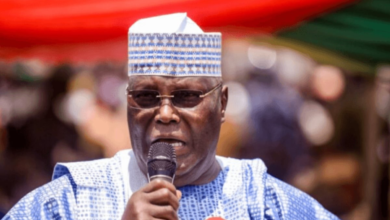
The growing political developments have also brought the influence of former Vice-President Atiku Abubakar into the conversation. Atiku, who is associated with the African Democratic Congress (ADC), remains an important opposition figure with political connections across Northern Nigeria.
Videos and images from his political engagements have generated discussions on social media, with supporters pointing to the crowds as evidence of his continued political relevance.
Nevertheless, the size of crowds at political gatherings does not automatically determine how voters will behave during an election. Electoral support is influenced by several factors, including party structures, campaign organisation, candidate popularity and the issues that matter most to voters.
The APC also faces the challenge of convincing Nigerians that the policies and reforms introduced by the Tinubu administration will produce meaningful improvements in their living conditions.
President Tinubu has defended his administration’s economic reforms, including the removal of the petrol subsidy, describing them as necessary measures for economic recovery and long-term growth.
However, the impact of these policies on household expenses and purchasing power remains a major subject of public debate.
The ruling party will therefore have to address concerns about the economy, security, employment and social welfare as it seeks to maintain public support ahead of the next presidential election.
At the same time, opposition parties are expected to use public dissatisfaction as an opportunity to present alternative policies and attract voters who are unhappy with the current administration.
Despite the growing criticism, the APC retains significant political structures across the country, while defections and alliances have strengthened its presence in several states.
The party’s challenge will be to translate its political influence into public confidence, particularly in communities where residents are demanding visible improvements in security and economic conditions.
The 2027 election is expected to be an important test of how voters assess the performance of the Tinubu administration and the alternatives presented by opposition candidates.
For Northern Nigeria, issues such as insecurity, poverty, education, political representation and the cost of living are likely to remain central to discussions about the future of the region.
As political activities intensify, the recent protests and disagreements demonstrate the importance of public engagement in the democratic process. However, the actions of particular groups should not be taken as the position of every northern voter.
Whether the dissatisfaction expressed by some residents will translate into a broader electoral shift remains uncertain. What is clear is that the ruling party and opposition groups will face increasing scrutiny as Nigerians prepare to decide who should lead the country beyond 2027.