

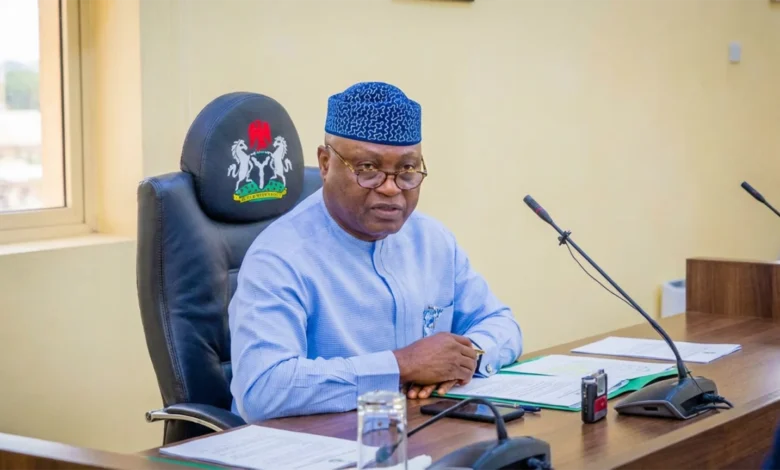
Biodun Oyebanji, Ekiti State governor
As Ekiti State prepares for the 2026 governorship election, political activities across the state are gradually reaching their peak, with major political parties intensifying efforts to convince voters ahead of what promises to be another defining moment in the state’s democratic journey.
Scheduled for June 20, 2026, the election will determine who succeeds in occupying the Government House in Ado-Ekiti for the next four years. While the contest features candidates from several political parties, analysts believe the race is likely to be dominated by the ruling All Progressives Congress (APC), the Peoples Democratic Party (PDP), and a handful of smaller parties hoping to upset the established order.
The incumbent governor, Biodun Oyebanji of the APC, enters the race as the man to beat. Since assuming office in October 2022, Oyebanji has maintained a relatively cordial relationship with political stakeholders across party lines, earning endorsements from influential figures within and outside his party.
His administration has highlighted achievements in infrastructure, education, agriculture, and social welfare, which the APC believes will translate into electoral support. The governor also enjoys the backing of President Bola Ahmed Tinubu and key figures within the ruling party, a factor political observers say could strengthen his chances at the polls.
However, the opposition PDP insists the election remains open. The party has presented a candidate it believes can challenge the APC’s dominance and capitalize on concerns over economic hardship and the rising cost of living affecting many Nigerians.
PDP leaders argue that voters are looking for alternatives and insist that dissatisfaction with national economic conditions could influence voting patterns in the state. The party has been holding consultations with stakeholders and mobilizing supporters across local government areas in an attempt to regain political relevance in Ekiti.
Beyond the APC and PDP, smaller political parties are also making efforts to attract voters. The African Democratic Congress (ADC) and other opposition groups have promised reforms aimed at improving governance, creating jobs, and increasing transparency in public administration.
Although these parties face the challenge of competing against larger and better-funded political organizations, they remain hopeful that a growing number of undecided voters could reshape the political landscape.
Political analysts, however, believe the APC currently holds a significant advantage due to incumbency, its organizational structure, and the broad coalition of support the party enjoys within the state.
They point to the relatively peaceful political climate in Ekiti as a sign that the election may not witness the intense rivalry associated with previous governorship contests. Nonetheless, they caution that elections can be unpredictable and that voter turnout, campaign effectiveness, and last-minute political realignments could still influence the outcome.
As the countdown to June 20 continues, residents of Ekiti State are expected to weigh the promises, performances, and personalities of the candidates before making their choice at the ballot box.
For now, the battle lines are gradually being drawn, campaign messages are becoming more pronounced, and all eyes are on Ekiti as the state prepares for yet another important chapter in its democratic history.
Whether the ruling APC retains power, the PDP stages a comeback, or an outsider emerges to surprise the political establishment, the 2026 governorship election is expected to shape the future direction of the state for years to come.
As election day approaches, political campaigns across Ekiti’s sixteen local government areas are expected to intensify, with candidates taking their messages directly to voters through town hall meetings, rallies, media appearances, and grassroots engagements.
For Governor Biodun Oyebanji and the APC, the campaign strategy is likely to center on continuity and stability. Party officials have repeatedly argued that the governor has laid a solid foundation for development and deserves another term to consolidate ongoing projects.
Supporters of the governor point to road construction projects, investments in education, agricultural initiatives, and the relatively peaceful political atmosphere in the state as evidence of his administration’s achievements. They believe these factors could resonate strongly with voters seeking consistency in governance.
On the other hand, opposition parties are expected to focus their campaigns on issues affecting ordinary citizens, including unemployment, inflation, and the rising cost of living. They argue that despite progress in some sectors, many residents are still grappling with economic challenges and deserve fresh ideas and alternative leadership.
The PDP, in particular, has continued efforts to rebuild its political base in the state after years out of power. Party leaders have been engaging community leaders, youth groups, and women associations, hoping to convert public dissatisfaction into electoral support.
Meanwhile, smaller parties are attempting to position themselves as credible alternatives, promising transparent governance, economic reforms, and policies aimed at empowering young people. Although their structures may not be as extensive as those of the major parties, they are banking on grassroots support and voter desire for change.
Political observers say voter turnout could become one of the deciding factors in the election. Historically, Ekiti has recorded varying levels of participation in gubernatorial elections, and analysts believe that whichever party succeeds in mobilizing its supporters effectively could gain a crucial advantage.
The Independent National Electoral Commission (INEC) has assured residents that preparations for the election are on course. Electoral officials have emphasized their commitment to conducting a free, fair, and credible poll while urging political parties and supporters to maintain peace before, during, and after the election.
Security agencies are also expected to increase surveillance and deploy personnel across the state to ensure a peaceful voting process. Authorities have repeatedly warned against electoral violence, vote-buying, and other practices capable of undermining the integrity of the poll.
As the campaigns gather momentum, conversations among residents increasingly revolve around issues of governance, development, and the future of the state. Markets, universities, social gatherings, and online platforms have become arenas for political debates as citizens weigh the strengths and weaknesses of the candidates.
With days left before voters head to the polls, uncertainty still lingers over what surprises the election may hold. While the APC appears to hold the upper hand on paper, politics in Ekiti has a history of producing unexpected outcomes.
The final verdict will ultimately rest with the electorate, whose votes on June 20, 2026, will determine who leads the state into its next chapter of political and economic development.