Budget 2026, Government Agencies pledge N400bn For Rehabilitation Of Mosques, Palace And Halls

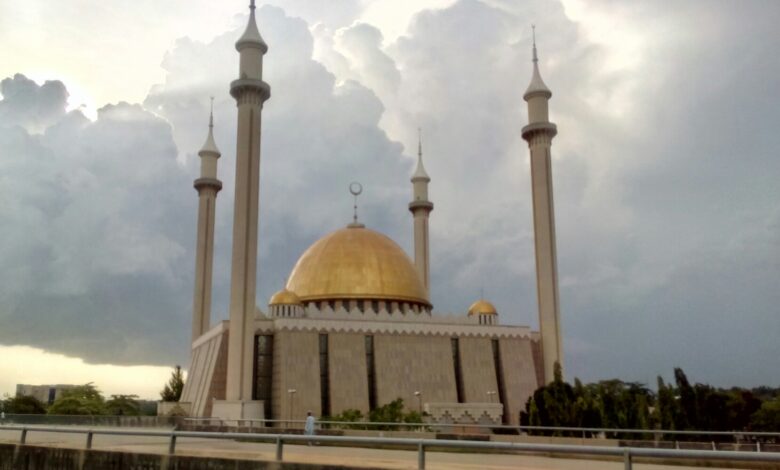
In the 2026 budget, about 78 federal ministries, departments, and agencies allocated close to N400 billion for the building and renovation of community halls, mosques, traditional rulers’ palaces, village market squares, and civic centers.
More than half of the N400 billion was set aside for non-developmental projects like supplying motorcycles and grains, supporting local thrift societies, building museums and mini-stadiums, and providing communities with tricycles, or “Keke Marwa.”
The Ministry of Defense Headquarters, the Nigerian Air Force, the Air Power Center of Excellence, the Nigerian Defense Academy, the Technical Aid Corps, the Foreign Mission, the Federal Ministry of Information and National Orientation, the Federal College of Land Resources, Owerri, the Institute of Agricultural Research and Training, Ibadan, and the Office of the Auditor-General for the Federation are a few of the MDAs under investigation.
The Federal Ministry of Industry, Trade, and Investment, the Federal Institute of Industrial Research in Oshodi, the National Building and Road Research Institute, the National Productivity Center, the Industrial Arbitration Panel, the Industrial Training Fund, the National Agricultural Extension and Research Liaison Services in Zaria, and the Federal Cooperative College in Kaduna are a few more organizations.
Given Nigeria’s financial situation, critics contend that many of the projects designated do not rank among the nation’s most pressing priorities.
Millions of Nigerians are deprived of the advantages of strategic public investment, according to analysts, because hundreds of billions of naira are allocated to numerous small and frequently low-impact projects.
They argue that money spent on disjointed projects could be better used for vital infrastructure, such as roads, power, healthcare, education, and security, which have a greater and longer-lasting effect on both economic growth and the well-being of the populace.
The proliferation of these comparatively minor projects, according to the analysts, not only erodes fiscal restraint but also restricts the government’s capacity to provide high-quality public services.
They caution that there is a huge opportunity cost when limited public funds are diverted from transformative national priorities to initiatives that often lack adequate oversight, transparency, or quantifiable developmental impact.
Concerns have also been raised by experts regarding the inclusion of a number of budget items in certain MDAs’ allocations that have little to do with their statutory obligations.
For example, the National Building and Road Research Institute in Lagos has included strange projects in its budget, such as building village halls in Akukwa, Anambra State; building an international market in Birniwa, Jigawa State; building palaces for traditional rulers at Sarkin Wuse, Osokodoko, and Osana in Rivers State; and building and renovating the palace of the Agbana of Isanlu in Kogi State.
Other projects include setting up market stalls in Gubio, building a multipurpose hall in Sanga, Kaduna State, and renovating five mosques in Izalla (Kebbi), Zawiya Center (Kebbi), Ikole (Ekiti), Mangadu (Jigawa), and Samani (Jigawa). Analysts caution that although these items cost more than N4 billion in the 2026 budget, the federal government receives nothing in return.
In a similar vein, the National Productivity Center’s budget includes odd items like funding for Ijaw musicians; building an emir’s palace in Nguru/Yusufari/Machina/Karasuwa in Yobe State; building an econometrics laboratory in Ekiti State; building and renovating Obas’ palaces at Ado Odo, Yewa, and Ajilefe in Ogun State; and building an abattoir in Akko, Gombe State.
The construction of a sociology department building at Ahmadu Bello University in Zaria will be funded by the National Mathematical Centre, Nigeria’s premier institution for mathematical research and training. However, many argue that this goes beyond the agency’s primary mandate.
Chukwunonso Ihuma, a consultant economist and former central banker, attributed the predicament to the National Assembly’s two chambers. “All of these are the result of the National Assembly’s inadequate oversight. He added, “They are typically the ones who insert, smuggle, and pad these budgets.”