Ebola Crisis Deepens in Congo as Death Toll Climbs, Raising Fears of Wider Regional Health Emergency

The Democratic Republic of Congo is confronting a worsening public health emergency as the country’s battle against Ebola enters a more dangerous phase, with hundreds of lives already lost and growing concerns that the virus may be spreading beyond the communities initially affected.
Health authorities have intensified surveillance and emergency response operations following reports of suspected infections emerging in additional parts of the country, a development that has heightened anxiety among medical experts who fear the outbreak could become increasingly difficult to contain if swift intervention is not sustained.
For many communities across the vast Central African nation, the outbreak has become more than just a medical crisis. It has evolved into a humanitarian challenge affecting families, healthcare workers, local economies, schools, and entire communities already struggling with poverty, displacement, and limited access to healthcare.
Officials say the rising number of fatalities reflects the severity of the outbreak and the enormous difficulties involved in responding to infectious diseases within regions where healthcare infrastructure remains fragile.
Hospitals and treatment centres in several affected areas have continued receiving patients displaying symptoms commonly associated with Ebola, including persistent fever, severe weakness, vomiting, diarrhoea, unexplained bleeding, and intense body pain.
Medical professionals explain that although early diagnosis significantly improves survival chances, many patients arrive at healthcare facilities only after their condition has deteriorated considerably.
This delay often occurs because the early symptoms resemble those of malaria, typhoid fever, and other common illnesses, making it difficult for individuals to immediately recognize the seriousness of their condition.
Healthcare workers therefore continue urging residents to seek medical attention immediately whenever unusual symptoms appear, particularly in communities where confirmed Ebola infections have already been recorded.
Public health officials have also expanded community awareness campaigns designed to educate residents about how the virus spreads and the importance of reporting suspected infections without delay.
Teams of medical volunteers have been travelling from village to village, conducting public education sessions, distributing informational materials, and encouraging community leaders to support disease prevention efforts.
According to health specialists, controlling Ebola depends not only on treating infected individuals but also on quickly identifying everyone who may have come into contact with them.
Contact tracing remains one of the most important strategies used during Ebola outbreaks.
Every confirmed patient may have interacted with dozens of family members, neighbours, healthcare workers, traders, or travellers before receiving medical care.
Disease surveillance teams therefore work tirelessly to identify, monitor, and regularly assess these contacts throughout the virus’s incubation period.
Whenever a contact develops symptoms, immediate isolation and laboratory testing become critical to preventing additional transmission.
Authorities have expressed concern that suspected cases identified outside the primary outbreak area could indicate increasing movement of infected individuals between communities before diagnosis.
Such movement significantly increases the complexity of outbreak response because each new location requires additional surveillance teams, medical supplies, isolation facilities, and trained healthcare personnel.
Medical experts warn that Ebola spreads primarily through direct contact with infected bodily fluids, contaminated surfaces, or materials used while caring for patients.
Unlike airborne diseases, Ebola requires close physical contact for transmission.
However, once introduced into households or healthcare facilities lacking adequate infection prevention measures, the virus can spread rapidly among caregivers and family members.
Healthcare workers remain among those facing the greatest risks.
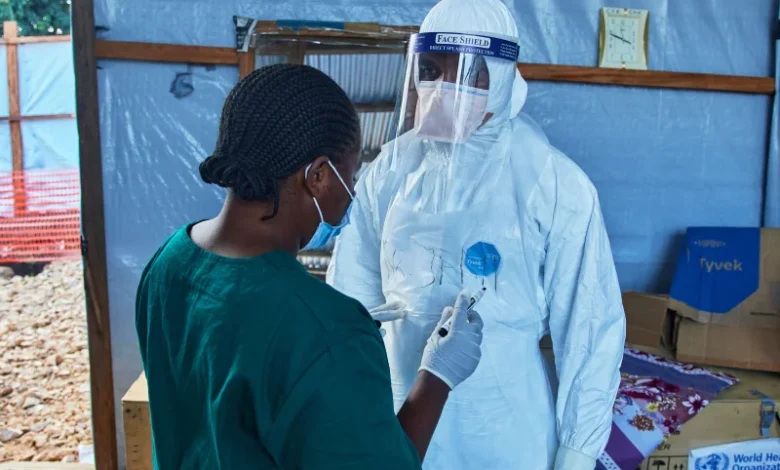
Doctors, nurses, laboratory scientists, ambulance personnel, cleaners, and community health volunteers continue working under extremely demanding conditions while caring for infected patients.
Many spend long hours inside protective equipment designed to reduce exposure, often working in difficult environmental conditions where high temperatures increase physical exhaustion.
Despite these challenges, frontline medical teams continue risking their own safety to save lives and slow the spread of infection.
Several humanitarian organizations have praised their dedication, describing them as indispensable to Congo’s public health response.
The current outbreak has also renewed discussions about healthcare investment across Africa.
Public health specialists argue that stronger community healthcare systems, improved disease surveillance, modern laboratory facilities, and better emergency preparedness could significantly reduce the impact of future outbreaks.
They note that infectious diseases often expose weaknesses within national healthcare systems, particularly where medical infrastructure has experienced years of underinvestment.
The Democratic Republic of Congo has confronted multiple Ebola outbreaks over the past several decades.
Each outbreak has contributed valuable scientific knowledge regarding disease control, emergency response, and patient management.
Nevertheless, experts emphasize that every outbreak presents unique challenges influenced by geography, population movement, healthcare capacity, security conditions, and community behaviour.
International organizations continue supporting Congolese authorities through financial assistance, technical expertise, laboratory support, epidemiological surveillance, logistics, and training programmes for healthcare workers.
Global health agencies have stressed that international cooperation remains essential because infectious diseases do not respect national borders.
Neighbouring countries have consequently strengthened health screening at border crossings while reviewing emergency preparedness plans designed to detect and isolate imported cases should they occur.
Airports, border communities, and major transportation corridors are receiving increased attention from surveillance teams seeking to reduce opportunities for cross-border transmission.
Health economists also warn that prolonged outbreaks often produce significant economic consequences.
Beyond the immediate healthcare costs, communities affected by Ebola frequently experience reduced commercial activity, declining agricultural production, school closures, travel restrictions, and disruptions to local businesses.
Families may also face financial hardship when income earners become ill or when movement restrictions affect employment opportunities.
Mental health professionals have similarly highlighted the psychological burden associated with infectious disease outbreaks.
Fear, uncertainty, grief, and social isolation frequently accompany epidemics, particularly among families who lose loved ones or experience prolonged quarantine.
Counselling services and community support programmes therefore remain important components of comprehensive outbreak response strategies.
Scientists continue studying the virus while exploring improved treatment methods capable of increasing patient survival.
Advances in medical research over recent years have significantly improved understanding of Ebola, allowing healthcare providers to manage patients more effectively than during earlier outbreaks.
Even so, specialists emphasize that prevention remains the most effective defence against widespread transmission.
For millions of Congolese citizens, the priority remains simple: ending the outbreak and restoring normal life.
Parents hope schools can continue operating safely.
Healthcare workers hope additional resources will strengthen their response.
Community leaders hope public cooperation will reduce new infections.
Government officials, meanwhile, continue appealing for calm while assuring citizens that every available measure is being implemented to contain the outbreak.
They maintain that surveillance operations, laboratory testing, emergency treatment, public education, and coordination with international health partners will continue until transmission is successfully interrupted.
As the country confronts another difficult chapter in its public health history, the resilience of healthcare workers, community volunteers, humanitarian organizations, and ordinary citizens will play a decisive role in determining how quickly the outbreak can be brought under control.
Although the rising death toll reflects the devastating human cost of Ebola, health experts remain hopeful that sustained cooperation, early detection, scientific expertise, and public awareness can ultimately prevent the virus from spreading further and help protect countless additional lives across the region.