‘PDP Was Sold to Tinubu’ Dino Melaye Names Three Persons He Blames for Party’s Collapse

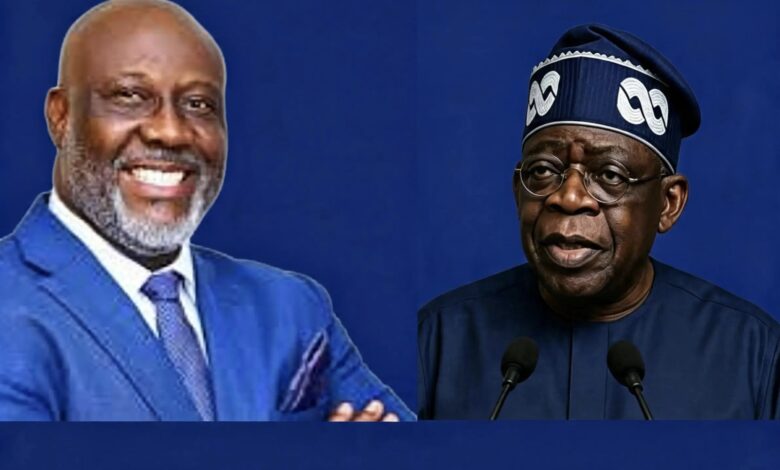
Former Kogi State senator Dino Melaye has reignited controversy within Nigeria’s opposition political space after accusing key figures of contributing to the decline of the Peoples Democratic Party (PDP) and alleging that the party was effectively “sold” to President Bola Ahmed Tinubu.
Melaye made the claim while speaking about the current state of the PDP and the political developments surrounding the opposition ahead of the 2027 general elections. He reportedly named Umar Damagum, Samuel Anyanwu and Bature as the three individuals he believes played significant roles in the party’s deterioration.
His comments have added fresh fuel to the longstanding crisis within the PDP, a party that has struggled with internal divisions, leadership disputes, defections and disagreements over its direction since its defeat in the 2023 presidential election.
Melaye’s allegation is a political claim and has not been established as fact by a court or independent investigation. The individuals he mentioned have not, on the basis of the allegation alone, been proven to have deliberately “sold” the party to Tinubu. Nevertheless, the statement has generated considerable political interest because of the influential positions occupied by some of the people he referenced and the wider circumstances surrounding the PDP’s internal troubles.
The PDP remains one of Nigeria’s most established political parties. It controlled the federal government for 16 years, from 1999 to 2015, before losing the presidency to the All Progressives Congress (APC).
For many years, the party maintained a strong presence across the country, controlling several states and producing numerous senators, members of the House of Representatives and other elected officials.
However, its defeat in the 2015 presidential election marked the beginning of a difficult period for the organisation.
Although the party remained a major opposition force after losing power, its internal disagreements became increasingly visible during the build-up to the 2023 general election.
The presidential primary created one of the most significant divisions within the party, with former Vice President Atiku Abubakar emerging as its presidential candidate while Nyesom Wike and his allies expressed dissatisfaction with the outcome.
The disagreements continued into the general election and became part of the broader political crisis that has affected the party since then.
Atiku eventually lost the presidential election to Tinubu of the APC, while Peter Obi of the Labour Party also emerged as a strong political force after attracting substantial support.
Rather than the election ending the internal conflict within the PDP, the divisions continued.
One of the most controversial developments came when Wike, who had been one of the PDP’s most influential figures, accepted a ministerial appointment under Tinubu.
His appointment as Minister of the Federal Capital Territory created a complicated political situation, particularly because Wike remained associated with the PDP even while serving in an APC-led federal government.
Supporters of Atiku and other critics within the PDP accused the party leadership of failing to respond adequately to what they considered anti-party activities.
The issue has remained one of the major sources of tension within the opposition party.
Melaye has now returned to that debate, arguing that the party’s problems are the result of actions by individuals who, in his view, weakened the organisation from within.
His criticism of the PDP is not entirely new.
The former senator has previously made harsh statements about the party’s condition, at one point declaring that the PDP was dead and buried following its poor performance in the 2023 election.
He has continued to maintain that the party has failed to recover because of the leadership problems that followed its electoral defeat.
His latest comments appear to reinforce that position.
By accusing Damagum, Anyanwu and Bature, Melaye has shifted attention toward specific individuals whom he believes should bear responsibility for the party’s current predicament.
Damagum has been particularly controversial within the PDP because of the leadership disputes surrounding the position of national chairman.
As acting national chairman, he has faced criticism from sections of the party that have demanded stronger leadership and more decisive action against members accused of undermining the organisation.
Anyanwu, as national secretary, has also been involved in the internal struggles surrounding the party’s leadership and control of its structures.
Melaye’s decision to mention the two politicians alongside Bature is therefore likely to generate further reactions within the PDP.
The former senator’s accusations also come at a time when opposition politicians are increasingly exploring new political alliances ahead of 2027.
Several prominent politicians have become involved in efforts to create a stronger opposition coalition capable of challenging the APC.
Melaye himself has moved away from the PDP and become associated with the African Democratic Congress (ADC), which has attracted politicians interested in building an alternative political platform.
His position outside the PDP means his latest criticism can also be viewed within the context of the larger political realignment taking place in the country.
The future of the PDP has become an important question as political parties prepare for the next general election.
The party must determine whether it can reconcile its factions and retain its relevance or whether more of its influential members will move to emerging opposition platforms.
A major challenge is the loss of trust among party members.
When politicians believe that the party leadership cannot protect their interests or provide a clear political direction, they may begin searching for alternative platforms.
This can weaken party structures, particularly at the grassroots level.
For the PDP, rebuilding those structures will require more than replacing individual leaders.
It would likely require reconciliation between competing factions, a clearer political strategy and a renewed effort to convince members that the party can compete effectively in future elections.
The party will also have to address questions about its relationship with politicians who have taken positions within the Tinubu administration.
Those relationships have become a major source of suspicion among opposition supporters.
Critics argue that the presence of former opposition politicians within the ruling government makes it difficult for the PDP to maintain a united opposition strategy.
Others maintain that individual politicians have the right to make their own political decisions and that disagreements should not automatically be interpreted as evidence that the entire party has been compromised.
These competing views are likely to continue shaping the debate.
Melaye’s accusation has therefore opened a broader conversation about what caused the PDP’s decline and whether the party can recover.
For some Nigerians, the party’s problems are largely the result of internal selfish interests and the failure of its leaders to prioritise the organisation above individual political ambitions.
Others believe the decline is a normal consequence of political competition and that the PDP can still rebuild itself if its leaders are willing to resolve their differences.
The 2027 election may ultimately provide the clearest indication of the party’s strength.
If the PDP succeeds in maintaining its major political structures and attracting support across the country, it could demonstrate that it remains capable of competing with the APC.
However, if more prominent members defect and the opposition vote becomes increasingly fragmented, the party could face a much more difficult future.
Melaye’s latest remarks are consequently unlikely to end the debate.
Instead, they could trigger further responses from the individuals he named and from other PDP leaders who may reject his assessment.
The allegations also underline the increasingly bitter nature of political competition as Nigeria moves closer to another general election.
For now, the claim that the PDP was “sold to Tinubu” remains an allegation made by Melaye rather than an established fact.
The responsibility of determining whether any individual committed wrongdoing rests with credible evidence and, where applicable, the appropriate legal or institutional processes.
What cannot be disputed, however, is that the PDP has experienced serious internal difficulties since the 2023 election.
Whether those difficulties eventually destroy the party’s influence or force it to reinvent itself remains one of the major questions in Nigerian politics.
As political realignments continue, the PDP faces the difficult task of deciding whether to repair its existing structure or risk being overtaken by emerging opposition movements.
Melaye’s latest accusation has brought that challenge back into the spotlight and placed renewed attention on the leadership decisions that have shaped the party’s fortunes.
With the 2027 elections drawing closer, Nigerians will be watching to see whether the PDP can overcome its divisions, regain the confidence of its members and present a united alternative to the ruling party, or whether the internal crisis will continue to push its influential figures toward other political platforms.