
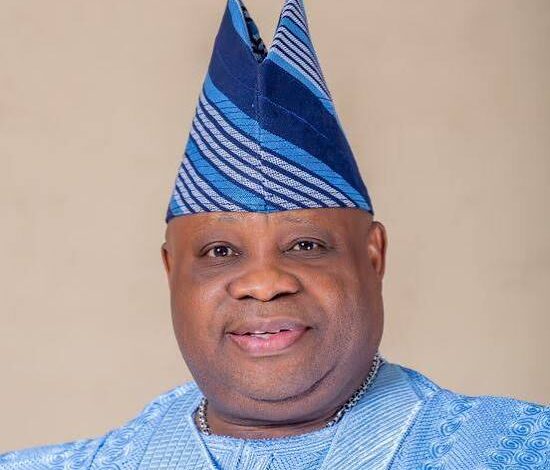
Governor Ademola Adeleke has been declared the winner of the Osun State governorship election, securing another term in office after defeating his closest challenger, Bola Oyebamiji of the All Progressives Congress.
The declaration followed the completion of the collation of results from across the state, bringing an end to a closely watched electoral contest that generated significant political interest in Osun and beyond.
Adeleke, who contested the election under the Accord Party, emerged ahead of the other candidates after securing strong support across several local government areas.
His victory means he will continue as governor of Osun State for another four-year term, giving his administration the opportunity to consolidate its programmes and pursue fresh initiatives during the next phase of governance.
The election had been fiercely contested, with the APC mounting a strong challenge through Oyebamiji. The opposition campaign focused on the need for a change in leadership, while Adeleke’s camp urged voters to support continuity and allow the administration to build on its achievements.
The contest also carried an unusual political dimension because Adeleke was seeking re-election under the Accord Party rather than the platform on which he previously won the governorship.
Despite the change in political platform, the governor succeeded in maintaining a strong electoral structure across important parts of the state.
His performance in several areas considered politically significant contributed substantially to his eventual victory.
The result is also a major political setback for the APC, which had hoped to regain control of Osun State after losing the governorship in the previous election cycle.
Oyebamiji was able to secure support in several local government areas, demonstrating that the APC remained a major force in the state. However, his overall performance was not enough to overturn Adeleke’s advantage across the state.
The election attracted considerable attention because Osun has remained one of the most politically competitive states in the South-West.
Political parties invested heavily in the campaign, while prominent figures across the country took an interest in the contest.
For Adeleke’s supporters, the declaration represents a confirmation that voters are satisfied with the direction of his administration and are willing to give him another opportunity to govern.
For the governor, however, the victory also comes with renewed responsibilities.
His second term is expected to bring increased pressure to deliver on campaign promises and address issues affecting residents across the state.
Infrastructure remains one of the major areas where residents will expect further action.
Road construction and rehabilitation, urban development and improvements in public facilities are likely to remain important issues as the governor begins his new term.
Education is another major area of concern.
Parents, students and teachers will expect continued investment in schools, improved learning environments and measures aimed at strengthening the quality of education across the state.
Healthcare is also expected to remain high on the agenda.
Residents in rural and urban communities continue to depend on government hospitals and health centres, creating expectations for improved facilities, equipment and access to affordable healthcare.
Employment and economic opportunities will equally be important.
With a large population of young people across the state, the administration will face pressure to create opportunities through entrepreneurship, skills development, investment and support for small businesses.
Agriculture is another sector with considerable potential in Osun.
The state has a strong agricultural base, and improved support for farmers, access to financing, modern farming techniques and better market opportunities could contribute to economic growth.
Security will also remain an important responsibility for the administration.
Although Osun has generally enjoyed relative stability compared with some other parts of the country, residents will expect the government to continue working with security agencies to protect communities and maintain peace.
The governor’s victory also means that political attention will gradually shift from the election itself to the performance of the new administration.
During the campaign, political parties made numerous promises to voters.
The electorate will now expect those promises to translate into tangible improvements.
Adeleke will also need to govern beyond the political divisions created during the campaign.
Thousands of residents supported other candidates, and the new administration will be expected to treat all communities fairly regardless of their political affiliations.
The outcome is likely to have implications beyond Osun State.
With Nigeria moving towards the 2027 general elections, the result could influence political calculations among the major parties.
Adeleke’s ability to retain power under a different political platform could also attract attention from politicians considering new alliances and political movements ahead of the next general election.
For the Accord Party, the victory represents a major boost.
The party’s success in retaining the Osun governorship through Adeleke could increase its visibility and influence within the national political landscape.
For the APC, the outcome provides an opportunity to reassess its political strategy in Osun.
The party will likely examine its performance across different local government areas, evaluate its campaign structure and consider how to rebuild support ahead of future elections.
Other political parties that participated in the contest will also be assessing their performances and considering how to strengthen their structures.
Beyond the political implications, the conclusion of the election provides relief to residents who have spent weeks following the campaign and waiting for the outcome.
The focus can now return to everyday issues affecting the people.
Businesses, schools, government institutions and communities will continue to operate under the new political reality.
The administration will also be expected to maintain peaceful relations with opposition parties and encourage constructive political engagement.
Adeleke’s second term provides an opportunity to strengthen institutions, improve transparency and create an environment where residents can participate actively in the development of the state.
The governor will also have to manage expectations carefully.
Winning an election is different from governing, and the challenges facing the state will require sustained attention, resources and effective planning.
The electorate will ultimately judge the administration based on what it delivers during the next four years.
For now, however, the electoral contest has ended with Adeleke emerging as the winner.
His supporters have welcomed the declaration, while the opposition is expected to review the results and determine its next political steps.
The victory gives Adeleke a fresh mandate to continue leading Osun State and places the responsibility for the next phase of the state’s development firmly on his administration.
With the final declaration now made, the political campaign is over and governance takes centre stage.
The people of Osun will now be watching closely to see whether the governor can turn the mandate he has received into meaningful development, stronger public services and improved opportunities for residents across the state.