Donald Duke Explains Why Tinubu Could Have an Edge in 2027 Presidential Election

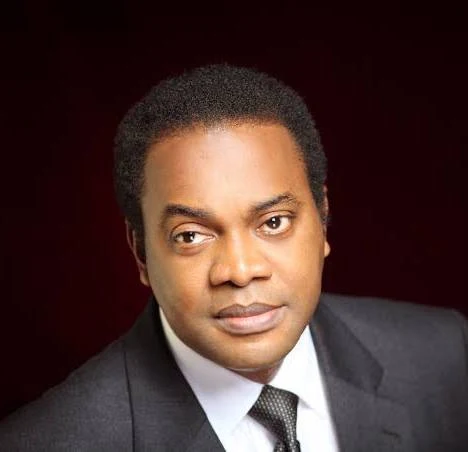
President Bola Ahmed Tinubu could have a strong advantage in the 2027 presidential election if opposition parties fail to unite and present a coordinated challenge, former Cross River State Governor Donald Duke has said.
Duke’s assessment comes as political activities ahead of the 2027 election continue to intensify, with several political parties and prominent politicians already positioning themselves for the presidential contest.
The former governor described Tinubu as an experienced and formidable politician whose political strength should not be underestimated.
According to Duke’s assessment, one of the biggest advantages available to Tinubu is his position as the incumbent president.
An incumbent enjoys nationwide visibility, an established political structure and a network of supporters built over years of political activity.
These advantages can become particularly important during a presidential election, when candidates need strong structures across the country’s different regions.
Duke believes the opposition could struggle to defeat Tinubu if several candidates continue to pursue separate presidential campaigns.
A fragmented opposition could divide votes among different candidates, potentially allowing the ruling party to emerge victorious even in an election where there is significant dissatisfaction with the government.
The former governor has therefore stressed the importance of opposition politicians finding common ground before the election.
He believes personal ambitions and political differences could become major obstacles to building a strong coalition.
Several opposition figures are currently associated with different political platforms and movements, while discussions about possible alliances continue.
The political situation is expected to remain fluid as parties negotiate possible partnerships and candidates assess their chances.
For Duke, the central issue is whether opposition politicians are prepared to make the compromises necessary to defeat an incumbent.
He believes that having several popular candidates may not necessarily translate into victory if they compete against one another.
Instead, their combined support could become divided across different parties and candidates.
This could give Tinubu an electoral advantage, particularly if the APC succeeds in maintaining its existing political structure.
The former governor’s argument does not mean that he considers Tinubu’s performance in office beyond criticism.
Duke has also expressed concerns about the government’s handling of the economy and the impact of economic reforms on ordinary Nigerians.
The rising cost of living has become one of the most important political issues in the country.
Food prices, fuel costs, transportation expenses, unemployment and reduced purchasing power have placed considerable pressure on households.
These issues are expected to form a major part of political campaigns as the 2027 election approaches.
The opposition is likely to use economic hardship to challenge the government’s record, while the ruling party is expected to defend its policies as necessary measures for rebuilding the Nigerian economy.
The petrol subsidy removal remains one of the most controversial policies implemented under Tinubu.
The government has argued that ending the subsidy has reduced the financial burden on public resources and created additional funds for government spending.
Critics, however, have pointed to the immediate impact of higher fuel prices on transportation, food distribution and household expenses.
The debate over the policy is expected to continue throughout the election period.
Security will also be an important factor.
Kidnapping, banditry, terrorism and other forms of insecurity have continued to affect communities and travellers in different parts of Nigeria.
Political parties are expected to present different approaches to tackling insecurity and protecting citizens.
Duke’s argument suggests that the opposition cannot rely solely on public dissatisfaction with the government.
Instead, opposition politicians would need to build a strong electoral structure capable of converting dissatisfaction into votes.
That requires cooperation among political parties, effective grassroots organisation and an agreement on a candidate capable of attracting support across different parts of the country.
The challenge is complicated by the number of politicians interested in the presidency.
Each potential candidate has supporters, political networks and personal ambitions, making it difficult for everyone to agree to support one individual.
The possibility of a single opposition candidate has therefore remained a major topic in discussions surrounding the 2027 election.
Duke himself is part of the wider political landscape, having expressed his own presidential ambitions.
His position consequently reflects the broader dilemma facing opposition politicians: whether to continue individual campaigns or consider a larger arrangement designed to challenge the ruling party.
The APC, meanwhile, has the advantage of controlling the Federal Government.
That position gives the party an established national structure and significant political visibility.
Tinubu also has a long history in Nigerian politics and played a major role in the formation and development of the political structure that eventually produced the APC.
His experience in Lagos politics, his role in building political alliances and his eventual emergence as president have made him one of Nigeria’s most experienced political figures.
Duke’s description of Tinubu as a formidable politician is therefore linked largely to his political experience and ability to build and maintain alliances.
However, political experience alone does not guarantee electoral victory.
The President’s performance in office will remain a major factor in how voters assess his bid for another term.
Economic conditions, security, infrastructure, employment opportunities and the general quality of life will all influence public opinion.
The opposition will likely argue that the administration has not done enough to improve living conditions, while the APC will point to its reforms and ongoing projects.
The 2027 election could therefore become a contest between the government’s record and the opposition’s alternative vision.
Duke’s warning highlights another important factor: organisation.
A politically dissatisfied electorate still needs a credible alternative before it can translate dissatisfaction into an electoral change.
If opposition parties fail to agree on a common strategy, their votes could become divided.
This is the scenario Duke believes could work in Tinubu’s favour.
The coming months will consequently be important for opposition negotiations.
Political parties will have to decide whether their interests are better served by independent campaigns or by forming broader alliances.
Candidates will also have to determine how much of their individual political ambition they are willing to sacrifice for a possible coalition.
The electorate will ultimately have the final say.
Nigerians will be expected to assess the records of the competing candidates and decide which political platform best represents their expectations for the country’s future.
For Tinubu, the challenge will be to convince voters that his administration’s policies are producing the desired results and that his government deserves another term.
For the opposition, the challenge will be to present a convincing alternative while avoiding the divisions that could weaken its chances.
Duke’s assessment has therefore added another dimension to the growing political debate ahead of 2027.
His message is essentially that Tinubu’s political strength, incumbency and established structure could make him difficult to defeat if opposition politicians remain divided.
Whether the opposition can overcome those challenges will become clearer as alliances develop and the presidential contest moves closer to the election.