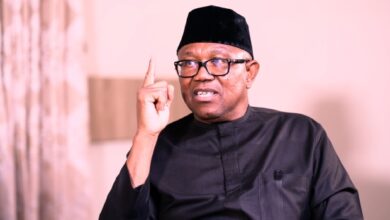
Peter Obi Responds to Datti Baba-Ahmed, Says He Can Replicate Anambra Record Across Nigeria

Former Anambra State Governor and 2027 presidential candidate Peter Obi has responded to criticism from his former running mate, Yusuf Datti Baba-Ahmed, insisting that his record in Anambra State demonstrates that he has the capacity to improve Nigeria if given the opportunity to lead at the federal level.
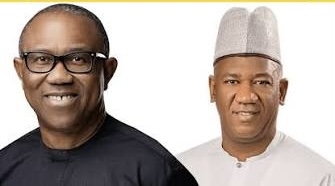
The exchange has added another layer to the growing political contest ahead of the 2027 presidential election, particularly because Obi and Baba-Ahmed were running mates on the Labour Party ticket during the 2023 election.
Baba-Ahmed had recently questioned the ability of opposition politicians seeking to challenge President Bola Ahmed Tinubu to transform the country.
He specifically included Obi among those he believed could not deliver the kind of change Nigeria needs.
Baba-Ahmed argued that several of the politicians seeking to take over from Tinubu had previously been part of established political structures and therefore could not convincingly present themselves as agents of a fundamentally different political order.
He also criticised Obi’s decision to leave the Labour Party and join the Nigeria Democratic Congress, maintaining that he had previously advised his former running mate against the move.
Obi has now responded by directing attention to his record in Anambra rather than engaging in an extended personal exchange with his former political partner.
The former governor argued that his time in Anambra provided evidence of his approach to governance and showed what he could potentially achieve if entrusted with responsibility at the national level.
He said the improvements recorded during his time in office could serve as a basis for his plans for Nigeria.
Obi said his immediate objective as president would be to restore order and discipline to governance while reducing what he considers excessive government expenditure.
He argued that the cost of running government has become a major concern and that public resources should be directed toward areas capable of improving the lives of citizens.
The former governor also placed corruption and waste among the major issues he intends to confront.
He said his administration would pursue a stronger system of accountability while ensuring that government institutions operate within the law.
Obi further promised to strengthen law and order and protect the integrity of the electoral process.
He said electoral manipulation would not be tolerated under his administration and that political parties would be allowed to operate within a properly functioning democratic system.
The former governor also identified national unity and security as major priorities.
He argued that Nigeria cannot make meaningful progress without addressing the divisions and insecurity that continue to affect communities across the country.
According to Obi, his administration would focus on rebuilding confidence in government while ensuring that citizens feel protected regardless of their ethnic, religious or regional backgrounds.
He also highlighted health and education as critical areas requiring greater attention.
The former governor said government should prioritise sectors that directly affect the quality of life of Nigerians instead of concentrating resources on activities that have little impact on ordinary citizens.
Reducing poverty would also form a major part of his proposed agenda.
Obi said Nigeria must create conditions that allow citizens to become productive rather than relying on short-term assistance.
His comments come as political parties and presidential aspirants begin positioning themselves for the 2027 election.
The election is expected to be one of the most closely watched presidential contests in recent Nigerian history, with several opposition figures seeking to challenge Tinubu’s bid for another term.
Obi is now running under the Nigeria Democratic Congress, while former Vice President Atiku Abubakar is contesting under the African Democratic Congress.
Baba-Ahmed, meanwhile, has maintained a critical position toward the major political figures involved in the coming election.
His latest criticism of Obi represents a significant change from the political partnership that brought the two men together in 2023.
Their joint campaign attracted a large following among young Nigerians and voters seeking an alternative to the established political parties.
However, their political paths diverged after the 2023 election.
Obi eventually left the Labour Party and joined the NDC, while Baba-Ahmed remained critical of several political developments involving his former running mate.
Baba-Ahmed has also argued that he is different from many of the politicians seeking the presidency because, in his view, he has never been a member of a ruling political party.
He said he was previously associated with the Congress for Progressive Change but left before the party merged with others to form the All Progressives Congress.
That argument forms part of his broader call for what he describes as a new political direction for Nigeria.
Obi, however, has chosen to emphasise his administrative experience and past record rather than engage directly with the criticism.
His reference to Anambra is significant because his tenure as governor remains central to his political identity and the case his supporters make for his presidential ambition.
Supporters frequently point to his emphasis on fiscal management, infrastructure, education and healthcare as examples of the type of governance they believe he could introduce at the federal level.
Critics, however, have argued that managing a state and managing a country with more than 200 million people are fundamentally different challenges.
The national government controls a far larger bureaucracy and must deal with complex issues involving defence, foreign policy, monetary and fiscal coordination, federal infrastructure and relations among 36 states and the Federal Capital Territory.
Obi’s latest argument is therefore likely to become part of the wider debate over whether experience at the state level can be successfully translated into national leadership.
The political exchange also demonstrates how quickly disagreements among former allies can become central to the 2027 campaign.
Obi and Baba-Ahmed were once presented as a united political team, particularly during the 2023 presidential election.
Their partnership attracted substantial support among young Nigerians and became one of the defining features of that election.
Their current disagreement illustrates the significant political changes that have taken place since then.
The 2027 contest is expected to feature debates not only over individual candidates but also over their previous records, political affiliations and ability to deliver reforms.
For Obi, the argument remains centred on his performance in Anambra and his stated plans to apply similar principles to national governance.
He has presented his proposed presidency as one focused on reducing waste, improving institutions, fighting corruption, strengthening security and investing in human development.
He has also stressed the importance of restoring public confidence in government.
The former governor’s latest response does not settle the wider debate over his record or his political transition, but it clearly communicates his belief that his previous experience is relevant to the national challenge.
His position is that Nigeria does not require leadership to be treated as an experiment because he has already governed at the state level.
Whether voters accept that argument will ultimately depend on how the 2027 campaign develops and how the competing candidates present their records and policy proposals.
The exchange with Baba-Ahmed is also likely to remain part of the political conversation as both men continue to explain their different visions for Nigeria.
For now, Obi has responded to the criticism by pointing back to his time in Anambra and arguing that the same principles he believes produced improvements there can be applied on a much larger scale.
His message is that Nigeria can be improved through disciplined governance, reduced waste, stronger institutions, better public services and greater attention to citizens’ welfare.
With the 2027 presidential contest gradually taking shape, Nigerians are likely to hear much more about the records of the leading candidates and their plans for addressing the country’s economic, security and social challenges.
Obi’s latest remarks have therefore shifted the focus away from the personal disagreement with his former running mate and back toward the central question of his presidential campaign: whether his experience in Anambra provides enough evidence that he can deliver the kind of national transformation he is promising.