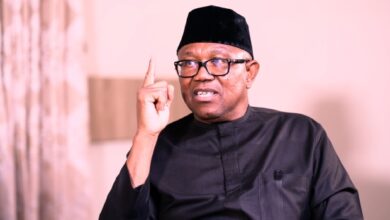


Former Vice-President and 2027 presidential candidate Atiku Abubakar has challenged the Federal Government to explain how the funds saved from the removal of the petrol subsidy have been spent, following a renewed threat by university lecturers to embark on nationwide industrial action.
Atiku’s criticism came after the Academic Staff Union of Universities (ASUU) warned that it could shut down public universities again if outstanding issues concerning lecturers’ welfare and the implementation of agreements with the government are not resolved.
The former vice-president argued that the latest crisis in the university system raises serious questions about one of the major justifications given for removing the fuel subsidy.
According to Atiku’s position, Nigerians accepted the removal of the subsidy and subsequently endured significantly higher fuel prices and increased costs of transportation, food, energy and other essential goods on the understanding that money previously spent on subsidising petrol would be redirected towards critical sectors of the economy.
He questioned why the country is once again facing the possibility of a university shutdown if substantial resources were supposedly freed by the subsidy reform.
The renewed ASUU dispute has placed education at the centre of a wider political argument over how government has managed the economic consequences of subsidy removal.
ASUU recently warned that it could activate a nationwide strike within the shortest possible time unless the Federal Government and state governments address unresolved issues affecting university lecturers.
The union’s concerns include the implementation of the agreement reached with the government in December 2025, payment of outstanding salaries and other entitlements, as well as the remittance of deductions made from lecturers’ salaries.
ASUU has also raised concerns about pension contributions, cooperative deductions and union check-off dues which it says have not been properly remitted.
The union’s position has increased anxiety among students and parents who fear another disruption to the academic calendar after years of recurring university strikes.
For Atiku, the situation represents evidence that the government has not sufficiently demonstrated how the financial benefits of subsidy removal are being translated into improvements in public services.
He argued that Nigerians have already paid a heavy price for the policy through increased living costs and that the government therefore has a responsibility to demonstrate where the financial gains have gone.
The former vice-president has particularly questioned the state of public universities, where lecturers continue to raise concerns about welfare, unpaid obligations and inadequate facilities.
He also linked the education crisis to the wider economic pressure facing Nigerian families.
As the cost of living rises, many parents are struggling to finance education while students in public universities face uncertainty over whether academic activities will continue uninterrupted.
Atiku’s criticism extends beyond ASUU and the immediate dispute with lecturers.
He argued that the government should account for how resources released by subsidy removal have been distributed across education, healthcare, infrastructure and other essential areas.
The former vice-president said Nigerians were told that the removal of subsidy would create fiscal space for government to invest more heavily in sectors that directly affect citizens.
He has now questioned whether those expected benefits are being delivered at the level promised.
The controversy comes more than three years after the Federal Government removed the petrol subsidy, a decision that dramatically changed the country’s economic landscape.
The policy initially resulted in a sharp increase in petrol prices and triggered higher transportation and production costs.
Although the government has maintained that subsidy removal was necessary to reduce fiscal pressure and redirect public resources, critics have repeatedly demanded greater transparency over the use of the resulting savings and increased revenues.
The Federal Government has also pointed to increased allocations to states and other interventions as part of the benefits of its economic reforms.
However, Atiku’s latest criticism suggests that the debate over subsidy savings is far from settled.
He questioned why higher government revenues and increased allocations have not translated into sufficiently improved public education and other essential services.
The renewed dispute with ASUU has therefore become another platform for opposition politicians to challenge the economic policies of the Tinubu administration.
Atiku is seeking the presidency in 2027 under the African Democratic Congress and has increasingly used issues such as the cost of living, education, unemployment and economic reforms to criticise the current administration.
His comments on ASUU also reflect his broader argument that economic reforms must be judged by their impact on ordinary Nigerians rather than by government revenue figures alone.
Meanwhile, ASUU has maintained that its threat of industrial action is rooted primarily in unresolved agreements and lecturers’ welfare rather than partisan politics.
The union said the December 2025 agreement reached after years of negotiations has not been fully implemented by the Federal Government and several state governments.
It also complained about outstanding withheld salaries dating back to previous industrial disputes.
According to the union, lecturers are still owed part of the salaries withheld during earlier strike periods, while the value of those outstanding payments has been significantly eroded by inflation and the depreciation of the naira.
ASUU has argued that lecturers performed the work for which those salaries were withheld and that the outstanding payments should therefore be released.
The union has also expressed concern over the failure to remit third-party deductions from lecturers’ salaries.
Such deductions include pension contributions, cooperative funds and union dues.
ASUU said failure to remit the money creates additional financial pressure on workers because they are denied access to funds that have already been deducted from their earnings.
The union’s warning has placed the Federal Government under renewed pressure to reach a settlement before another nationwide strike begins.
Government officials have, however, continued to emphasise dialogue as the preferred means of resolving the dispute.
The administration has previously maintained that it is committed to improving university funding and lecturers’ welfare while also arguing that some matters raised by ASUU fall under the responsibilities of individual university governing councils.
The government has also warned that existing labour laws, including the principle of “no work, no pay,” could apply if lecturers proceed with industrial action.
The disagreement therefore remains centred on both financial obligations and the implementation of agreements governing Nigeria’s public university system.
For students, another strike would carry significant consequences.
Previous university shutdowns have delayed graduation, disrupted academic calendars and forced students to spend additional time in school.
Repeated disruptions can also affect students seeking admission, professional opportunities and further education abroad, especially when academic calendars become difficult to predict.
Parents and guardians may also face additional financial pressure when students remain in school longer than expected.
The current dispute has consequently attracted attention beyond lecturers and government officials.
It has become part of the broader debate over whether Nigeria’s economic reforms are producing the improvements promised to citizens.
Atiku’s central question is whether the financial burden placed on Nigerians by subsidy removal has been matched by corresponding investments in education, healthcare, infrastructure and other public services.
The government, on the other hand, is expected to defend its record by pointing to its broader economic reforms, increased revenues and interventions across different sectors.
The disagreement is likely to intensify as the 2027 election approaches.
Education has traditionally been a major campaign issue in Nigeria, particularly because of the country’s large youth population and the persistent problems of inadequate infrastructure, overcrowded institutions, unemployment and underfunding.
The threat of another ASUU strike could therefore become a significant political issue during the coming election season.
For Atiku and other opposition figures, the crisis provides an opportunity to question the effectiveness of the government’s economic policies.
For the administration, resolving the dispute before universities are shut down could help prevent further disruption and demonstrate its commitment to maintaining stability in the tertiary education sector.
The immediate challenge remains finding a lasting solution to the issues raised by ASUU.
While successive administrations have reached agreements with the union, disagreements over implementation have repeatedly returned.
The cycle has contributed to years of instability in Nigeria’s university system.
A permanent resolution would require clear funding arrangements, reliable implementation mechanisms, improved staff welfare and stronger accountability from both government and university authorities.
Until those issues are addressed, students remain vulnerable to repeated disruptions whenever negotiations between ASUU and government break down.
Atiku’s latest intervention has consequently shifted the conversation from the immediate threat of a strike to a larger question about the management of the country’s post-subsidy-removal finances.
His demand for an explanation over the alleged savings has placed the government under pressure to show Nigerians how the financial resources created by the policy have been allocated and what measurable benefits have resulted.
As the ASUU deadline and negotiations continue to attract attention, the outcome could have implications not only for university students and lecturers but also for the wider political debate over Nigeria’s economic reforms.
For now, Atiku’s question remains at the heart of the controversy: if Nigerians have endured the cost of subsidy removal in the hope that government would redirect the savings into critical public services, where are the promised benefits?