
Peter Obi Challenges Anambra Government Over Loan Claims, Says He’ll Quit 2027 Race If One Person Is Found Unpaid

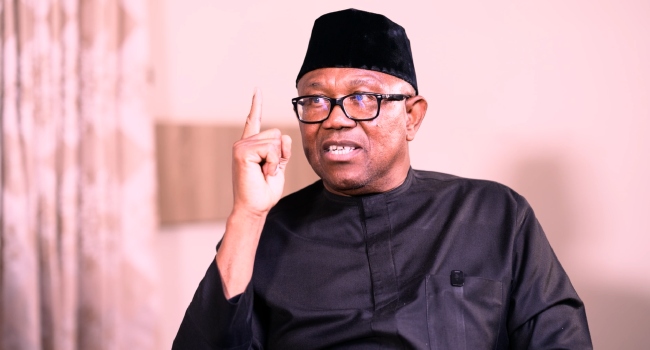
Former Anambra State Governor Peter Obi has challenged the state government to produce evidence that he left behind unpaid financial obligations when he completed his tenure, offering to abandon his 2027 presidential campaign if even one person can be identified as having been owed by his administration.
Obi’s challenge followed renewed claims by the Anambra State Government that the state is still servicing loans and other financial commitments incurred by previous administrations, including those associated with Obi’s tenure.
The former governor strongly disputed any suggestion that he left office owing salaries, pensions, gratuities, contractors or suppliers.
He argued that his administration concluded its tenure without leaving behind unpaid obligations to individuals or businesses that were entitled to payment from the state government.
Obi went further by attaching a political consequence to the claim.
He challenged the Anambra Government to identify anyone who was owed money by his administration when he left office, saying he would immediately end his campaign for the 2027 presidential election if such a person could be produced.
The challenge has reopened a longstanding debate over the state’s financial obligations and the distinction between loans secured by a government and unpaid bills owed directly to workers, contractors and suppliers.
The controversy began after the Anambra Commissioner for Finance, Izuchukwu Okafor, discussed the state’s inherited debt obligations during a government podcast.
Okafor said the state continues to make repayments on loans obtained by previous administrations and that deductions connected to those obligations are reflected in the state’s monthly Federation Account Allocation Committee, or FAAC, statements.
The commissioner identified the administrations of Obi and his successor, Willie Obiano, among those whose borrowing contributed to the state’s inherited loan obligations.
He also mentioned other previous administrations while discussing the broader history of borrowing by the state.
According to the commissioner, the fact that the current administration has not obtained new commercial bank loans since taking office does not mean Anambra has stopped making debt repayments.
He explained that some financial obligations inherited from previous governments were structured to be repaid through deductions from the state’s federal allocations.
The issue has become politically significant because Obi is preparing for another presidential contest in 2027 and his record as Anambra governor remains a major part of his political identity.
Supporters frequently point to his administration’s financial management as one of the reasons they believe he should be trusted with responsibility at the federal level.
Critics, however, have continued to scrutinise the state’s financial records during his tenure and question the nature and purpose of obligations incurred before he left office.
Obi’s latest response suggests that he is drawing a distinction between legitimate loans that may have been borrowed for government projects and unpaid liabilities that should have been settled before he left office.
His argument is that the existence of loans being repaid by the state today does not necessarily mean that his administration left behind unpaid bills.
The distinction is important because governments can legitimately borrow money for infrastructure and development projects, with repayment extending beyond the tenure of the administration that secured the facility.
Such loans can remain part of a state’s financial obligations for years after a governor leaves office.
At the same time, unpaid salaries, pensions, gratuities, contractor bills and supplier obligations represent a different category of liability and can create immediate financial pressure on subsequent administrations.
Obi’s challenge focuses specifically on the latter category.
The former governor maintained that he did not leave behind unpaid salaries, pensions, gratuities or outstanding payments owed to contractors and suppliers.
He argued that if the current administration has evidence contradicting that position, the affected individuals or companies should be identified.
The finance commissioner, meanwhile, provided a broader account of the state’s financial position, saying inherited loans continue to affect monthly revenue available to the government.
He claimed that the current administration had reduced the state’s overall debt burden by more than 83 per cent since Governor Chukwuma Soludo assumed office in 2022.
He also said Anambra’s domestic debt was now close to zero after the government addressed several inherited obligations.
The commissioner said the government had dealt with liabilities including outstanding contracts, pension arrears and gratuity-related obligations.
He further disclosed that the state had recently completed repayment of one particular debt facility, describing the development as part of efforts to create additional fiscal space for the state.
However, according to the commissioner’s explanation, some external financial obligations remain active.
These include certain facilities associated with international development institutions, whose repayment arrangements extend beyond the tenure of the administrations that initially secured them.
The repayments are reportedly structured so that deductions are made from the state’s federal allocations before the remaining funds are made available to the government.
This means that although the present administration may not have taken new commercial loans, it can still be responsible for servicing financial obligations inherited from earlier governments.
The disagreement therefore centres partly on how the word “debt” is being interpreted in the political debate.
For the Anambra Government, inherited loans constitute financial obligations that continue to affect the state’s monthly revenue.
For Obi, however, the existence of such loans does not establish that his administration left the state owing workers, contractors, suppliers or other individuals.
The former governor’s challenge now puts the issue directly in the political spotlight.
If the state government accepts the challenge and produces documentation showing that individuals or companies remained unpaid when Obi left office, it could provide a basis for a broader examination of his financial record.
If no such evidence is produced, Obi is likely to use the episode to reinforce his argument that his administration maintained strong financial discipline.
The dispute is also likely to become part of the wider political conversation surrounding Obi’s 2027 presidential ambition.
His supporters have consistently promoted his record in Anambra as evidence of his ability to manage public resources.
They frequently cite projects and financial policies from his tenure when making the case for his candidacy.
His opponents, however, are expected to continue examining the borrowing and financial commitments recorded during his years in office.
The debate is particularly important because the management of public debt has become a major national political issue.
Nigeria’s federal and state governments continue to face questions about borrowing, debt servicing, revenue generation and the amount of money available for development after mandatory deductions.
The Anambra dispute provides another example of how financial records from one administration can remain politically relevant long after a governor has left office.
Obi governed Anambra from 2006 to 2014 before handing over to Obiano.
Soludo became governor in March 2022 and has since made fiscal management and debt reduction important parts of his administration’s economic message.
The current government has repeatedly highlighted efforts to reduce financial obligations and create more resources for development.
The commissioner’s latest comments are consistent with that broader narrative, particularly his claim that the state’s debt burden has fallen substantially under the current administration.
Obi’s response, on the other hand, places emphasis on his own record at the point he left office.
The former governor’s willingness to tie the matter to his 2027 presidential campaign has raised the political stakes surrounding the disagreement.
His challenge effectively asks the state government to move beyond general references to inherited loans and identify specific unpaid obligations that existed when he left office.
The outcome of the dispute may depend on financial records, loan agreements, payment schedules, audited accounts and other official documents covering the transition between administrations.
Such records would help distinguish between loans that were properly serviced over several years and unpaid bills that were outstanding at the end of a governor’s tenure.
For voters, the distinction could become increasingly important as the 2027 campaign gathers momentum.
Political candidates are expected to defend their records in office, particularly when seeking to persuade Nigerians that they can responsibly manage public resources at the national level.
Obi’s latest statement is therefore more than a response to a debt-related allegation. It is also an attempt to put his record as Anambra governor at the centre of the 2027 political debate.
For now, both sides are presenting different aspects of the state’s financial history.
The Anambra Government says inherited loans continue to be repaid and that deductions from federal allocations remain part of the state’s financial obligations.
Obi insists that this should not be interpreted as evidence that he left workers, contractors, suppliers or other beneficiaries unpaid.
Until the relevant financial records are fully examined and the competing claims are independently verified, neither side’s political interpretation should be treated as the final word on the state’s debt history.
The dispute is likely to continue as the 2027 election approaches, with Obi’s record in Anambra expected to remain one of the issues used by supporters and opponents to assess his presidential ambition.


