
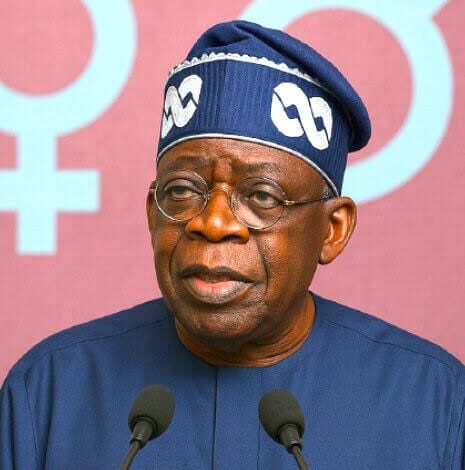
President Bola Ahmed Tinubu has changed his travel plans and postponed his return to Nigeria after a last-minute adjustment to his itinerary, with the President now expected to return to the country on Tuesday, September 29.
Tinubu had initially been expected to return to Nigeria during the weekend following an extended working vacation in Europe.
The latest change means the President will spend additional days outside the country before returning through Lagos, where he is expected to remain for some time before travelling to Abuja.
The reason for the latest adjustment has not been publicly disclosed.
Tinubu left Nigeria on August 30 for London at the beginning of what was initially announced as a three-week working vacation.
After spending about a week in the United Kingdom, the President travelled to Paris, France, where he held meetings with French President Emmanuel Macron and businessman Vincent Bolloré.
The Presidency subsequently announced on September 21 that Tinubu had extended his stay abroad by a few days and would return to Nigeria during the following weekend.
That expected return has now been pushed back again.
The latest development means the President’s working vacation, which was initially planned for three weeks, has extended to roughly four weeks.
Reports indicate that Tinubu is expected to arrive in Lagos on Tuesday before spending additional time in the commercial capital attending to official matters.
He is also expected to remain in Lagos for several days before returning to Abuja.
The change in itinerary has attracted renewed public attention because of the length of the President’s stay outside Nigeria and the fact that Vice-President Kashim Shettima has also been outside the country for part of the period.
Shettima travelled to New York to represent Nigeria at the 81st United Nations General Assembly after being delegated by Tinubu to lead the country’s delegation.
The Vice-President delivered Nigeria’s national statement at the global gathering in the President’s absence.
Tinubu’s decision not to attend the UN General Assembly in person has already generated political debate, with opposition figures questioning the President’s continued absence from Nigeria.
The Presidency has maintained that Tinubu has remained in contact with officials at home and continued to direct the affairs of government while abroad.
The government has also pointed to official decisions taken by the President during his stay outside the country as evidence that he remains actively involved in governance.
Among the matters handled during the period was the President’s directive for an independent investigation into the deaths of illegal miners in Minna, Niger State.
Other government activities have continued through the Vice-President and senior officials while Tinubu remains abroad.
The latest delay, however, has revived questions about the constitutional implications of a prolonged presidential absence.
Section 145 of Nigeria’s 1999 Constitution provides for the President to transmit a written declaration to the Senate President and Speaker of the House of Representatives when proceeding on vacation.
The provision also deals with the circumstances under which the Vice-President may perform the functions of President in an acting capacity.
The prolonged nature of Tinubu’s absence has prompted opposition politicians and some civil society voices to question whether the constitutional requirements surrounding presidential absence have been fully complied with.
There has also been debate over whether the President’s physical absence from the country amounts to a transfer of presidential powers.
Senate President Godswill Akpabio has rejected suggestions of a power vacuum, maintaining that Tinubu remains in charge of the country’s affairs.
The debate has become more prominent because Shettima, who had been representing Tinubu at several official engagements during the President’s vacation, was also outside Nigeria for the UN General Assembly.
However, government officials have continued to insist that the country’s constitutional and administrative structures remain functional.
The latest travel adjustment has also generated political reactions, particularly as Nigeria moves closer to the 2027 general election.
Opposition politicians have used the President’s prolonged absence to question his priorities and leadership style, while supporters of the administration have argued that the President can continue carrying out official responsibilities while travelling.
Former Anambra State governor Peter Obi has questioned Tinubu’s absence from the United Nations General Assembly and asked why the President was not personally representing Nigeria at the international gathering.
Former Vice-President Atiku Abubakar has also raised questions about the President’s extended stay abroad and the constitutional arrangements surrounding his absence.
The reactions have added a political dimension to what the Presidency has described as a working vacation.
The administration has continued to maintain that Tinubu remains engaged with national affairs and that the trip is not preventing government from functioning.
Tinubu’s return to Lagos will therefore be closely watched, particularly because he is expected to resume direct official engagements after spending several weeks abroad.
His decision to remain in Lagos for a period before travelling to Abuja also means that some presidential activities are likely to take place from the commercial capital.
Reports indicate that the President is expected to spend up to a week in Lagos before returning to the Federal Capital Territory.
The timing is also significant because Nigeria’s Independence Day falls on October 1, only two days after Tinubu’s expected return.
There is therefore considerable attention on whether the President will spend the Independence anniversary in Lagos or Abuja and what official activities will be organised around the occasion.
The Presidency has not publicly provided a detailed explanation for the latest change in the President’s travel plans.
Until an official explanation is issued, the reason for the delay remains unclear.
The adjustment also means that earlier expectations of Tinubu returning during the weekend will not be met.
For now, the reported schedule places his expected arrival in Lagos on Tuesday, September 29.
The President’s extended stay abroad has generated considerable discussion over presidential travel, constitutional responsibilities and the role of the Vice-President when the President is outside the country.
It has also highlighted the growing political scrutiny surrounding Tinubu’s administration as parties prepare for the 2027 elections.
While government officials insist that the President has remained in charge and continues to direct national affairs, opposition figures have continued to question whether his prolonged absence is appropriate given the country’s economic, security and political challenges.
The latest travel change is therefore likely to remain a subject of public discussion until Tinubu returns and the Presidency provides further details about the circumstances surrounding the adjustment.
For now, the President’s return has been moved from the expected weekend arrival to Tuesday, September 29, with Lagos expected to be his first destination before he later returns to Abuja.