
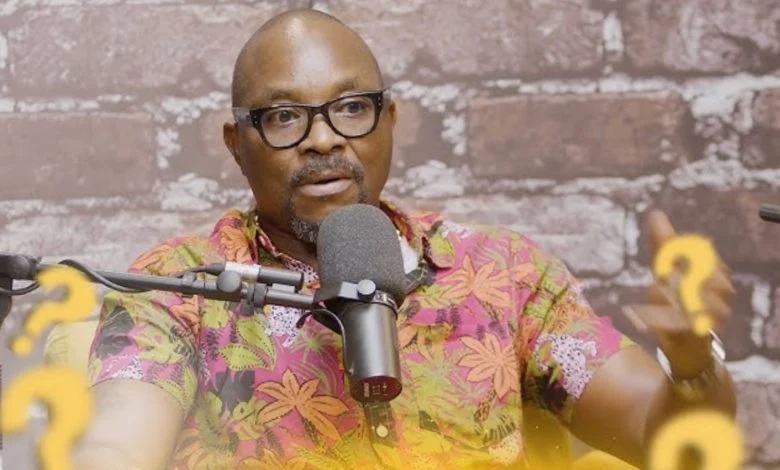
Nigerian businessman and political commentator Isaac Fayose has challenged Minister of the Federal Capital Territory, Nyesom Wike, following the minister’s declaration that he would resign from office if President Bola Ahmed Tinubu fails to win the Federal Capital Territory and Rivers State in the 2027 presidential election.
Fayose responded by telling the former Rivers State governor to begin preparing for life outside government, while insisting that the political situation in Abuja and Rivers State would be different from what Wike expects.
Wike had made the resignation pledge during an engagement with members of the Apo Mechanics and Traders Association in Abuja, where he spoke about his determination to deliver electoral support for Tinubu in both the FCT and his home state.
The minister said the 2027 presidential election would be a test of his political effectiveness, arguing that Abuja is the territory where he currently works while Rivers remains his home state.
He declared that if Tinubu loses in either of the two areas, he would consider the outcome a failure on his part and would no longer feel qualified to remain in his ministerial position.
Wike fixed January 17, 2027, as the date on which he said he would announce his resignation if Tinubu loses the FCT and Rivers State in the presidential election scheduled for January 16.
The declaration has since generated considerable political discussion, particularly because Wike remains a member of the Peoples Democratic Party while serving as a minister under an All Progressives Congress-led federal government.
His continued support for Tinubu has placed him at the centre of political realignment ahead of the 2027 elections.
Wike has been actively promoting support for Tinubu and has spoken about building a broad political coalition in the FCT involving members of different political parties.
During his meeting with the Apo mechanics and traders, he called for grassroots mobilisation behind Tinubu and also spoke about support for candidates contesting legislative positions in the capital.
He specifically endorsed former FCT Senator Philip Aduda for the Senate and urged members of the business community to participate actively in the political process.
Fayose, however, rejected Wike’s confidence in Tinubu’s prospects in Abuja and Rivers.
In his reaction, he argued that Peter Obi, the presidential candidate of the Nigeria Democratic Congress, would attract substantial support in both territories if the election is conducted freely and fairly.
Fayose referred to Obi’s performance in the 2023 presidential election in the FCT as part of his argument, maintaining that the former Anambra governor could improve on that showing in the next election.
He also disputed Wike’s expectation of securing Rivers State for Tinubu, arguing that political support in the state cannot simply be assumed because of Wike’s influence or political activities.
Fayose’s comments have added another layer to the growing political debate over the FCT and Rivers State, two areas that are likely to receive significant attention during the 2027 presidential campaign.
The FCT is particularly important because Abuja has historically attracted voters from different parts of Nigeria, while Rivers State remains one of the country’s politically influential states because of its population, economic importance and history of strong political competition.
Wike’s decision to make the two territories central to his personal political pledge has therefore attracted attention from supporters and opponents of the Tinubu administration.
His statement also demonstrates the extent to which political figures are already preparing for the 2027 contest, despite the election still being months away.
Fayose used his response to question the confidence behind Wike’s pledge, arguing that political power ultimately belongs to voters.
He also warned against any attempt to influence the electoral process improperly, saying the outcome should reflect the genuine choices of citizens.
The allegation that any politician or official intends to manipulate the election has not been established by Fayose’s comments alone, and the 2027 election outcome cannot be determined in advance.
The exchange between the two men nevertheless reflects the increasingly heated political atmosphere surrounding the next presidential election.
Wike has positioned himself as one of the major political figures working to build support for Tinubu beyond the traditional APC structure.
His Rainbow Coalition is intended to bring together politicians and supporters from different parties around the president’s re-election campaign.
The minister has argued that political cooperation across party lines can produce broader support for candidates and strengthen the chances of delivering electoral victories.
His activities have also attracted criticism from some opposition figures who question his decision to remain in the PDP while actively supporting an APC president.
Wike, however, has continued to defend his political position and has made it clear that his support for Tinubu is based on his assessment of the president’s administration and his political interests.
The latest disagreement with Fayose therefore forms part of a larger political contest over alliances, voter support and the future direction of Nigeria.
For Fayose, the focus is on what he believes could happen if voters are allowed to make their choices without interference.
He has expressed confidence in Obi’s political strength in Abuja and Rivers, but those statements remain political claims rather than established predictions of the 2027 election.
The actual outcome will depend on the candidates, campaigns, voter participation, electoral administration and votes cast on election day.
The disagreement also highlights the importance of the FCT in Nigeria’s presidential elections.
Although Abuja is not a state, its votes count in determining the nationwide spread required in a presidential contest. Political parties therefore routinely pay close attention to the territory during national elections.
Rivers State is similarly significant because of its large electorate and strategic political position in the South-South region.
The political competition in both areas is expected to intensify as the election approaches, with rival camps seeking to build grassroots structures and persuade voters.
For Wike, winning support for Tinubu in the two territories has now become a personal political benchmark following his resignation pledge.
For Fayose, the declaration provides an opportunity to challenge Wike’s political calculations and argue that voters may not follow the direction being promoted by the minister.
The exchange is likely to remain part of the political conversation as parties and candidates intensify their preparations for 2027.
Beyond the personalities involved, the episode raises broader questions about the role of political influence, campaign mobilisation and accountability in Nigerian elections.
Whether Wike’s political coalition can deliver the results he expects and how other parties respond will become clearer as campaigns progress.
For now, the minister has publicly tied his continued stay in office to Tinubu’s performance in the FCT and Rivers, while Fayose has responded with a direct challenge for him to prepare for another career outside government.
The competing positions underscore the growing intensity of Nigeria’s 2027 political contest, even before the formal election campaign reaches its peak.