
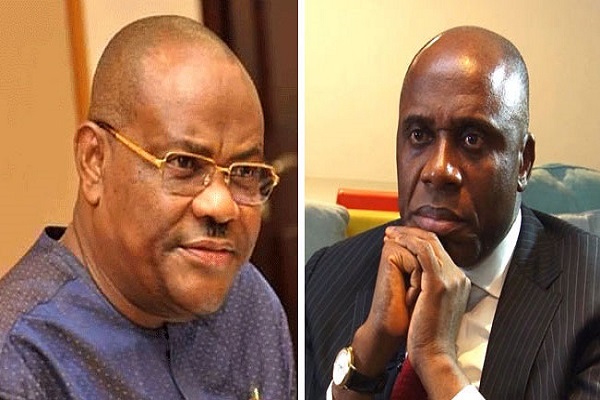
The Minister of the Federal Capital Territory, Nyesom Wike, has reportedly taken a swipe at former Rivers State Governor and ex-Minister of Transportation, Rotimi Amaechi, declaring that he would never become Nigeria’s president.
The reported remark has added another dimension to the political exchanges between the two prominent figures, whose rivalry dates back to their time in Rivers State politics.
Wike and Amaechi have long been associated with opposing political camps in Rivers State. Their disagreements have featured prominently in discussions about the state’s political leadership, party loyalties and influence in national politics.
Both men previously served as governors of Rivers State, but their political paths have since diverged. Amaechi was a prominent member of the All Progressives Congress (APC) and served as Minister of Transportation under former President Muhammadu Buhari, while Wike rose through the Peoples Democratic Party (PDP) before joining President Bola Tinubu’s administration as FCT minister.
The reported comment comes amid continuing political discussions surrounding the future ambitions of Nigeria’s leading political figures and the alliances that could shape the country’s political landscape ahead of the 2027 general elections.
Amaechi has remained an influential political figure since leaving office as transportation minister. His experience as a former governor, minister and senior party member has kept him involved in national political conversations.
Wike, meanwhile, has maintained a prominent presence in national affairs through his position as FCT minister. His political activities and public comments frequently attract attention, particularly when they involve individuals with whom he has had longstanding disagreements.
The reported declaration that Amaechi would never become president is likely to generate reactions among supporters of both politicians. While Wike’s supporters may interpret the statement as an expression of his political position, Amaechi’s supporters may view it as another episode in the longstanding rivalry between the two men.
However, political aspirations and electoral outcomes are ultimately determined by several factors, including party decisions, political alliances, voter preferences and the constitutional requirements for contesting public office.
The exchange also highlights the increasingly competitive nature of Nigerian politics as politicians and their supporters position themselves ahead of future elections.
Despite their differences, both Wike and Amaechi have played significant roles in Rivers State and national politics. Their careers have included important government positions, party leadership activities and involvement in political contests that have shaped the country’s democratic process.
As political discussions surrounding 2027 continue, further exchanges between influential figures could draw attention to the rivalries and alliances developing across party lines.
For now, the reported remark has placed Wike and Amaechi’s political relationship back in the spotlight, renewing public interest in their longstanding disagreements and their respective roles in Nigeria’s political future.