
R. Kelly Seeks Presidential Clemency From Donald Trump, Requests Commutation of 31-Year Prison Sentence

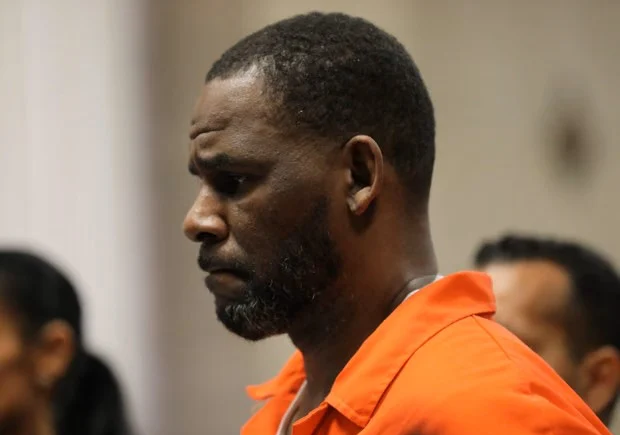
Disgraced American R&B singer R. Kelly has reportedly appealed to former U.S. President Donald Trump for executive clemency, seeking a commutation of the combined 31-year prison sentence he is currently serving following multiple federal convictions.
The request has once again placed the embattled musician at the centre of public attention, reigniting discussions about his legal battles, the scope of presidential clemency powers, and the high-profile convictions that brought an end to one of the most successful careers in contemporary R&B music.
According to reports, Kelly’s legal team has formally petitioned for presidential intervention, arguing that his lengthy prison sentence should be reduced through executive action. A commutation, if granted, would shorten the length of his sentence but would not overturn his convictions or erase his criminal record.
The request comes as Kelly continues serving sentences imposed in separate federal cases involving racketeering and child sexual exploitation-related offences.
The singer, whose full name is Robert Sylvester Kelly, was once regarded as one of the biggest names in American music, producing numerous chart-topping songs and albums over several decades.
However, his career collapsed following years of allegations of sexual abuse and misconduct that ultimately resulted in criminal prosecutions in multiple jurisdictions.
In 2021, a federal court in New York convicted Kelly on racketeering and sex trafficking-related charges. He was later sentenced to 30 years in prison in that case.
The following year, he was also convicted in a separate federal trial in Chicago involving child sexual abuse material and enticement-related offences, receiving an additional prison sentence that contributed to his combined term of imprisonment.
Although some of the sentences run concurrently, Kelly is currently serving what amounts to approximately 31 years in federal custody.
Throughout the legal proceedings, Kelly has consistently maintained his innocence, while his lawyers have continued pursuing appeals challenging aspects of both convictions and the sentences imposed.
The latest request for presidential clemency represents another avenue being explored by his legal representatives as they seek relief from the lengthy prison term.
Under the United States Constitution, the president possesses the authority to grant pardons and commute sentences for federal offences.
A pardon forgives a federal crime and may restore certain rights, while a commutation simply reduces or modifies a sentence without affecting the underlying conviction.
Historically, presidents have exercised clemency powers in a wide range of cases involving criminal justice reform, humanitarian concerns, wrongful convictions, and other exceptional circumstances.
Whether any particular request is granted depends entirely on presidential discretion.
Legal experts note that clemency petitions typically undergo review before any decision is made, although presidents are not legally required to follow any specific recommendation.
Kelly’s reported appeal has generated mixed reactions across social media and among legal commentators.
Supporters of the singer argue that he deserves another opportunity to present his case and seek relief through lawful constitutional processes.
Others strongly oppose any possibility of clemency, pointing to the seriousness of the convictions and the testimonies presented during the federal trials.
Victims’ advocacy groups have also continued emphasising the importance of respecting the outcomes of the judicial process, arguing that the convictions followed lengthy investigations and court proceedings.
The singer’s downfall remains one of the most significant in modern entertainment history.
For years, allegations surrounding Kelly circulated publicly before renewed attention generated by investigative reporting and the documentary series Surviving R. Kelly led to intensified public scrutiny and criminal investigations.
The documentary featured numerous women who accused the singer of abuse, coercion, and exploitation over several years.
Following its release, prosecutors reopened investigations that ultimately resulted in federal charges and convictions.
The legal outcomes fundamentally transformed public perception of the once-celebrated performer, whose music had earned multiple awards and commercial success over several decades.
Despite his imprisonment, Kelly’s legal team has continued filing motions and appeals seeking various forms of judicial relief.
The clemency request now adds another chapter to those continuing legal efforts.
Political analysts note that presidential clemency requests involving high-profile public figures often attract widespread attention because they combine legal, political, and public interest considerations.
However, they also emphasise that submitting a petition does not guarantee that any action will be taken.
Neither Donald Trump nor his representatives have publicly indicated whether the request will receive consideration.
As a result, the outcome of the petition remains uncertain.
For now, R. Kelly continues serving his federal prison sentence while awaiting the outcome of ongoing legal appeals and any future decisions regarding his request for executive clemency.
The development has once again brought renewed attention to one of the most closely watched criminal cases involving a major figure in the American entertainment industry, with observers continuing to monitor whether the clemency appeal will influence the next stage of the singer’s legal journey.