
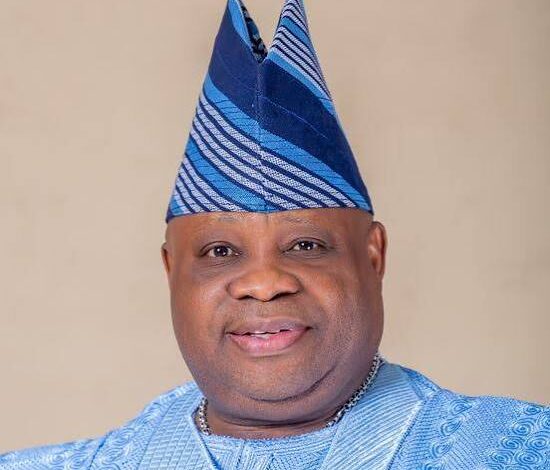
Governor Ademola Adeleke has taken an early lead in the Osun State governorship election as the Independent National Electoral Commission begins the collation of results from across the state.
The development has generated excitement among supporters of the incumbent, while the opposition camp continues to monitor the figures emerging from the various local government areas.
The election, held on Saturday, August 15, 2026, attracted significant attention as voters across Osun went to the polls to choose the governor who will lead the state for the next term.
Adeleke, who is seeking another term in office, faced a strong challenge from the All Progressives Congress candidate, Bola Oyebamiji, alongside other candidates who participated in the contest.
As the results began to emerge, Adeleke recorded strong performances in several areas, putting him ahead in the early stages of the statewide collation.
The incumbent’s supporters have interpreted the figures as an indication that he remains popular among a significant section of voters, particularly in areas where he has maintained a strong political base.
However, the early lead is not yet a final declaration.
INEC is expected to complete the collation of results from all the local government areas before the final result is announced and the winner formally declared.
The figures emerging from the different areas have shown that the contest remains competitive, with the two leading candidates recording victories in different parts of the state.
Adeleke has performed strongly in several locations considered important to his political support base.
In Osogbo, the state capital, the governor recorded a significant number of votes, giving him an advantage over his APC challenger.
He also maintained a strong showing in Ede North and Ede South, areas closely associated with his political structure.
His performance in these areas has contributed substantially to his early advantage and has strengthened the confidence of supporters who believe he could retain the governorship.
Oyebamiji, however, has also secured victories in some local government areas, demonstrating that the APC remains a major force in the election.
The APC candidate’s performances in areas where the party has traditionally maintained strong support could become increasingly important as the remaining results are announced.
The final outcome could therefore depend on how the candidates perform in the outstanding local government areas.
Political parties and their agents are closely monitoring the collation process as INEC officials receive and verify results from different parts of the state.
The collation stage is one of the most important parts of the electoral process because it brings together results from polling units, wards and local government areas before the statewide figure is determined.
Party agents are expected to observe the process and raise objections through the appropriate procedures where they believe there are discrepancies.
The election has also taken place against the backdrop of significant political realignments in Osun.
Adeleke entered the contest as the incumbent governor but contested under the Accord Party after leaving the Peoples Democratic Party.
His movement to another political platform added a new dimension to the election and forced political observers to reassess the strength of his support base.
Despite leaving the PDP, Adeleke entered the election with the advantage of incumbency and a political structure built during his time in office.
The APC, meanwhile, campaigned aggressively for Oyebamiji, presenting him as an alternative to the incumbent administration.
The party mobilised supporters across the state and sought to take advantage of dissatisfaction in some areas while highlighting its own plans for the future of Osun.
The contest consequently became more than a battle between two candidates.
It also became a test of the political strength of the incumbent governor and the ability of the APC to return to power in a state where the two major political camps have remained highly competitive.
For voters, however, the election has largely been about issues affecting everyday life.
Infrastructure, roads, education, healthcare, employment, security, agriculture and economic opportunities have remained important concerns among residents.
Many communities expect the next administration to focus on improving living conditions and creating more opportunities for young people.
The final winner will therefore inherit both political expectations and the responsibility of addressing the challenges facing the state.
The atmosphere around the election has also attracted attention as political parties and their supporters wait for the final results.
Although the election was largely conducted peacefully in many areas, there were reports of isolated incidents and allegations of irregularities.
Such allegations remain matters for the appropriate authorities to investigate, and they do not determine the final outcome unless established through the proper process.
Security agencies were deployed across the state before and during the election to protect voters, electoral officials and election materials.
Their presence is expected to continue around collation centres until the process is concluded.
This is particularly important because political tension can increase as provisional figures begin to show one candidate gaining an advantage over another.
Supporters of the different candidates have therefore been urged to remain calm and allow the electoral process to run its course.
For Adeleke’s camp, the early results have created renewed optimism.
Supporters believe the governor’s performance in several areas demonstrates that voters remain willing to give him another term.
They are expected to continue monitoring the collation process closely while urging their supporters to remain peaceful.
The APC, on the other hand, will be looking towards the outstanding results in the hope that the party’s candidate can reduce Adeleke’s advantage.
The number of votes still to be collated means that the final outcome cannot yet be determined solely from the early figures.
Some local government areas have large voting populations, meaning that their results could significantly affect the overall tally.
This makes the remaining stage of the collation particularly important.
INEC will also face the responsibility of ensuring that all results are accurately recorded and that the final declaration reflects the valid votes cast by the electorate.
The credibility of the process will depend heavily on transparency and adherence to electoral procedures.
For residents of Osun, the expectation is that the process will be completed without disruption.
Many voters want their ballots to be accurately counted and the candidate who receives the highest number of valid votes to be declared the winner.
The election also has significance beyond Osun State.
As Nigeria moves closer to the 2027 general elections, the outcome will provide political parties with an indication of their strength and the level of public support they currently command.
A victory for Adeleke would strengthen his political position and demonstrate that his move to Accord did not prevent him from maintaining a strong electoral base.
It would also give his supporters greater confidence as the country approaches another major election cycle.
A victory for Oyebamiji would produce a different political outcome, handing the APC control of the state and marking a significant comeback for the party.
The competing political camps therefore have considerable interest in the final result.
For now, however, the process remains in the hands of INEC.
The commission must complete the collation before announcing the final statewide figures.
Until that happens, the early lead enjoyed by Adeleke remains provisional.
The remaining results could either strengthen his advantage or narrow the gap between the leading candidates.
Political observers and residents are consequently watching developments closely as the collation continues.
The final declaration will ultimately determine whether Adeleke retains the governorship or whether Oyebamiji and the APC succeed in taking control of the state.
Whatever the outcome, political leaders and their supporters will be expected to respect the electoral process and pursue any legitimate grievances through lawful channels.
For now, Adeleke’s early lead has placed him in a favourable position, but the race remains open until the final results are collated and officially declared.
The coming hours will therefore be crucial as INEC continues the process that will determine the political future of Osun State.