Sowore Calls on Tinubu to Remove DSS Director-General Amid Criminal Prosecution

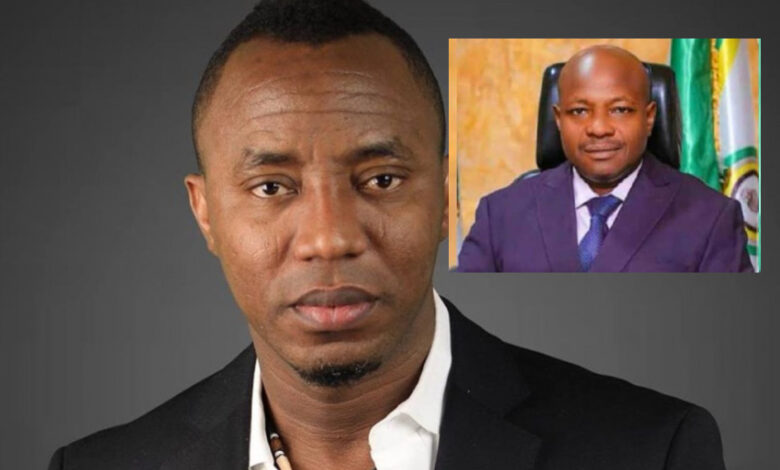
AAC presidential candidate Omoyele Sowore has called on President Bola Ahmed Tinubu to remove the Director-General of the Department of State Services (DSS), Adeola Ajayi, amid an ongoing criminal case involving the opposition politician.
The demand comes as the legal dispute between Sowore and the DSS continues to attract attention, with the activist maintaining that the prosecution against him is politically motivated.
Sowore has been facing criminal proceedings over statements he made online concerning President Tinubu. The case has been heard before the Federal High Court in Abuja, where his legal team has continued to challenge the allegations against him.
The activist has consistently maintained that he has the constitutional right to criticise the government and express his political opinions.
The latest development has added a new dimension to the case after reports emerged that the prosecution had been put on hold until after the 2027 general elections.
Sowore has questioned the decision and argued that the development raises serious concerns about the manner in which the case has been handled.
He has particularly criticised Ajayi’s role in the matter, alleging that the DSS leadership has pursued the case against him aggressively.
The opposition politician has called on Tinubu to remove the DSS director-general, arguing that the leadership of the country’s intelligence service should operate professionally and independently of political considerations.
The dispute has been developing for months and has involved several appearances before the Federal High Court.
Sowore’s legal battle intensified after he was detained in connection with the case and subsequently taken before the court.
The activist has also raised concerns about his treatment while in custody and has continued to challenge the circumstances surrounding the prosecution.
His defence team has argued that the case raises important questions about freedom of expression and the right of citizens to criticise public officials.
The prosecution, on the other hand, has maintained that online statements can attract criminal consequences when they allegedly cross the boundaries established by Nigerian law.
The disagreement has therefore developed beyond the individual case, becoming part of a wider national conversation about the limits of free speech and the responsibilities of security agencies.
Sowore has repeatedly positioned himself as a strong critic of successive Nigerian governments and has used his political campaigns and social media platforms to attack policies and actions he considers unacceptable.
His opposition to the Tinubu administration has been particularly vocal as the country prepares for another presidential election.
The 2027 election is expected to feature several opposition politicians seeking to challenge the ruling APC.
Sowore is among those preparing to participate in the contest, while Tinubu is expected to seek another term in office.
This political background has made the ongoing legal dispute especially sensitive.
Sowore has argued that prosecuting an opposition presidential candidate over statements directed at the sitting president could create the perception that state institutions are being used to silence political opponents.
The case has also attracted attention because of the position held by Ajayi.
As DSS director-general, Ajayi heads one of Nigeria’s most important security institutions and is responsible for overseeing intelligence operations relating to national security.
Sowore believes that the DSS should focus on issues such as terrorism, kidnapping, espionage and other threats to national security rather than becoming involved in what he considers political disputes.
The controversy has also raised questions about the use of criminal laws in cases involving statements made by politicians and activists.
Nigeria’s political environment has increasingly moved online, with politicians, journalists, activists and ordinary citizens using social media to comment on government policies and public affairs.
The rise of online political commentary has created new challenges for law-enforcement agencies, particularly where statements are considered defamatory, threatening or otherwise unlawful.
Sowore’s case has become an example of that wider conflict.
Supporters of the activist believe that political criticism, even when harsh, should not automatically lead to criminal prosecution.
They argue that public officials should expect strong scrutiny because they hold positions of public trust.
Others maintain that political status does not give anyone immunity from laws governing public statements and online conduct.
The court will ultimately have to determine the legal issues surrounding the allegations.
Meanwhile, the controversy over the prosecution has continued to generate political debate.
Sowore’s demand for Ajayi’s removal is likely to place additional pressure on the federal government to explain how the DSS has handled the case.
The activist has also continued to insist that the prosecution should not be allowed to interfere with his political activities ahead of the 2027 election.
The situation has become particularly significant because Sowore intends to contest the presidency while simultaneously facing legal proceedings involving the incumbent president.
His supporters fear that prolonged litigation could create difficulties for his campaign, while the government is expected to maintain that the legal process should be allowed to run its course.
The reported decision to suspend the prosecution until after the election has added another layer of uncertainty.
Questions remain about why the case would be delayed and what would happen to the proceedings after the election.
For Sowore, the issue goes beyond his personal legal battle.
He has presented it as a test of the country’s commitment to freedom of expression, political opposition and the independence of state institutions.
The DSS, meanwhile, remains responsible for enforcing its mandate within the framework of national security and Nigerian law.
As the 2027 election approaches, clashes between opposition politicians and government institutions are likely to attract increased public attention.
Political campaigns are expected to intensify, and social media will remain a major platform for political criticism and mobilisation.
Sowore’s latest demand has therefore added another issue to an already heated political environment.
For now, the opposition politician is calling for Adeola Ajayi’s removal as DSS director-general, while continuing to challenge the criminal case against him.
The legal proceedings and the political debate surrounding them are expected to continue as Nigeria moves closer to the 2027 presidential election.