
Cubana Chief Priest Reveals Why He Believes Igbos Are Backing Tinubu Ahead of 2027

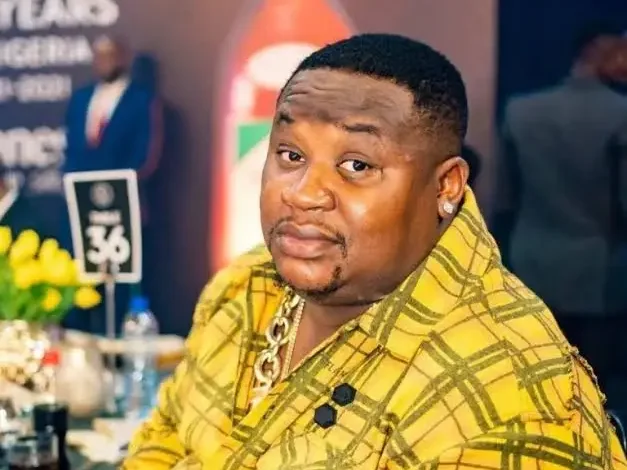
Popular Nigerian businessman and socialite Pascal Okechukwu, better known as Cubana Chief Priest, has offered his explanation for what he described as growing support among some people of Igbo extraction for President Bola Ahmed Tinubu ahead of the 2027 presidential election.
Okechukwu made the remarks while addressing supporters of the City Boy Movement in Imo State, where he serves as the organisation’s state director. The movement is aligned with Tinubu’s administration and is campaigning for the president’s second-term bid.
During the engagement, Cubana Chief Priest argued that the relationship between the South-East and the presidency had changed, pointing to what he described as increased access to Tinubu through the president’s son, Seyi Tinubu.
He presented this access as one of the reasons he believes many Igbos are becoming more willing to work with the administration and support its political ambitions ahead of the 2027 election.
The socialite’s comments come against the backdrop of intense political realignment ahead of the next presidential election, with politicians, businessmen, entertainers and other influential Nigerians taking different positions on the candidates expected to contest.
Cubana Chief Priest has become one of the more visible personalities openly supporting Tinubu’s re-election campaign, particularly in the South-East, where the president faced significant opposition during the 2023 election.
His latest position also represents a continuation of his political shift. In the run-up to the 2023 election, he was associated with support for Peter Obi, the former Anambra State governor who enjoyed strong backing across large sections of the South-East.
In early 2026, however, Cubana Chief Priest publicly embraced Tinubu’s second-term bid and began campaigning more actively for the president through the City Boy Movement.
He has argued that supporting Tinubu should not automatically be interpreted as abandoning Igbo interests or betraying the South-East.
The businessman has previously questioned why an Igbo person supporting Tinubu should be accused of betrayal when members of other ethnic groups can support candidates from outside their own ethnic backgrounds.
His latest remarks have therefore added another layer to the debate over political loyalty, ethnic identity and the search for influence ahead of the 2027 election.
Cubana Chief Priest’s argument is centred on political access. He believes that having a channel through which people from the South-East can communicate with the presidency could create opportunities for the region to present its concerns, negotiate for development and participate more directly in national politics.
He suggested that rather than remaining outside the political structure, Igbos should seek a place within it and use that position to advance their interests.
The argument reflects a broader strategy increasingly visible among some politicians and influential figures in the South-East: instead of relying exclusively on opposition politics, they believe participation in the ruling political structure could provide greater access to government and potentially influence decisions affecting the region.
Cubana Chief Priest has also spoken about the practical realities of political participation, suggesting that businesses and individuals need to understand how power operates and position themselves accordingly.
His position has, however, generated debate among Nigerians, particularly on social media.
Some supporters agree that political engagement with the federal government could provide the South-East with greater opportunities to negotiate for infrastructure, investment and other development projects.
They argue that political isolation could make it more difficult for the region to influence federal decisions, especially when national politics is increasingly shaped by alliances across ethnic and regional boundaries.
Others strongly disagree with the socialite’s position and question whether access to individual members of the president’s family should be presented as evidence of broad political support among the entire Igbo population.
Critics have also argued that political preferences among Igbos are diverse and cannot be represented by the position of one businessman or social media personality.
The claim that the Igbo community is backing Tinubu should therefore be understood as Cubana Chief Priest’s political assessment rather than an established consensus across the South-East.
The region remains politically important because of its voting population, business influence and history of strong political mobilisation.
The 2023 presidential election demonstrated the extent of Peter Obi’s appeal in the South-East, where the Labour Party candidate recorded overwhelming support in several states.
That political reality has made the region an important battleground for parties seeking to build broader coalitions ahead of 2027.
Tinubu’s political camp has consequently continued efforts to strengthen its presence in the South-East, while opposition groups are also working to maintain or expand their support in the region.
For Cubana Chief Priest, the decision to support Tinubu appears to be based on what he considers political pragmatism rather than ethnic sentiment alone.
He has maintained that Nigerians should be free to support whichever candidate they believe can advance their interests and should not be condemned simply because their choice differs from the dominant political position within their ethnic group.
The businessman has also linked his political involvement to the activities of the City Boy Movement, which has been working to promote support for Tinubu ahead of the next presidential election.
His involvement became more prominent after he was appointed the movement’s Imo State director.
He had earlier expressed interest in contesting for the APC ticket to represent the Orsu/Orlu/Oru East Federal Constituency in the House of Representatives but later withdrew from the primary process.
Despite not securing the ticket, he reaffirmed his commitment to the APC and Tinubu’s re-election campaign.
His continued involvement has kept him at the centre of conversations about the growing political activities of celebrities and wealthy entrepreneurs in Nigeria.
The latest controversy also highlights the changing nature of political mobilisation in the country.
Social media personalities and entertainment figures increasingly use their large audiences to promote political messages, influence public conversations and encourage supporters to participate in elections.
For some, this represents a legitimate exercise of political freedom. For others, it raises questions about the influence of celebrity status on political decision-making and whether popularity should translate into political authority.
In the South-East, the issue carries additional emotional weight because political affiliation is often closely connected to discussions about regional representation, economic development, insecurity, federal appointments and perceived marginalisation.
Cubana Chief Priest’s position has therefore attracted attention beyond his personal support for Tinubu.
His argument that Igbos should work with the federal government from within rather than remain outside the ruling structure has reopened a wider debate about the best political strategy for the region.
Supporters of the approach believe cooperation with the federal government could produce tangible benefits if properly negotiated.
Critics, however, insist that political support should depend on policies, performance and accountability rather than access to powerful individuals.
As the 2027 election approaches, the South-East is expected to remain an important focus of political campaigns.
Different parties and political movements will likely continue seeking influential voices capable of attracting support across communities and age groups.
Whether Cubana Chief Priest’s prediction of wider Igbo support for Tinubu becomes reality will ultimately depend on voters across the region rather than the declarations of individual personalities.
For now, his remarks have added to the growing political conversation around Tinubu’s second-term campaign and the changing alliances taking shape ahead of Nigeria’s 2027 presidential election.
The debate also reflects a larger question confronting voters in the South-East and across Nigeria: whether political participation from within the ruling establishment offers a more effective path to influence than opposition, and whether such alliances will translate into measurable benefits for ordinary citizens.
With the 2027 election still ahead, the competing political camps will have ample opportunity to make their case to voters. Cubana Chief Priest’s latest intervention shows that the contest for political influence in the South-East is already becoming increasingly active.