Pakistani Airstrikes Kill At Least 13 In Afghanistan, Including 11 Children, Taliban Says

At least 14 others were injured in strikes that violated Afghanistan’s airspace and bombed civilian homes in the provinces of Kunar, Khost, and Paktika, a spokesperson added
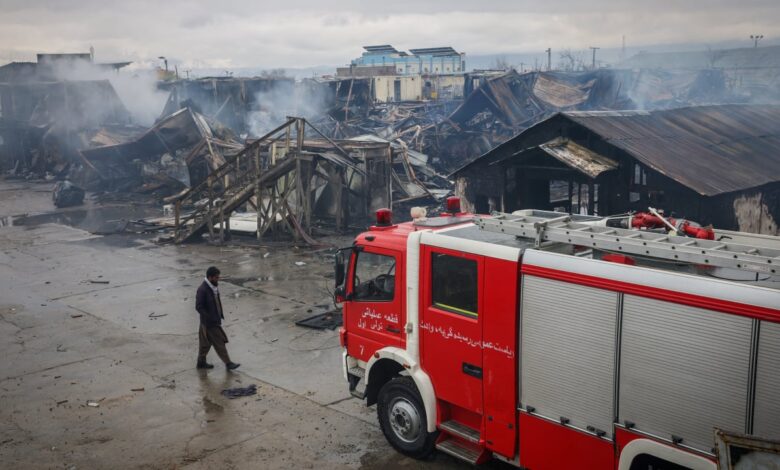
AN AFGHAN man walks next to the site where a drug rehabilitation center was destroyed in what the Taliban said was a Pakistani airstrike, in Kabul, Afghanistan, March 18, 2026.(photo credit: REUTERS/Sayed Hassib)
Afghanistan’s Taliban authorities have accused Pakistan of carrying out airstrikes that allegedly killed at least 13 people, including 11 children, in eastern Afghanistan, according to statements released on June 2026.
Taliban officials said the strikes targeted areas near the border between the two countries and resulted in civilian casualties. Local authorities reported that women and children were among those affected, while emergency teams were deployed to assess the situation and provide assistance to residents.
The incident has further heightened tensions between Afghanistan and Pakistan, whose relationship has been strained in recent years over border security, militant activity, and cross-border attacks.
Taliban representatives condemned the reported strikes and called on the international community to pay attention to the situation. Officials in Kabul stated that the attacks violated Afghanistan’s sovereignty and warned that such actions could worsen instability in the region.
Pakistani authorities had not immediately provided a detailed response to the allegations at the time reports emerged. In previous incidents, Islamabad has maintained that its security operations are aimed at armed groups accused of launching attacks from areas close to the Afghan border.
The border region has remained a source of concern for both governments, with each side frequently accusing the other of failing to prevent militant activities. Security analysts note that the mountainous frontier has long been difficult to monitor, contributing to recurring disputes and military confrontations.
Regional observers have expressed concern that any escalation could complicate ongoing efforts to improve relations between the neighbouring countries. Humanitarian organisations have also called for the protection of civilians and an independent assessment of the reported casualties.
As investigations continue, authorities on both sides of the border are expected to face increasing pressure to clarify the circumstances surrounding the incident and prevent further deterioration in relations between the two nations.
In the aftermath of the reported incident, concerns have continued to grow among regional observers, humanitarian groups, and diplomatic stakeholders regarding the potential impact on relations between Pakistan and Afghanistan.
Residents of affected communities were reported to have fled their homes amid fears of further violence, while local authorities worked to assess damage and provide assistance to displaced families. Community leaders in the area appealed for calm and urged both sides to avoid actions that could lead to further escalation.
The reported airstrikes have also reignited discussions about security challenges along the Afghanistan-Pakistan border, a region that has experienced repeated tensions over the years due to militant activity, border disputes, and competing security concerns.
Analysts note that relations between Islamabad and Kabul have remained fragile despite periodic diplomatic engagements aimed at improving cooperation on security and trade issues. Incidents involving cross-border military operations have frequently complicated those efforts, often resulting in sharp exchanges between officials from both countries.
International observers have called for restraint and emphasized the importance of dialogue to prevent additional confrontations. Several humanitarian organizations have stressed the need for civilian protection and urged all parties to respect international humanitarian principles during security operations.
Meanwhile, local residents interviewed by regional media described an atmosphere of uncertainty as families sought information about missing relatives and attempted to recover from the reported destruction caused by the incident.
Diplomatic sources indicated that discussions involving regional stakeholders could take place in the coming days as efforts continue to reduce tensions and establish a clearer understanding of the circumstances surrounding the reported strike.
As developments continue to unfold, attention remains focused on official investigations, humanitarian needs in affected communities, and the broader implications for stability in a region that has long faced complex security challenges.
In the aftermath of the reported incident, concerns have continued to grow among regional observers, humanitarian groups, and diplomatic stakeholders regarding the potential impact on relations between Pakistan and Afghanistan.
Residents of affected communities were reported to have fled their homes amid fears of further violence, while local authorities worked to assess damage and provide assistance to displaced families. Community leaders in the area appealed for calm and urged both sides to avoid actions that could lead to further escalation.
The reported airstrikes have also reignited discussions about security challenges along the Afghanistan-Pakistan border, a region that has experienced repeated tensions over the years due to militant activity, border disputes, and competing security concerns.
Analysts note that relations between Islamabad and Kabul have remained fragile despite periodic diplomatic engagements aimed at improving cooperation on security and trade issues. Incidents involving cross-border military operations have frequently complicated those efforts, often resulting in sharp exchanges between officials from both countries.
International observers have called for restraint and emphasized the importance of dialogue to prevent additional confrontations. Several humanitarian organizations have stressed the need for civilian protection and urged all parties to respect international humanitarian principles during security operations.
Meanwhile, local residents interviewed by regional media described an atmosphere of uncertainty as families sought information about missing relatives and attempted to recover from the reported destruction caused by the incident.
Diplomatic sources indicated that discussions involving regional stakeholders could take place in the coming days as efforts continue to reduce tensions and establish a clearer understanding of the circumstances surrounding the reported strike.
As developments continue to unfold, attention remains focused on official investigations, humanitarian needs in affected communities, and the broader implications for stability in a region that has long faced complex security challenges.
The reported incident has also prompted renewed debate among security experts about the future of counterterrorism operations and border management in the region. Analysts argue that the long and rugged frontier separating Afghanistan and Pakistan remains one of the most challenging borders in the world to monitor effectively, creating persistent security concerns for both countries.
Over the years, officials in Islamabad have repeatedly expressed concerns about armed groups allegedly operating near the border, while authorities in Kabul have accused Pakistan of taking actions that undermine Afghanistan’s sovereignty. These competing narratives have often complicated efforts to establish lasting security cooperation between the neighbouring states.
Political observers note that any significant deterioration in relations could have broader consequences for regional stability, trade, and humanitarian activities. Cross-border commerce remains an important source of livelihood for thousands of people living in communities along the frontier, and prolonged tensions could disrupt economic activity in already vulnerable areas.
Humanitarian organizations have continued to call for support for affected families, emphasizing the importance of providing shelter, medical assistance, and psychological support to those impacted by conflict-related incidents. Aid workers have warned that civilians often bear the greatest burden whenever tensions escalate between armed actors.
Meanwhile, diplomatic channels are expected to remain active as regional governments monitor developments closely. Several international observers have encouraged both sides to engage through established diplomatic mechanisms to reduce the risk of further confrontations and prevent additional civilian suffering.
Experts also stress that long-term stability in the region will likely depend on sustained dialogue, improved intelligence cooperation, and greater efforts to address the underlying security challenges that have fueled repeated disputes along the border.
As investigations and official assessments continue, the situation remains under close scrutiny from governments, international organizations, and regional stakeholders seeking clarity on the events and their potential consequences for peace and security in South Asia.