
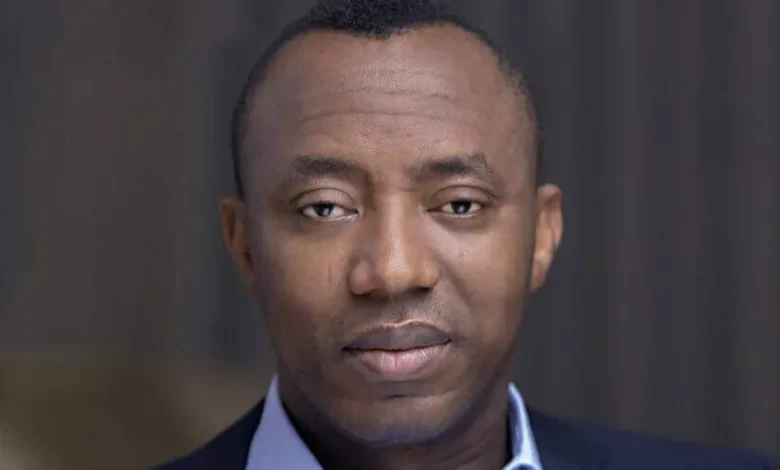
Human rights activist and former presidential candidate Omoyele Sowore will remain in custody for now after a court postponed its decision on an application seeking the restoration of his bail.
The court adjourned proceedings after hearing arguments from both the prosecution and defense teams, indicating that more time was needed to consider the issues raised before delivering a ruling.
Sowore’s legal representatives had urged the court to reinstate his bail, arguing that he remains entitled to his constitutional rights and should be allowed to continue enjoying his freedom while legal proceedings continue.
The prosecution, however, opposed the application, maintaining that there were grounds for the court to carefully review the circumstances surrounding the case before making a decision.
Following submissions from both sides, the presiding judge announced that a ruling would be delivered on a later date, effectively meaning that Sowore will remain in detention until the court reaches a final decision on the matter.
The development has attracted significant public attention, with supporters of the activist expressing concern over his continued detention and calling for a speedy resolution of the case.
Outside the courtroom, supporters gathered to show solidarity, insisting that due process and the rule of law should guide the proceedings.
Meanwhile, legal analysts say the court’s eventual ruling could have important implications for the case, particularly regarding the conditions under which bail may be restored once it has been revoked or challenged.
Observers note that the case has become one of the most closely watched legal and political matters in the country, drawing interest from civil society organizations, political stakeholders, and members of the public.
For now, attention remains focused on the court’s next sitting, where a decision on the bail restoration request is expected to be delivered.
Until then, Sowore will remain in custody as the legal process continues.
The adjournment has further intensified public interest in the case, with legal observers closely examining the arguments presented by both sides during the hearing.
Supporters of Sowore argue that continued detention could undermine the principles of fairness and due process, while insisting that the activist has consistently demonstrated a willingness to participate in legal proceedings.
On the other hand, prosecutors maintain that the court must carefully evaluate all relevant facts before reaching a decision that could affect the direction of the case.
Legal experts note that applications for bail restoration often require judges to balance competing considerations, including the rights of the accused, compliance with previous court orders, and the broader interests of justice.
“The court’s responsibility is to ensure that its decision is guided by law and evidence rather than public sentiment,” one legal analyst explained.
The latest development has also generated reactions from civil society groups and human rights organizations, some of which have called for a swift determination of the application.
Several advocacy groups have emphasized the importance of protecting constitutional rights while respecting the independence of the judiciary.
Meanwhile, political commentators say the case continues to attract attention because of Sowore’s profile as a prominent activist and former presidential candidate.
Over the years, he has remained one of the country’s most outspoken voices on governance, accountability, and civil rights, often drawing both support and criticism for his positions on national issues.
Outside the courtroom, supporters continued to express optimism that the court would eventually grant the application and allow him to regain his freedom pending the conclusion of the case.
Some carried placards and called for adherence to democratic principles, while others urged patience as the judicial process unfolds.
Despite the growing public interest, court officials have maintained that the matter will be decided strictly on legal grounds.
The presiding judge is expected to deliver a ruling after reviewing submissions from both the defense and prosecution, as well as applicable legal precedents.
For Sowore and his supporters, the waiting period represents another chapter in a legal battle that has remained under intense public scrutiny.
For the judiciary, it is a test of its commitment to impartiality, due process, and the rule of law.
As the nation awaits the court’s decision, attention remains firmly fixed on the upcoming ruling, which could significantly influence the next phase of the case.
Until then, Sowore remains in detention while legal proceedings continue and stakeholders on all sides await clarity from the court.