
Kenneth Okonkwo Explains Why No South-East Politician Was Eligible to Be Atiku Abubakar’s Running Mate

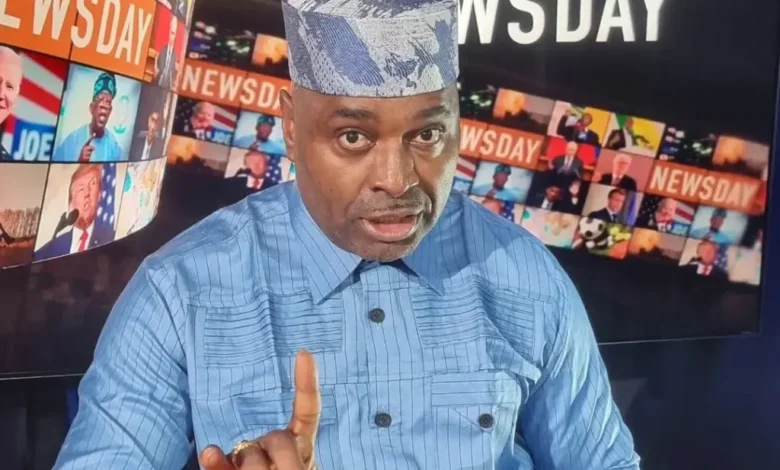
Former presidential spokesperson and actor-turned-politician Kenneth Okonkwo has explained why, in his view, no politician from Nigeria’s South-East geopolitical zone was eligible to emerge as the running mate of former Vice President Atiku Abubakar during the last presidential election.
Okonkwo made the remarks while discussing political developments within the country’s opposition movement and the factors that influenced decisions surrounding the selection of a vice-presidential candidate.
According to him, the issue was not necessarily about excluding the South-East from consideration but rather about the constitutional, political, and strategic realities that shaped the process of choosing a running mate.
He argued that political parties often consider several factors before selecting a vice-presidential candidate, including electoral strength, regional balance, political experience, acceptability across different parts of the country, and the ability to attract votes in key regions.
Okonkwo maintained that, at the time, none of the available political figures from the South-East met all the conditions that party leaders considered necessary for the position.
He stressed that his opinion should not be interpreted as a criticism of the South-East or a suggestion that the region lacks capable leaders.
Instead, he said the circumstances surrounding the election required political calculations that went beyond regional sentiment.
According to the former Labour Party chieftain, presidential candidates seeking national office must make decisions based on what they believe will improve their chances of winning elections in a country as politically and ethnically diverse as Nigeria.
He noted that vice-presidential selections are rarely based on geographical considerations alone but also involve consultations with party stakeholders, assessments of electoral data, and broader campaign strategies.
Okonkwo further argued that every geopolitical zone in Nigeria has produced competent politicians capable of occupying the country’s highest offices.
However, he insisted that competence alone does not automatically guarantee selection as a running mate during a presidential contest.
His remarks have generated widespread reactions within political circles, particularly among politicians and supporters from the South-East, where the conversation about political inclusion and equitable representation has remained a recurring national issue.
Some political observers agreed with Okonkwo’s assessment, arguing that vice-presidential candidates are usually selected based on electoral strategy rather than regional entitlement.
They noted that political parties often prioritize candidates who can strengthen their chances in battleground states and expand their national appeal.
Others, however, disagreed with his position, insisting that the South-East has produced numerous experienced politicians with the qualifications and national stature required to serve as vice president.
Critics also argued that continued exclusion of the region from key political positions contributes to growing feelings of marginalization among many residents of the South-East.
The debate has once again drawn attention to broader discussions surrounding power sharing, federal character, and equitable political representation in Nigeria’s democratic system.
For decades, questions about rotational leadership and regional inclusion have remained central issues in the country’s political landscape.
Political analysts believe that conversations such as these are likely to become even more prominent as preparations intensify for the 2027 general elections.
With major political parties already positioning themselves for future contests, discussions about zoning arrangements, coalition building, and regional alliances are expected to dominate political discourse over the coming months.
Analysts also observe that the selection of presidential and vice-presidential candidates will continue to require a delicate balance between political strategy, national unity, regional interests, and electoral realities.
Meanwhile, supporters of various political parties have continued to express differing opinions regarding the criteria that should determine who becomes a presidential running mate.
Some maintain that competence and electability should remain the overriding considerations, while others argue that fairness, inclusion, and national balance deserve equal attention.
As political realignments continue ahead of future elections, Kenneth Okonkwo’s comments have reignited an important national conversation about representation, leadership, and the complex calculations that shape Nigeria’s presidential politics.
Whether or not political parties adjust their approach in future elections, the debate underscores the continuing importance of building consensus across Nigeria’s diverse regions while ensuring that leadership decisions inspire confidence among citizens from every part of the federation.
The controversy generated by Kenneth Okonkwo’s remarks has further highlighted the growing importance of regional politics in Nigeria’s democratic process, particularly as political stakeholders begin laying the groundwork for the 2027 general elections.
Across the country, conversations surrounding zoning, power rotation, and equitable representation have intensified, with many Nigerians expressing differing views on how political offices should be distributed among the six geopolitical zones.
Supporters of Okonkwo’s position argue that political parties are primarily established to win elections and must therefore make strategic decisions based on electoral realities rather than regional expectations alone.
According to them, presidential candidates are expected to assemble tickets capable of attracting broad national support, making considerations such as political influence, voter appeal, experience, and coalition-building essential factors in selecting a running mate.
Others contend that while electoral strategy is important, national unity should also remain a central consideration in leadership decisions.
They believe every geopolitical zone should have a fair opportunity to occupy key political positions, particularly in a country as ethnically and culturally diverse as Nigeria.
Several political commentators noted that feelings of exclusion among any region can contribute to political dissatisfaction and deepen calls for constitutional reforms aimed at ensuring greater inclusiveness.
The South-East has, over the years, consistently advocated for increased participation in Nigeria’s highest political offices, with many leaders from the region arguing that equitable representation remains necessary for strengthening national cohesion.
As a result, comments relating to the region’s political relevance often attract widespread public attention and generate robust debate across political, academic, and civil society circles.
Analysts say the discussion also reflects the evolving nature of coalition politics in Nigeria, where political parties increasingly seek alliances capable of expanding their electoral reach beyond traditional strongholds.
They argue that vice-presidential selections are rarely symbolic appointments but are instead strategic decisions intended to strengthen campaigns, reassure stakeholders, and appeal to diverse voting blocs.
With political consultations already beginning ahead of the next election cycle, observers expect similar debates to continue as prospective presidential aspirants evaluate possible alliances and running mates.
Questions surrounding competence, regional balance, electoral value, party loyalty, and national acceptability are likely to remain central considerations during future ticket negotiations.
Political scientists also note that Nigeria’s constitutional democracy allows political parties considerable discretion in choosing their candidates, provided the process complies with electoral laws and party constitutions.
However, they emphasize that public perception remains an equally important factor, as leadership decisions can significantly influence voter confidence and party unity.
Meanwhile, leaders from different political parties continue to call for peaceful, issue-based political engagement as preparations gradually gather momentum for the 2027 elections.
Many have urged politicians to focus on policies capable of addressing Nigeria’s economic challenges, insecurity, unemployment, infrastructure development, healthcare, and education rather than allowing regional divisions to dominate political discourse.
Observers believe that while debates over zoning and representation will remain relevant, Nigerians are increasingly demanding leadership based on competence, accountability, integrity, and the ability to deliver effective governance.
As conversations surrounding future political alignments continue, Kenneth Okonkwo’s comments have added another dimension to the national discussion on leadership selection and electoral strategy.
Whether his views influence future political calculations or simply contribute to ongoing public debate, the discussion underscores the complexity of Nigeria’s political landscape, where electoral success often depends on balancing regional interests, national unity, party strategy, and the aspirations of millions of voters across the federation.