
Sudanese Army Intensifies Offensive to Retake Strategic Border City Near Ethiopia Amid Escalating Conflict

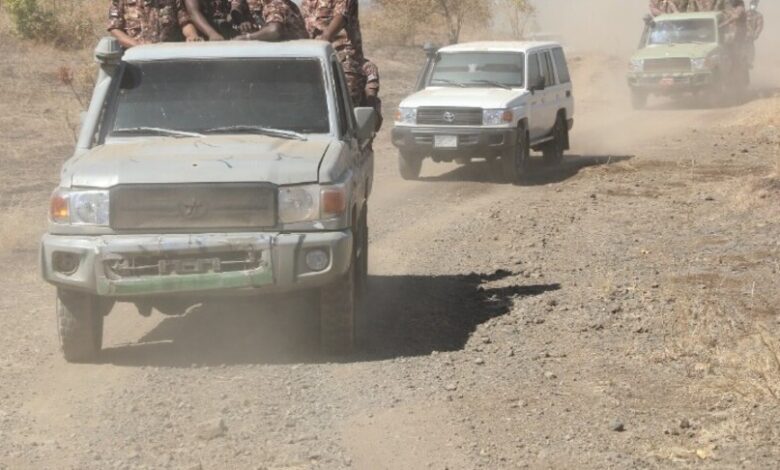
The Sudanese Armed Forces have launched a major military offensive aimed at recapturing a strategically important city near the country’s border with Ethiopia, as fighting between government troops and rival armed groups continues to intensify across several regions of Sudan.
Military sources familiar with the operation said government forces are pushing to regain control of the key border area, which has become increasingly significant because of its geographical location, supply routes, and proximity to neighboring Ethiopia.
The latest military campaign comes as Sudan’s prolonged conflict enters another critical phase, with both sides seeking to strengthen their territorial positions while maintaining control over vital transportation corridors and strategic infrastructure.
According to security sources, fierce clashes have been reported around the targeted city, with heavy exchanges of gunfire and artillery taking place as Sudanese troops attempt to dislodge opposing fighters from defensive positions.
Although officials have not released an official casualty figure, reports indicate that the fighting has been intense, forcing many civilians to flee surrounding communities in search of safer locations.
Residents in nearby towns described hearing sustained explosions and continuous gunfire, while humanitarian organizations expressed concern over the growing number of displaced families affected by the renewed violence.
Military analysts believe control of the city carries considerable strategic importance because it serves as a gateway to important border routes linking Sudan with Ethiopia.
Whoever controls the area is expected to gain greater influence over military logistics, troop movements, humanitarian access, and cross-border trade.
The offensive also reflects the Sudanese military’s broader objective of recovering territories lost during months of conflict that have severely weakened state institutions and disrupted normal economic activities across the country.
Since the outbreak of hostilities between the Sudanese Armed Forces and the Rapid Support Forces (RSF), large parts of Sudan have experienced sustained violence, resulting in widespread destruction, humanitarian emergencies, and one of the world’s largest displacement crises.
Entire communities have been forced to abandon their homes as fighting spread from the capital, Khartoum, into other states, affecting millions of civilians.
International humanitarian agencies estimate that millions of Sudanese have been displaced internally, while hundreds of thousands have crossed into neighboring countries seeking refuge from the violence.
The continuing conflict has also disrupted agricultural production, healthcare services, education, and commercial activities, deepening an already severe humanitarian crisis.
Observers note that the latest military operation demonstrates the Sudanese army’s determination to regain momentum after months of fierce confrontations with rival forces across different parts of the country.
At the same time, analysts caution that continued military escalation could further complicate efforts to achieve a negotiated political settlement.
Regional security experts have warned that fighting near international borders carries additional risks, including increased refugee movements, disruptions to cross-border commerce, and potential security concerns for neighboring countries.
Ethiopian authorities have continued monitoring developments closely due to the close proximity of the clashes to the shared frontier.
Meanwhile, international organizations have renewed calls for restraint and urged all parties involved to prioritize civilian protection and respect international humanitarian law.
Diplomatic efforts aimed at securing a lasting ceasefire have so far produced limited progress despite repeated mediation initiatives involving regional organizations and international partners.
Several peace negotiations have been held over the past year, but disagreements over political transition, security arrangements, and power-sharing have repeatedly delayed meaningful breakthroughs.
Humanitarian agencies continue to appeal for unrestricted access to conflict-affected communities, warning that ongoing military operations are making it increasingly difficult to deliver food, medicine, and emergency assistance to vulnerable populations.
Aid workers have reported growing shortages of essential supplies in several regions, with many hospitals operating under extremely difficult conditions because of damaged infrastructure and limited medical resources.
Political analysts believe the battle for the strategic border city may influence the broader direction of the conflict by determining which side controls an important military and logistical corridor.
However, they also stress that lasting stability cannot be achieved through military victories alone.
According to conflict resolution experts, sustainable peace will ultimately depend on meaningful political dialogue, national reconciliation, and agreements capable of addressing the underlying causes of Sudan’s prolonged instability.
As fighting continues, the international community remains increasingly concerned about the humanitarian consequences of the conflict and its potential impact on security throughout the Horn of Africa.
For millions of Sudanese civilians caught in the violence, hopes remain focused on an end to hostilities and the restoration of peace, security, and normal life after months of devastating conflict.
The renewed military campaign has further intensified concerns among regional leaders and international observers, who fear that continued fighting could deepen Sudan’s humanitarian crisis and prolong the country’s political instability.
For many civilians living near the conflict zone, the latest offensive has brought renewed uncertainty as families continue to flee their homes in search of safer communities. Local residents have reported increasing movement of displaced people toward neighboring towns and border areas, with many leaving behind their homes, farms, and businesses to escape the violence.
Humanitarian organizations warn that the growing displacement is placing additional pressure on already overstretched relief operations. Temporary shelters in several areas are reportedly struggling to accommodate new arrivals, while shortages of food, clean drinking water, medicine, and sanitation facilities continue to worsen.
Aid agencies have appealed for safe humanitarian corridors that would allow emergency workers to reach communities trapped by the fighting and deliver life-saving assistance without interruption.
The conflict has also had significant economic consequences. Agricultural production in several regions has been disrupted as insecurity prevents farmers from cultivating their land, raising concerns about food shortages and declining rural incomes. Trade routes linking border communities have also been affected, limiting the movement of goods and increasing the cost of essential commodities.
Security analysts note that the strategic city at the center of the latest offensive is not only militarily important but also economically valuable because of its role in facilitating commerce and transportation between Sudan and neighboring countries.
Control of the area could influence supply chains, border security, and future humanitarian access, making it a key objective for both sides in the conflict.
Diplomatic efforts to end the fighting have continued, with regional organizations and international partners urging all parties to return to negotiations. Several governments have reiterated that a lasting solution can only be achieved through inclusive political dialogue rather than continued military confrontation.
Observers believe the longer the conflict continues, the more difficult it may become to rebuild damaged infrastructure, restore public services, and revive Sudan’s struggling economy.
Healthcare facilities in conflict-affected areas continue to face enormous challenges, with many hospitals operating under severe shortages of medical personnel, equipment, and essential medicines. Education has also been heavily disrupted, leaving thousands of children unable to attend school as insecurity forces repeated closures.
The United Nations and other humanitarian agencies have repeatedly warned that Sudan is facing one of the world’s most severe displacement and humanitarian emergencies, with millions of people requiring urgent assistance.
Regional experts have also cautioned that prolonged instability in Sudan could have broader implications for neighboring countries through increased refugee flows, cross-border insecurity, and pressure on regional economies.
Despite the ongoing military operations, many Sudanese citizens continue to express hope that renewed diplomatic efforts will eventually lead to a comprehensive ceasefire and a political agreement capable of ending the violence.
Civil society groups have urged all parties to prioritize the protection of civilians, respect international humanitarian law, and create conditions that would allow displaced families to return home safely.
As the battle for the strategic border city continues, the outcome is expected to influence not only the military balance on the ground but also the direction of future peace efforts.
For now, uncertainty remains high as government forces press ahead with their offensive while humanitarian organizations continue to call for an immediate reduction in hostilities to prevent further loss of life and alleviate the suffering of millions of civilians affected by Sudan’s prolonged conflict.