

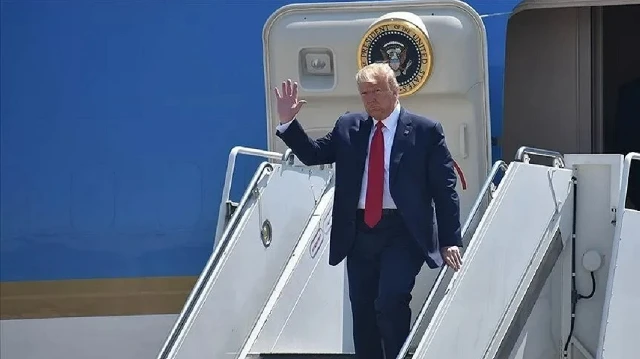
United States President Donald Trump is expected to make an official visit to Türkiye as part of his diplomatic engagements surrounding the upcoming North Atlantic Treaty Organization (NATO) summit, a trip that is expected to reinforce strategic cooperation between Washington and Ankara while addressing a range of pressing regional and global security issues.
The planned visit comes at a time when NATO member states are seeking to strengthen collective defence, respond to evolving security threats, and reinforce unity within the alliance amid ongoing geopolitical tensions across Europe, the Middle East, and other parts of the world.
Officials familiar with the preparations said President Trump’s visit will include high-level meetings with Turkish President Recep Tayyip Erdoğan and senior government officials, with discussions expected to focus on defence cooperation, regional stability, counterterrorism, economic relations, and the future direction of the NATO alliance.
Political observers believe the visit represents another important opportunity for both countries to reaffirm their longstanding strategic partnership despite occasional disagreements on regional and foreign policy issues in recent years.
The United States and Türkiye have maintained decades of military and diplomatic cooperation through their membership in NATO, with both countries playing significant roles in the alliance’s security architecture.
As one of NATO’s largest military powers, Türkiye occupies a strategically important position connecting Europe, Asia, and the Middle East. Its geographic location has made the country a critical partner in regional security operations, intelligence sharing, migration management, and counterterrorism efforts.
Analysts say the upcoming bilateral discussions are likely to address ongoing conflicts affecting the broader region, including developments in Eastern Europe, the Black Sea, the Middle East, and the Eastern Mediterranean.
Both leaders are also expected to exchange views on international efforts aimed at reducing tensions in conflict zones while strengthening diplomatic cooperation among allied nations.
Defence cooperation is anticipated to feature prominently during the meetings, particularly as NATO members continue discussions regarding military readiness, modernization of defence capabilities, and increased investment in collective security.
Officials from both governments have repeatedly emphasized the importance of maintaining close coordination among alliance members in response to emerging security challenges facing Europe and its neighbouring regions.
Economic issues are also expected to form part of the agenda during Trump’s visit.
The United States and Türkiye maintain extensive commercial relations covering trade, investment, manufacturing, energy, aviation, technology, and infrastructure development.
Business leaders in both countries have continued to advocate for stronger economic cooperation, arguing that expanded trade could generate new investment opportunities and strengthen bilateral ties.
Diplomatic observers believe the visit may also provide an opportunity for both governments to address areas where differences have previously emerged while exploring new avenues for collaboration based on shared strategic interests.
Over the years, relations between Washington and Ankara have experienced periods of both close cooperation and diplomatic disagreements.
Despite those differences, both countries have consistently recognized the importance of maintaining constructive dialogue given their shared responsibilities within NATO and broader international security frameworks.
The NATO summit itself is expected to bring together heads of state and government from across the alliance to discuss collective defence strategies, military spending commitments, technological innovation, cybersecurity, intelligence cooperation, and responses to evolving global security threats.
Alliance leaders are also expected to examine ongoing efforts to strengthen deterrence capabilities while improving coordination among member states in addressing challenges posed by terrorism, cyberattacks, hybrid warfare, and regional instability.
Foreign policy analysts believe President Trump’s visit to Türkiye before participating in the summit underscores the importance of bilateral diplomacy in shaping broader multilateral discussions within NATO.
According to experts, consultations between key alliance members often help establish common positions before formal summit deliberations begin.
International observers will closely monitor the outcome of the meetings, particularly any agreements relating to defence cooperation, regional security initiatives, and future collaboration between the United States and Türkiye.
Many also expect the visit to generate renewed discussions regarding NATO’s long-term strategic priorities as the alliance adapts to an increasingly complex global security environment.
For Türkiye, hosting the American president represents an opportunity to reaffirm its role as one of NATO’s most strategically significant members while strengthening diplomatic engagement with one of its principal allies.
For the United States, the visit provides another platform to reinforce partnerships that remain central to its broader foreign policy and security objectives across Europe, the Middle East, and beyond.
As preparations continue for both the official visit and the NATO summit, diplomats from member states remain engaged in intensive consultations aimed at ensuring productive discussions on issues that will shape the alliance’s future.
The meetings are expected to conclude with renewed commitments to cooperation, collective security, and continued dialogue as NATO members seek to address shared challenges while preserving stability in an increasingly uncertain international environment.
The planned visit has already attracted significant international attention, with diplomats and foreign policy experts describing it as one of the most closely watched engagements ahead of the NATO summit.
Observers believe the discussions between President Trump and President Erdoğan could influence broader conversations within the alliance, particularly on matters relating to regional security, defence cooperation, and the evolving geopolitical landscape.
In recent years, NATO has faced a series of complex challenges, including heightened security concerns in Eastern Europe, instability in parts of the Middle East, cyber threats, energy security, and the need to strengthen cooperation among member states.
Against this backdrop, alliance leaders are expected to use the summit to reaffirm their collective commitment to mutual defence while exploring practical strategies for addressing emerging global risks.
Türkiye’s strategic location continues to make it one of NATO’s most important members. Positioned at the crossroads of Europe, Asia, and the Middle East, the country plays a central role in regional security, migration management, maritime operations, and intelligence cooperation.
Its extensive military capabilities and geographical importance have made Ankara a key partner in several NATO missions over the years, reinforcing its influence within the alliance.
Analysts suggest that the bilateral meeting between Trump and Erdoğan could also provide an opportunity to discuss ongoing efforts aimed at strengthening military interoperability among NATO members.
Such discussions may include joint military exercises, intelligence sharing, defence technology cooperation, and initiatives designed to improve the alliance’s overall readiness in response to evolving threats.
Economic cooperation is also expected to feature prominently during the visit.
Trade relations between the United States and Türkiye span numerous sectors, including manufacturing, agriculture, defence, aviation, technology, healthcare, and energy.
Business communities in both countries have consistently advocated for deeper commercial ties, arguing that increased investment and expanded trade would generate economic opportunities while reinforcing diplomatic relations.
Observers note that enhanced economic collaboration often complements broader strategic partnerships by creating additional avenues for long-term cooperation.
The visit is also expected to provide both leaders with an opportunity to exchange views on international conflicts, humanitarian concerns, and ongoing diplomatic initiatives aimed at promoting peace and stability across several regions.
Foreign policy experts believe such consultations remain essential as global challenges increasingly require coordinated responses among major international partners.
Security analysts have further emphasized that strong communication between key NATO members helps reduce misunderstandings, strengthen trust, and improve coordination during periods of heightened geopolitical uncertainty.
They argue that regular high-level engagements remain one of the alliance’s most effective tools for maintaining unity despite differing national interests on specific issues.
As preparations for the summit continue, diplomatic teams from member countries are finalizing agendas covering defence spending, technological innovation, cybersecurity, military modernization, and collective responses to evolving security challenges.
Many observers expect the summit to produce renewed commitments toward strengthening NATO’s capabilities while reinforcing cooperation among its members.
For President Trump, the visit represents another important diplomatic engagement as his administration continues to emphasize strategic partnerships with key allies.
For Türkiye, hosting the American president ahead of the summit underscores the country’s continuing importance within the alliance and its broader role in regional and international affairs.
While the outcome of the discussions will only become clear after the meetings conclude, analysts believe the visit could contribute positively to efforts aimed at strengthening bilateral relations and reinforcing cooperation within NATO.
The international community will therefore be watching closely as both leaders seek to advance shared interests, address areas of mutual concern, and contribute to broader discussions that will shape the future direction of one of the world’s most significant security alliances.