
Trump Says Iran Is Eager for New Agreement as Diplomatic Signals Raise Hopes for Fresh Negotiations

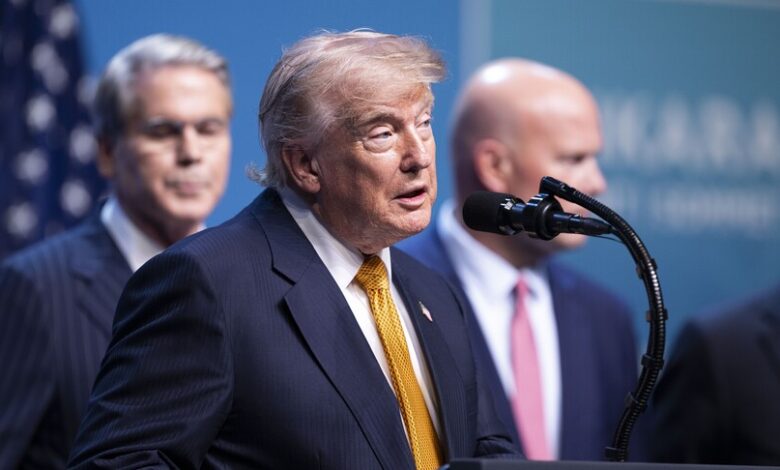
United States President Donald Trump has claimed that Iran is now eager to reach a new agreement with Washington, declaring that the Islamic Republic wants to “make a deal so badly” as diplomatic contacts between the two countries continue to attract international attention.
The remarks come at a time of renewed speculation over the future of relations between the United States and Iran following months of heightened regional tensions, economic pressure, and indirect diplomatic engagement involving several international mediators.
Speaking while addressing reporters, President Trump expressed confidence that Iran is seeking a negotiated solution to its longstanding dispute with the United States, suggesting that recent developments indicate a growing willingness on Tehran’s part to return to meaningful dialogue.
According to Trump, his administration remains open to diplomacy, provided any future agreement adequately addresses concerns surrounding Iran’s nuclear activities, regional security, and broader issues affecting stability across the Middle East.
The President argued that sustained economic sanctions and diplomatic pressure have significantly influenced Iran’s calculations, leading its leadership to reconsider the benefits of renewed negotiations.
Although Trump did not provide detailed evidence supporting his assertion, he maintained that communication channels remain active and that discussions involving intermediaries have continued behind the scenes.
His comments have immediately generated widespread international interest, with diplomats and foreign policy analysts closely examining whether they signal genuine progress toward renewed negotiations or represent another phase in the long-running political rhetoric that has characterized relations between Washington and Tehran.
For decades, relations between the United States and Iran have remained among the most complex and sensitive in international diplomacy.
Political disagreements have extended across multiple administrations, involving disputes over Iran’s nuclear programme, economic sanctions, regional influence, missile development, and broader security concerns throughout the Middle East.
Despite repeated periods of confrontation, both countries have occasionally explored diplomatic avenues through direct or indirect negotiations aimed at reducing tensions and preventing further escalation.
Recent months have witnessed renewed efforts by regional partners, including Qatar and Oman, to facilitate communication between both governments in hopes of creating conditions for broader diplomatic engagement.
These mediation efforts have focused on reducing regional tensions while encouraging constructive dialogue capable of addressing long-standing disagreements through peaceful means.
International observers believe that any successful agreement would require significant compromises from both sides.
While Washington has consistently sought stronger guarantees regarding Iran’s nuclear activities and regional conduct, Tehran has repeatedly emphasized the need for sanctions relief, economic normalization, and recognition of its sovereign rights under international law.
Political analysts note that achieving a comprehensive agreement will likely prove challenging given the complexity of the issues involved.
Questions surrounding nuclear inspections, uranium enrichment, regional security arrangements, prisoner exchanges, financial restrictions, and diplomatic recognition remain central to any future negotiations.
Nevertheless, experts argue that continued dialogue remains preferable to prolonged confrontation.
Many believe sustained diplomatic engagement offers the best opportunity to reduce misunderstandings, lower military tensions, and create conditions for greater regional stability.
Trump’s latest comments also come against the backdrop of continued geopolitical uncertainty across the Middle East, where several ongoing conflicts and security challenges have increased international calls for diplomatic solutions.
Governments across Europe, the Gulf region, and Asia have repeatedly encouraged both Washington and Tehran to maintain open communication while avoiding actions capable of escalating existing tensions.
Economic observers further note that any improvement in United States-Iran relations could have broader implications for global energy markets.
Iran possesses some of the world’s largest oil and natural gas reserves, and any significant easing of sanctions could eventually influence international energy supplies, investment opportunities, and global commodity prices.
Business analysts suggest that financial markets will continue monitoring diplomatic developments closely, as investors often respond positively to signs of reduced geopolitical risk in strategically important regions.
Meanwhile, security specialists caution that optimism should remain measured until concrete progress is achieved.
They point out that previous rounds of negotiations have often encountered setbacks despite encouraging public statements from political leaders.
As a result, many analysts believe future developments should be judged by formal diplomatic outcomes rather than political rhetoric alone.
Iranian officials have consistently maintained that while they remain open to diplomacy, negotiations must be based on mutual respect, fairness, and recognition of Iran’s national interests.
Tehran has repeatedly argued that sustainable agreements require reciprocal commitments from all parties involved rather than unilateral obligations.
The coming weeks are expected to reveal whether recent diplomatic signals translate into more substantive negotiations.
International observers believe any formal breakthrough would likely involve multiple rounds of technical discussions before progressing to higher-level political agreements.
For now, President Trump’s assertion that Iran is eager to “make a deal” has renewed global attention on one of the world’s most consequential diplomatic relationships.
Whether those comments ultimately mark the beginning of meaningful progress or simply reflect another chapter in the complex history of United States-Iran relations remains uncertain.
However, with regional stability, international security, and global economic interests closely tied to developments between the two countries, the international community will continue watching carefully as diplomatic efforts evolve in the months ahead.