
Ukraine and Nine European Nations Form New Missile Defence Coalition to Strengthen Regional Security Against Ballistic Threats

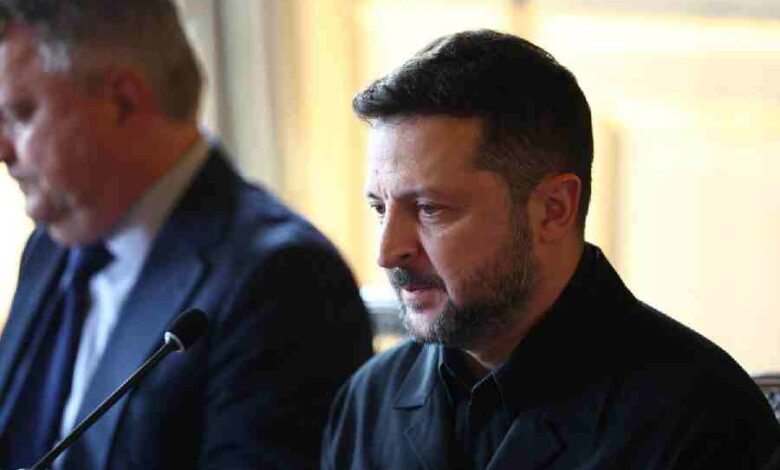
Ukraine and nine European countries have announced the formation of a new multinational coalition aimed at strengthening Europe’s collective defence against the growing threat of ballistic missile attacks, marking another significant development in the continent’s evolving security architecture.
The announcement comes at a time when European governments are increasingly reassessing their defence priorities amid heightened geopolitical tensions, rapid advances in missile technology, and continuing concerns over regional security. The coalition is expected to focus on improving cooperation in missile detection, air defence coordination, intelligence sharing, and the development of more effective systems capable of intercepting long-range ballistic threats.
Officials involved in the initiative described the alliance as a proactive response to changing security realities across Europe, emphasizing that modern defence requires close collaboration among nations rather than isolated national efforts.
According to participating governments, ballistic missile technology has become increasingly sophisticated in recent years, allowing missiles to travel greater distances with improved speed, accuracy, and destructive capability.
These developments have prompted many European countries to accelerate investments in integrated air and missile defence systems capable of protecting civilian populations, military installations, and critical infrastructure.
While individual nations have continued upgrading their own defence capabilities, leaders involved in the new coalition argue that no single country can effectively address emerging missile threats alone.
Instead, they believe collective planning, shared intelligence, coordinated surveillance, and interoperable defence systems offer greater protection against increasingly complex security challenges.
The coalition is expected to encourage participating countries to work more closely in developing early-warning networks capable of identifying missile launches within seconds.
Military experts explain that early detection remains one of the most critical elements of modern missile defence because interception opportunities are often measured in minutes—or even seconds.
The participating nations also plan to deepen cooperation on radar technology, satellite surveillance, command-and-control systems, and joint military exercises designed to improve operational readiness.
According to defence analysts, integrating these capabilities across multiple countries could significantly improve Europe’s ability to detect, track, and respond to potential missile attacks.
Ukraine’s participation in the coalition reflects its growing role within European security discussions.
Since the outbreak of conflict on its territory, Ukraine has accumulated extensive operational experience in defending against various forms of aerial attacks, including ballistic missiles, cruise missiles, and unmanned aerial systems.
Military observers believe that practical lessons learned through Ukraine’s experience may contribute valuable insights to the coalition’s future planning and operational strategies.
Several defence specialists note that Ukraine’s air defence forces have gained considerable expertise in coordinating multiple missile interception systems under extremely challenging battlefield conditions.
That operational knowledge could assist partner countries seeking to strengthen their own defensive capabilities.
European officials involved in the initiative stressed that the coalition should not be viewed as an offensive military alliance but rather as a defensive framework intended to improve collective protection against potential missile attacks.
They emphasized that safeguarding civilian lives remains one of the principal objectives behind the initiative.
The coalition is also expected to strengthen cooperation between governments, defence industries, research institutions, and technology companies involved in developing next-generation missile defence solutions.
Investments in advanced interceptor missiles, artificial intelligence, integrated radar systems, and cyber-secure communication networks are likely to become major priorities in the coming years.
Security analysts argue that technological innovation has become increasingly important in modern defence planning.
Advances in hypersonic weapons, precision-guided ballistic missiles, and long-range strike capabilities have significantly altered military calculations worldwide, forcing governments to modernize existing defence systems.
Many European countries have already increased defence spending in response to changing geopolitical conditions.
Several governments have announced ambitious military modernization programmes involving new aircraft, missile defence platforms, naval assets, and cyber defence capabilities.
The newly announced coalition is expected to complement those national efforts by promoting greater coordination rather than duplication of resources.
Political observers note that the initiative reflects a broader shift toward stronger regional security cooperation across Europe.
Beyond traditional military alliances, governments are increasingly forming specialized partnerships focused on cybersecurity, intelligence sharing, energy security, critical infrastructure protection, and advanced defence technologies.
The announcement has attracted attention beyond Europe, with international security experts closely monitoring how the coalition may influence future defence cooperation across the continent.
Some analysts believe the initiative could eventually encourage additional countries to join, further expanding Europe’s integrated missile defence network.
Others caution that implementation will require significant financial investment, political coordination, and long-term commitment from participating governments.
Building effective multinational defence systems involves harmonizing military standards, communication protocols, procurement policies, operational doctrines, and technological compatibility across different armed forces.
Despite these challenges, supporters argue that the long-term benefits outweigh the complexity of implementation.
They maintain that stronger collective defence not only improves military preparedness but also enhances deterrence by reducing the likelihood that potential adversaries would view missile attacks as strategically advantageous.
International relations experts also emphasize that defensive cooperation contributes to broader regional stability by increasing confidence among allied nations and strengthening crisis response mechanisms.
They argue that effective missile defence serves not only military purposes but also humanitarian ones by protecting civilian populations from catastrophic attacks.
The coalition’s formation comes amid continuing global discussions regarding arms control, strategic deterrence, and international security.
As missile technology continues evolving, governments worldwide are reassessing how best to balance diplomatic engagement with investments in defensive capabilities.
For participating European countries, the new coalition represents an important step toward adapting to an increasingly uncertain security environment.
By combining resources, intelligence, technological expertise, and operational planning, the alliance seeks to create a more resilient defence framework capable of responding to future challenges.
Although many practical details regarding funding, command structures, procurement timelines, and operational deployment remain under discussion, the political message behind the initiative is already clear.
Europe’s security landscape is entering a new phase characterized by deeper cooperation, shared responsibility, and collective investment in protecting the continent against emerging ballistic missile threats.
As defence ministers and military planners continue developing the coalition’s long-term strategy, many observers believe the initiative could become one of the most significant multinational security partnerships established in Europe in recent years.
Whether through enhanced surveillance, integrated missile defence, technological innovation, or expanded military cooperation, the coalition reflects Europe’s determination to strengthen its defensive posture while preparing for the rapidly changing realities of twenty-first-century security.