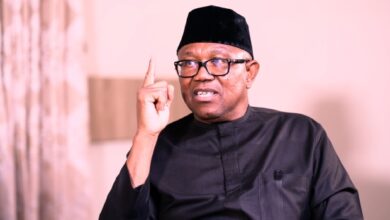


The debate over fuel subsidy and the management of Nigeria’s petroleum resources has taken another turn ahead of the 2027 general elections, with former Anambra State Governor and Labour Party presidential candidate Peter Obi expressing a position that differs from that of former Vice President Atiku Abubakar.
Obi has faulted the way Nigeria has managed the proceeds and resources associated with the petroleum sector, arguing that the country’s economic difficulties cannot be addressed simply by focusing on whether fuel subsidy should exist or be removed.
The disagreement comes as political leaders and presidential hopefuls intensify discussions about Nigeria’s economy, fuel prices, government spending and the broader management of public resources ahead of the 2027 elections.
The issue of fuel subsidy has remained one of the most contentious economic questions in Nigeria.
The Federal Government’s removal of the petrol subsidy in 2023 resulted in a sharp increase in fuel prices and triggered significant economic pressure on households and businesses.
Since then, Nigerians have continued to deal with elevated transportation costs, higher food prices and increased expenses for businesses that depend heavily on petrol and diesel.
Supporters of subsidy removal have argued that maintaining the subsidy placed an unsustainable burden on government finances and allowed public resources to be consumed without sufficient benefits reaching ordinary Nigerians.
Critics, however, have maintained that removing the subsidy without adequate social protection and economic reforms placed too much pressure on citizens.
It is within this wider debate that Obi’s latest position has attracted political attention.
Rather than treating subsidy as the central problem, Obi has repeatedly focused on the management of Nigeria’s resources and the need for greater accountability in government.
His position is that the country must examine what happens to its revenues and how public funds are deployed.
The former Anambra governor has argued that Nigeria’s enormous natural resources should translate into better living conditions, stronger infrastructure and greater economic opportunities for citizens.
He has also consistently raised concerns about government expenditure and the amount of money being committed to consumption instead of productive investment.
The disagreement with Atiku therefore reflects a broader difference in how opposition figures approach the country’s economic challenges.
Atiku has previously advocated economic reforms and spoken extensively about subsidy, petroleum-sector restructuring and the need to reduce waste in government.
Obi, meanwhile, has placed greater emphasis on production, investment, accountability and the efficient management of available resources.
The debate is particularly significant because both men remain influential figures in Nigeria’s opposition politics and have been associated with discussions about the possibility of a broader political realignment ahead of 2027.
Their differing economic positions could become an important part of the conversation as Nigerians assess the policies being proposed by political parties and presidential aspirants.
For ordinary Nigerians, however, the subsidy debate is closely connected to everyday economic realities.
The cost of petrol affects transportation, electricity generation for businesses and households, food distribution and the prices of goods and services.
When fuel prices rise, transport operators generally face higher operating costs, while businesses that depend on generators also experience increased expenses.
These additional costs can eventually be transferred to consumers.
Farmers and food distributors can similarly face higher transportation expenses, contributing to increases in food prices.
This has made fuel policy one of the most sensitive economic issues in the country.
Obi’s argument about the management of subsidy proceeds and petroleum revenues touches on the question of what Nigeria does with the resources it saves or generates.
If government finances improve as a result of reduced subsidy expenditure, citizens naturally expect to see the benefits through infrastructure, healthcare, education, social protection and other public services.
The question of accountability therefore remains central to the debate.
Political leaders have increasingly been challenged to explain how public resources are being managed and what measurable benefits citizens are receiving from government policies.
The discussion also comes at a time when Nigeria is attempting to increase oil production and strengthen non-oil revenue while dealing with debt obligations and rising public expenditure.
The country remains heavily dependent on petroleum revenues, despite repeated efforts to diversify the economy.
Obi has argued that Nigeria needs to move away from an economy that primarily consumes its resources towards one that invests in production and creates wealth.
His economic message has frequently centred on reducing waste, investing in human capital and creating an environment where businesses can expand.
He has also criticised what he describes as excessive government spending, arguing that scarce resources should be directed towards productive sectors.
The disagreement with Atiku does not necessarily mean that the two politicians differ on every aspect of economic reform.
Both have expressed concerns about Nigeria’s economic management and the need for changes in governance.
Their differences appear more pronounced in the emphasis they place on particular policies and how those policies should be implemented.
As the 2027 election approaches, such differences are likely to receive greater attention.
Political parties and candidates will be expected to present clear plans for addressing inflation, unemployment, energy costs, insecurity, poverty and declining purchasing power.
Voters are also likely to demand more specific explanations about how proposed policies will affect their daily lives.
The subsidy question will remain part of that discussion.
Any future government will have to determine how to balance the need for fiscal sustainability with the economic realities facing millions of Nigerians.
Keeping subsidies may require substantial public spending, while removing them can place immediate pressure on consumers unless accompanied by effective measures to cushion the impact.
The central issue, therefore, is not simply whether subsidy should exist but how the country’s resources are managed before, during and after major policy changes.
Obi’s criticism has brought the question of accountability back to the centre of the debate.
His position suggests that greater transparency and more productive use of public resources should accompany any major economic reform.
For Nigeria’s opposition politics, the discussion could also influence attempts to build a stronger coalition ahead of the next presidential election.
With several political figures positioning themselves for 2027, economic policy is expected to become one of the major areas of competition.
The electorate will ultimately have the opportunity to compare the different proposals and decide which approach best addresses the country’s challenges.
For now, Obi’s disagreement with Atiku over subsidy has added another dimension to an already intense political and economic conversation.
At the heart of the disagreement is a fundamental question about Nigeria’s resources: whether the country is receiving enough value from the enormous revenues generated from its natural wealth and whether those resources are being managed in a way that improves the lives of ordinary citizens.
As political activities gather momentum towards 2027, that question is likely to remain one of the most important issues shaping Nigeria’s economic and political debate.