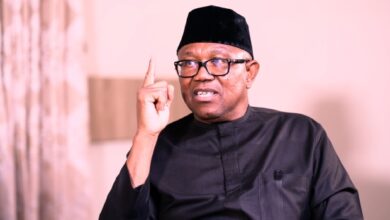

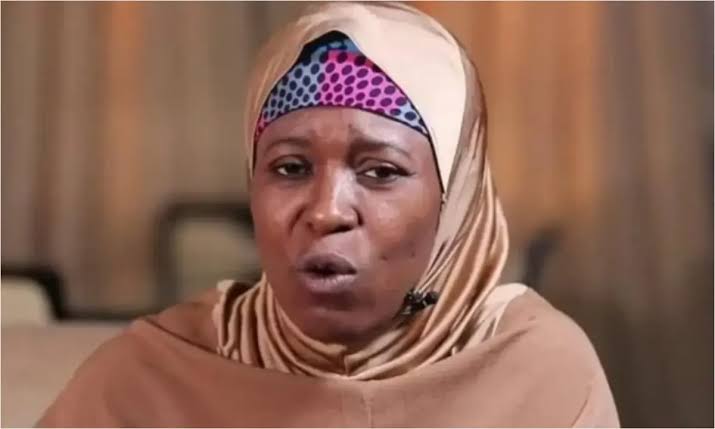
Activist and prominent Peter Obi supporter Aisha Yesufu has expressed confidence that the former Anambra State governor will have a stronger and potentially easier path to the presidency in the 2027 election than he had during the 2023 presidential contest.
Yesufu, who was one of the most visible supporters of Obi during the 2023 election campaign, said the political environment surrounding the next presidential election is significantly different from what existed three years ago.
Her position comes as political activities intensify ahead of the 2027 presidential election, with opposition figures and political parties working to build alliances capable of challenging President Bola Ahmed Tinubu.
Obi contested the 2023 presidential election under the Labour Party and emerged as a major force in the contest, particularly among young Nigerians and voters who identified with the Obidient movement.
The movement attracted significant attention across the country, with supporters organising rallies, online campaigns and grassroots mobilisation around Obi’s message of political change.
Yesufu was among the prominent personalities who openly supported the campaign and frequently defended Obi against criticism from opponents.
She has now suggested that the circumstances surrounding the 2027 contest could favour Obi more than the previous election did.
One of the major differences is the level of political experience Obi has gained since the 2023 election.
His presidential campaign in 2023 introduced him to a much wider national audience and transformed him from a former state governor with a strong regional profile into one of the country’s most prominent opposition figures.
The campaign also demonstrated the ability of a relatively new political movement to attract large numbers of young voters, particularly through social media and grassroots networks.
Obi’s supporters have maintained that the 2023 election created a political movement that has continued beyond the election itself.
Although the Labour Party experienced internal disagreements after the election, the support base associated with Obi remained politically active.
The 2027 contest could therefore provide Obi with an opportunity to build on the visibility and political network developed during the previous presidential campaign.
Another factor is the broader opposition realignment taking place ahead of the next election.
Political figures who previously operated under different parties have been exploring alliances and new platforms in an attempt to challenge the ruling APC.
Obi himself has since moved into a new political arrangement, giving him an opportunity to contest under a platform different from the Labour Party structure through which he ran in 2023.
The changing political landscape could make the next election substantially different from the previous one.
Yesufu’s confidence also reflects the belief among Obi’s supporters that the former Anambra governor has become better known nationally since 2023.
His campaign message of reducing government waste, investing in human capital, strengthening production and improving security resonated with many voters during the last election.
Supporters argue that the economic difficulties Nigerians have experienced since 2023 could further strengthen the appeal of candidates campaigning on economic reform and improved governance.
The cost of living, unemployment, insecurity, electricity challenges and other economic concerns are expected to dominate the 2027 campaign.
Obi’s supporters believe these issues could make voters more receptive to his message.
However, the political environment remains highly competitive.
Tinubu’s administration is expected to campaign on its record and argue that its reforms require more time to produce their full effects.
Other opposition figures are also expected to compete for the same pool of voters, making the 2027 election more complicated than a simple contest between Obi and Tinubu.
The strength of opposition cooperation will therefore be an important factor.
Yesufu has previously been closely associated with the Obidient movement, but she has also indicated that her approach to the 2027 campaign will not necessarily be identical to what she did in 2023.
Reports from August showed that she explained she would not follow Obi from state to state in the same way she did during the previous presidential campaign.
Instead, she indicated that she intended to adopt a different strategy in supporting his political ambition.
That position suggests that the 2027 campaign could involve a more decentralised form of mobilisation, with supporters using existing networks rather than relying entirely on large rallies and physical campaign tours.
The Obidient movement’s strong presence online is likely to remain an important part of Obi’s campaign strategy.
Social media played a major role in the 2023 election, particularly among younger Nigerians.
Supporters used online platforms to promote Obi’s speeches, policy positions and campaign events, while also challenging narratives promoted by rival political camps.
The movement also attracted Nigerians in the diaspora, who participated in online advocacy and fundraising activities.
Three years later, however, Obi faces a different political challenge.
The 2027 election will involve more experienced political structures, stronger alliances and potentially more coordinated opposition campaigns.
His ability to convert the enthusiasm witnessed online into votes at polling units will remain one of the major questions surrounding his campaign.
The 2023 election demonstrated that strong online popularity does not automatically translate into victory at the national level.
Obi won significant support in several parts of the country and performed particularly strongly in the South-East and parts of the South-South.
He also made notable gains among young voters in other regions.
Nevertheless, the final result went to Tinubu, with Atiku Abubakar finishing second and Obi third nationally.
The 2027 election will therefore test whether Obi can expand his support beyond the regions where he performed strongest in 2023.
For Obi’s campaign, building a broader national coalition will be essential.
His supporters have increasingly emphasised the need for him to attract voters from different ethnic, religious and regional backgrounds.
The political realignment ahead of 2027 could provide an opportunity for such a coalition if opposition parties are able to cooperate effectively.
At the same time, disagreements among opposition politicians could make the task more difficult.
Nigeria’s presidential elections are heavily influenced by regional voting patterns, party structures, political alliances and the ability of candidates to secure support across multiple parts of the country.
A candidate seeking to win the presidency must therefore combine enthusiasm among supporters with a strong nationwide organisation.
Yesufu’s assessment that 2027 will be easier for Obi is ultimately a political prediction.
The outcome will depend on factors that cannot yet be determined, including the final list of candidates, party alliances, campaign performance, voter turnout, economic conditions and the credibility of the electoral process.
The political climate between now and the election could also change considerably.
For now, however, Yesufu’s comments underline the confidence among Obi’s supporters that the 2027 contest presents a fresh opportunity.
They believe the experience gained from the 2023 election, the continued visibility of the Obidient movement and the changing political environment could put Obi in a stronger position.
Whether that optimism translates into an electoral advantage will become clearer as the campaign develops.
With the 2027 election approaching, the competition for Nigeria’s presidency is already taking shape, and Peter Obi remains one of the opposition figures attracting significant attention.
His supporters are now looking beyond the limitations of the 2023 campaign and focusing on what they believe can be achieved with a stronger political structure, wider alliances and a more experienced campaign team.
For Yesufu, the next election represents an opportunity for Obi to improve on his previous performance and make another attempt at winning the presidency.
The coming months will determine whether the political realities of 2027 ultimately match the confidence expressed by his supporters.