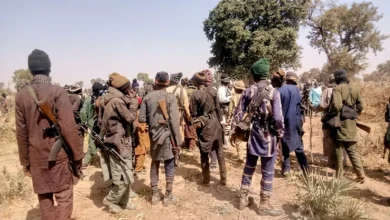
Police Recover 28 Human Skulls and Bones From Suspected Criminal Camps in Abia Forests


The Abia State Police Command has uncovered two suspected criminal camps in forest areas of the state, recovering 28 human skulls and other human bones during an intelligence-led operation.
The disturbing discovery was made in forest locations around Umuaku-Isuochi and Nneato in Umunneochi Local Government Area, where tactical police teams carried out a coordinated operation against suspected criminal groups.
The operation took place as part of an ongoing security campaign aimed at dismantling criminal hideouts and preventing armed groups from using remote forest locations as bases for their activities.
According to the police, the tactical teams entered the suspected camps after receiving intelligence about criminal activities in the area.
The occupants of the camps reportedly fled after noticing the arrival of the security personnel, abandoning the locations before the police could apprehend them.
The camps were subsequently searched and dismantled.
During the operation, officers discovered a total of 28 human skulls and assorted human bones.
The police said the remains were suspected to belong to victims of kidnapping, but investigations have not yet established the identities of the deceased or the circumstances surrounding their deaths.
The discovery has raised serious concerns about the activities allegedly taking place inside isolated forest locations in the area and the possible connection between the camps and kidnapping or other violent crimes.
Police authorities have commenced investigations into the remains and the suspected criminal camps.
Efforts have also been intensified to locate and arrest the suspects who escaped when the security teams arrived.
The operation involved several specialised units of the Abia State Police Command, including the Violent Crime Response Unit, Anti-Kidnapping Unit, Anti-Cultism Unit, Intelligence Response Unit, Rapid Response Squad and personnel from the Isuochi Divisional Police Station.
The involvement of multiple tactical units reflects the seriousness with which the command is treating criminal activities believed to be taking place in the forests.
The operation was carried out under the command’s ongoing security initiative known as “Operation No Hideout for Criminal Elements in the State.”
The objective of the operation is to identify and dismantle locations being used by criminals to plan or execute attacks, kidnappings, cult-related activities and other offences.
The discovery of the remains has added urgency to the investigation, particularly because authorities will need to determine whether they are connected to people previously reported missing or abducted.
Forensic examination could become an important part of the process as investigators attempt to identify the remains and establish possible causes of death.
The police have not announced the identities of any of the deceased persons recovered from the forest.
They have also not established publicly that all 28 skulls and bones came from kidnapping victims.
That distinction remains important as the investigation continues, because the remains must be examined before definitive conclusions can be drawn about when the deaths occurred, how the individuals died and whether the deaths were connected to the activities of the suspected criminal camps.
The discovery has nevertheless highlighted the security challenges associated with remote forest areas, which can provide criminals with concealment from law enforcement agencies.
Such locations can make it difficult for security personnel to monitor movement and identify individuals operating away from populated communities.
The police operation demonstrates the role intelligence gathering can play in locating such hideouts.
Rather than waiting for criminal activity to occur in populated areas, security agencies can use information from residents and other intelligence sources to identify suspected camps and carry out targeted operations.
The escape of the suspects, however, means the operation has not yet resulted in the arrest of those believed to have been occupying the camps.
The police have said efforts are continuing to track them down.
Investigators are expected to examine the physical evidence recovered from the locations and determine whether it can provide information about the suspects, their activities and possible victims.
The authorities may also investigate whether the forest camps were connected to other criminal incidents previously recorded in Abia or neighbouring states.
Kidnapping and other violent crimes have remained major security concerns in several parts of southeastern Nigeria, with criminals sometimes operating across state boundaries.
The use of forests and other difficult-to-access areas can make it easier for suspects to move between communities and evade security operations.
The latest discovery therefore comes as part of wider efforts by security agencies to deny criminal groups access to such areas.
The Abia police command has also appealed to residents to provide useful information about suspicious movements and activities.
Residents living near forest areas have been encouraged to report unusual activity to security agencies rather than attempting to confront suspected criminals themselves.
Community intelligence can be particularly important in rural areas because residents are often more familiar with unusual movements, unfamiliar persons and abandoned structures within their surroundings.
The police have assured residents that operations against criminal hideouts will continue across the state.
The discovery of the remains is likely to intensify public concern over missing persons and unresolved kidnapping cases in the area.
Families whose relatives have disappeared could also seek information from authorities as investigators work to determine whether any of the remains can be identified.
However, identification will require proper forensic and investigative procedures before any connection can be confirmed.
Authorities are also expected to establish whether the camps were used recently or had been abandoned before the police operation.
The condition and location of the remains could provide investigators with useful evidence about how long the camps may have been in use and whether the suspected occupants were responsible for the deaths.
For now, the police have not announced any arrests arising directly from the discovery.
The suspects who occupied the camps reportedly escaped into the surrounding forest before the security teams could apprehend them.
A wider search operation is therefore expected to continue as investigators work to identify and locate those responsible for the alleged criminal activities.
The Commissioner of Police in Abia has reiterated the command’s determination to prevent criminals from establishing safe havens in the state.
The command has also urged residents to cooperate with security agencies by providing information that could assist investigations and prevent further attacks.
The discovery of 28 skulls and human bones has brought renewed attention to the importance of sustained security operations in forest communities.
It also demonstrates the potential human cost of criminal activities that may remain hidden for long periods in isolated locations.
As the investigation progresses, authorities will face the crucial task of identifying the recovered remains, determining how the individuals died and establishing whether the suspected camps were directly connected to kidnapping or other violent crimes.
Until those investigations are completed, the recovered remains remain subject to forensic examination and the claim that they belonged to kidnapping victims remains a police suspicion rather than a confirmed fact.
The search for the fleeing suspects is continuing, while security personnel are maintaining surveillance around the affected forest areas.
The police have also urged members of the public to remain vigilant and report information that could help investigators uncover the activities of criminal groups operating in remote parts of the state.
The discovery has already raised serious questions about what may have been taking place inside the forest camps and whether there are additional victims or suspects yet to be identified.
With investigations ongoing, attention will now turn to the forensic examination of the remains and the efforts to apprehend those who fled the camps.