
A fresh dispute has emerged within the Nigeria Democratic Congress as the party and some of the support groups backing its 2027 presidential ticket disagree over who should control campaign structures and how the various mobilisation groups should operate ahead of the general election.
The latest disagreement centres on the relationship between the NDC’s formal party structures and organisations associated with Peter Obi and Rabiu Kwankwaso, particularly the Obi-Kwankwaso Movement, popularly known as the OK Movement, as well as Obidient and Kwankwasiyya groups.
The dispute has intensified after the NDC began moves to formalise the registration and coordination of support groups ahead of the 2027 election.
Party officials have maintained that support groups operate within the broader political structure of the NDC and cannot establish parallel campaign machinery without approval from the party leadership.
Some members of the Obi-Kwankwaso camp, however, have rejected any attempt to place their existing organisational structures under the direct control of the party.
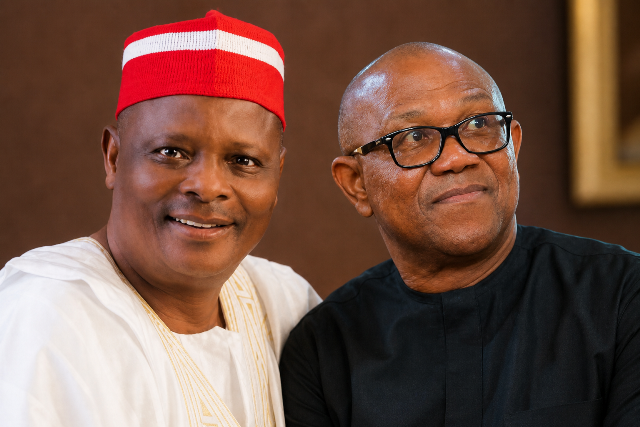
The disagreement is the latest in a series of tensions surrounding the campaign machinery for Obi and Kwankwaso, who are the NDC’s presidential and vice-presidential candidates.
The controversy became particularly visible after the OK Movement unveiled a 59-member Presidential Campaign Council in September to coordinate mobilisation for the two candidates.
The NDC subsequently disowned the structure, saying it had not been authorised by the party’s National Working Committee.
The party maintained that the power to establish an official presidential campaign council belongs to the NDC and not to an external movement or support organisation.
That position was reinforced by senior party figures, who argued that support groups should complement the party rather than assume responsibilities belonging to its official political structure.
The NDC has stressed that the party would be held responsible for activities connected to its candidates during the election campaign and therefore needs to maintain control over official campaign structures.
Party officials have also argued that election-related responsibilities such as the appointment of polling agents, coordination with electoral authorities and supervision of party activities cannot be transferred to independent support groups.
However, the OK Movement has maintained a different position.
Its leadership has described the organisation as an independently structured political movement whose members come from different political backgrounds but share support for Obi and Kwankwaso.
The movement has argued that political cooperation with the NDC does not mean surrendering its internal structure to the party.
Its leadership has insisted that its national, state, local government and ward structures were created through the efforts of its members and should remain under its own management.
The movement has also rejected suggestions that it should be merged into the NDC or treated simply as an appendage of the party.
According to its position, it can work alongside the NDC, campaign for the party’s candidates and mobilise voters while retaining its organisational identity.
The disagreement has created uncertainty over how the different groups will be integrated into the official campaign structure once the 2027 election campaign fully gets underway.
The situation has also exposed the difficulty of combining established political parties with large grassroots movements that existed before their current political alliance.
Both the Obidient and Kwankwasiyya movements developed substantial networks around their respective political leaders before Obi and Kwankwaso joined forces on the NDC platform.
The support structures associated with the two politicians therefore have their own coordinators, volunteers and networks across different parts of Nigeria.
The challenge for the NDC is how to bring these networks into one coordinated campaign without creating competing centres of authority.
Some state chairmen of the party have complained that existing party structures have been sidelined in certain areas by support groups.
In Anambra, for example, the state party leadership has alleged that Obidient structures have taken precedence over established NDC structures, including ward-level organisations.
The state leadership has called for intervention from the national party leadership, arguing that continued disagreement could affect preparations for the election.
Other state chapters have reported a different situation, saying they are working with the various movements and attempting to accommodate their representatives within a common campaign framework.
In some states, party officials have established directorates or other mechanisms specifically to coordinate support groups and prevent overlapping structures.
The different reactions from state chapters indicate that the disagreement is not uniform across the country.
While some party officials describe the issue as a serious organisational problem, others say discussions are ongoing and that the different camps can still reach an agreement.
The NDC’s national leadership has continued to insist on party supremacy.
The argument is that once a candidate accepts the party’s platform, official campaign structures must operate within the party’s constitution and established procedures.
Support groups, in this view, can organise rallies, mobilise voters and promote candidates but cannot present themselves as the official campaign machinery of the political party without authorisation.
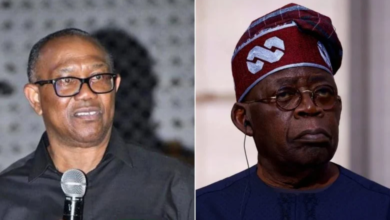
Peter Obi has also taken a position on the dispute.
The presidential candidate has said that the NDC is the political party to which he and his supporters belong and agreed with the position that the OK Movement, Obidient groups and Kwankwasiyya should function as support organisations.
Obi rejected the 59-member campaign council previously announced by the OK Movement and said he had not approved its creation.
His position is significant because the dispute has involved questions about whether the movement’s campaign structure was acting with the knowledge or approval of the presidential candidate.
Obi has indicated that support groups should not take over responsibilities that belong to the party.
He has also supported the principle that the official campaign council should be constituted through the appropriate party channels.
The development places the OK Movement’s leadership in a difficult position because the movement has continued to defend its independence while Obi himself has rejected the separate campaign council.
The disagreement therefore involves not only the party and the movement but also competing interpretations of how political mobilisation should be organised around the candidates.
The OK Movement has nevertheless maintained that its objective is not to challenge the NDC’s authority over its internal affairs.
Its position is that the movement simply wants to preserve its own structures while cooperating with the party in the campaign for Obi and Kwankwaso.
The movement has also rejected claims that its independence means it intends to operate against the NDC.
Its leadership has repeatedly said it will campaign for the party’s presidential ticket and work toward securing votes for Obi and Kwankwaso.
The dispute has also extended to questions about funding and registration.
The movement has said it is independently organised and has rejected claims that it depends financially on the NDC or Obi to maintain its structures.
Meanwhile, the NDC has begun formalising its relationship with support groups through a registration process managed from the national headquarters.
The party has warned that support groups should follow the approved process and that state chapters should not independently collect fees or establish unauthorised registration arrangements.
The effort is intended to give the party a clearer understanding of the various organisations operating in support of its candidates.
It also provides the NDC with a mechanism for coordinating campaign activities across states and local government areas.
The dispute comes at a sensitive stage of preparations for the 2027 election.
Political parties are increasingly building their structures, identifying campaign coordinators and mobilising supporters across the country.
For the NDC, maintaining unity will be particularly important because its presidential ticket brings together political networks that have traditionally operated separately.
Obi has a strong political following in the South-East and among younger voters in several parts of the country, while Kwankwaso has a longstanding political network in Kano and the wider North.
The ability to coordinate these different support bases could become a major feature of the NDC’s campaign strategy.
At the same time, the party must ensure that its formal structures remain functional across the 36 states and the Federal Capital Territory.
The disagreement over campaign control therefore goes beyond administrative arrangements.
It raises broader questions about whether a political party can effectively manage large grassroots movements while allowing them enough independence to mobilise their existing supporters.
If the two sides fail to reach a clear agreement, overlapping campaign structures could create confusion over who is authorised to organise rallies, appoint coordinators, communicate with electoral authorities and represent the party in different locations.
Party officials have warned that such confusion could become problematic during the election itself, particularly in relation to polling agents and the protection of votes.
Other stakeholders within the NDC have called for compromise and a common front.
They argue that internal disagreements should not distract the party from its wider objective of preparing for the election.
Some state leaders have already begun efforts to bring support groups under coordinated arrangements without completely excluding their existing leadership.
The goal is to create a structure in which the party retains constitutional authority while the various movements contribute their networks and grassroots mobilisation capacity.
Whether that arrangement will satisfy all sides remains to be seen.
For now, the NDC maintains that its official structures must remain supreme, while the OK Movement insists that political cooperation does not require it to surrender its independent organisational identity.
Obi’s own rejection of the separate campaign council has further complicated the situation, although his position could also provide a basis for clarifying the respective roles of the party and support groups.
The 2027 election is still ahead, leaving time for the different camps to negotiate a workable arrangement.
The immediate challenge for the NDC will be to prevent disagreements over campaign control from developing into a wider internal crisis.
For the Obi-Kwankwaso camp, the challenge will be to preserve the strength and reach of its existing grassroots networks while operating within the framework of the political party whose platform the candidates are using.
The outcome of these discussions could shape how the NDC conducts its campaign in the months ahead and determine how effectively the party coordinates the different political movements supporting its presidential ticket.