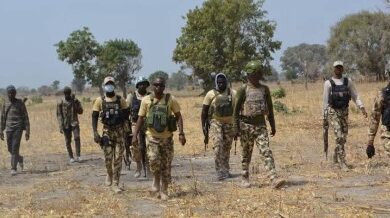


Nigerian troops have reportedly killed 16 suspected fighters of the Islamic State West Africa Province (ISWAP) during a military operation in the Lake Chad Basin, in another development highlighting the ongoing security challenges facing communities across the region.
The operation forms part of broader efforts by security forces to weaken armed groups operating around the Lake Chad Basin, an area that has experienced years of insurgency, attacks on civilians and disruptions to economic activities.
The Lake Chad region is strategically important because it connects parts of Nigeria, Chad, Niger and Cameroon. Its waterways, islands and difficult terrain can provide armed groups with routes for movement and concealment, making security operations particularly challenging for troops working to restore stability.
ISWAP is one of the armed groups responsible for the prolonged insurgency in northeastern Nigeria. The organisation emerged from divisions within Boko Haram and has carried out attacks against military positions, security personnel and civilians in parts of the Lake Chad region.
Military operations against the group have involved ground offensives, patrols, intelligence gathering and coordinated efforts to disrupt the movement of fighters and supplies. Such operations are intended to reduce the group’s ability to launch attacks, maintain strongholds and threaten communities.
The reported killing of 16 suspected fighters represents a development in the continuing campaign against insurgent groups. However, the full circumstances surrounding the operation, including its precise location, the duration of the engagement and whether weapons or other equipment were recovered, require confirmation from official sources.
The Lake Chad Basin has remained a major security concern because armed violence has affected farming, fishing, trading and other activities on which local communities depend. In some areas, residents have faced displacement, restrictions on movement and difficulties accessing essential services.
For communities whose livelihoods depend on fishing and agriculture, improved security is important for restoring normal economic activity. Insecurity can prevent farmers from reaching their fields, disrupt access to markets and increase the cost of transporting goods. It can also make humanitarian assistance more difficult to deliver to people who have been forced to leave their homes.
Military campaigns in the region therefore have implications beyond the immediate battlefield. Sustained improvements in security can help communities rebuild their livelihoods, reopen markets and resume activities that support household incomes.
Nevertheless, security experts have repeatedly highlighted the complexity of counterinsurgency operations in the Lake Chad Basin. Armed groups may adapt their tactics, move between remote locations or exploit gaps in security coverage. This means that military pressure often needs to be accompanied by intelligence cooperation, border security, community engagement and measures to address the conditions that make vulnerable populations susceptible to recruitment.
Protecting civilians during security operations remains another important consideration. Residents living near areas affected by insurgency can face serious risks, particularly when armed groups operate close to settlements or use remote communities as routes for movement.
The wider response to insecurity also depends on cooperation among countries around Lake Chad. Because armed groups can operate across national boundaries, coordination between Nigeria and its neighbours is important for monitoring movements, sharing intelligence and preventing fighters from exploiting border areas.
Beyond military action, the long-term recovery of affected communities requires access to education, healthcare, employment and reliable public services. These measures can help restore confidence in public institutions and support efforts to prevent armed groups from regaining influence.
The reported operation adds to the continuing efforts to counter ISWAP and other insurgent groups in northeastern Nigeria. Further verified information from the military would help establish the full details of the engagement and its impact on the group’s activities in the region.
For residents of the Lake Chad Basin, the hope remains that sustained security efforts will reduce attacks, protect innocent lives and create conditions for families to return to normal life.