Atiku’s Son Aligns With APC, Declares Support for Tinubu’s 2027 Presidential Bid

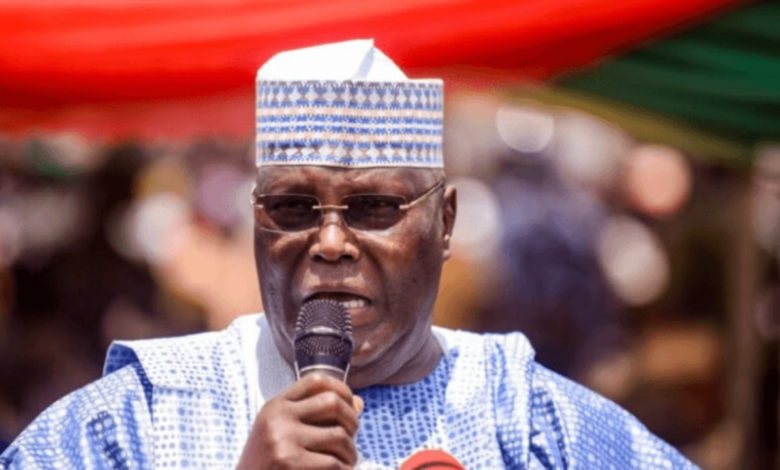
A fresh political development has emerged ahead of Nigeria’s 2027 presidential election following the defection of Abba Atiku Abubakar, son of former Vice President Atiku Abubakar, to the ruling All Progressives Congress (APC), where he declared support for President Bola Tinubu’s second-term ambition.
The development has attracted attention because of the political positions occupied by members of the Atiku family, particularly as the former vice president remains an influential opposition figure and has continued to participate in discussions surrounding the country’s political future.
Abba’s decision to join the APC has introduced another dimension to the unfolding political realignments ahead of the next general election, with his declaration of support for Tinubu creating renewed discussions about political loyalty, family relationships and individual choices in Nigeria’s democratic system.
The younger Atiku formally announced his defection from the Peoples Democratic Party (PDP) to the APC in January 2026, declaring his intention to work towards Tinubu’s re-election in 2027.
He subsequently registered with the ruling party in Gwadabwa Ward, Yola North Local Government Area of Adamawa State, where he received his APC membership card.
During the event, Abba expressed support for the Tinubu administration and said he believed the president should be given another opportunity to continue his policies and programmes.
His decision represents a notable political development in Adamawa State, which has remained an important political centre because of Atiku Abubakar’s longstanding influence and participation in national politics.
The former vice president has contested presidential elections and remains associated with opposition efforts to challenge the ruling party, making his son’s decision to join the APC a subject of public interest.
However, Abba’s defection does not automatically represent a change in his father’s political position or indicate that the entire Atiku family has moved to the ruling party.
Atiku Abubakar has previously addressed the development, describing his son’s decision as a personal choice and emphasising that political differences within families are not unusual in a democratic society.
The former vice president explained that he would not force his children to adopt his political beliefs or prevent them from making decisions based on their individual convictions.
He also maintained that his concerns remained focused on governance, the economic situation and the challenges facing Nigerians.
Atiku’s response has highlighted the distinction between personal relationships and political affiliation, particularly in a country where family members can belong to different political parties and support different candidates.
Abba, however, has publicly expressed confidence in Tinubu’s leadership and indicated that his decision was influenced by his assessment of the administration’s policies and programmes.
He also pledged to mobilise supporters and associates towards the president’s second-term ambition, making his defection more than a simple change of party membership.
The development has consequently drawn attention to the political implications of individual defections, particularly when the individuals involved belong to prominent political families.
For the APC, the arrival of Abba represents an opportunity to expand its political presence in Adamawa State and attract supporters who may be willing to participate in the party’s activities ahead of the next election.
The ruling party has continued to welcome individuals from different political backgrounds as it prepares for the 2027 electoral contest.
Party officials who received Abba described his decision as an important development and expressed optimism about the support he could bring to the party.
His declaration also reflects the growing political activity surrounding the next presidential election, with parties and political figures continuing to position themselves ahead of the campaign period.
Although the election remains in the future, political discussions have increasingly focused on alliances, defections, party membership and the mobilisation of supporters.
The situation in Adamawa State is particularly significant because of the political influence associated with the Atiku family and the competing interests of the major parties operating in the region.
Atiku Abubakar has remained a prominent figure in opposition politics, while members of his family have maintained their own political interests and affiliations.
Another son of the former vice president, Adamu Atiku, has remained associated with the PDP and serves as a commissioner in the Adamawa State government.
The different political positions within the family illustrate how political affiliations can vary even among relatives who share the same background.
Abba’s decision to support Tinubu has therefore generated discussion about the relationship between family influence and individual political choices.
Nevertheless, his defection should be understood within the broader context of political participation, where individuals are free to join parties and support candidates based on their own preferences.
The development has also renewed attention to the political calculations taking place ahead of 2027, as the APC and opposition parties continue to work towards strengthening their support bases.
For the ruling party, attracting new members from influential political backgrounds could contribute to its mobilisation efforts, while opposition figures may view such defections as developments requiring closer attention.
However, the political significance of any individual defection will ultimately depend on the level of support the person can mobilise and the circumstances surrounding the election.
Abba’s announcement has also highlighted the importance of distinguishing between personal endorsements and formal political alliances.
While he has pledged to work for Tinubu’s re-election, his decision does not necessarily indicate that other members of the Atiku family or their political associates share the same position.
The former vice president has maintained that his son’s choice should not be interpreted as a family-wide political decision.
As political activities surrounding the 2027 election continue, the development is expected to remain part of discussions about party loyalty, political influence and the changing relationships among Nigeria’s political actors.
The central issue, however, remains the individual nature of Abba’s decision and the broader political environment in which parties are seeking to attract supporters ahead of the next presidential election.